10 Best Prato Attractions You Must See
Introduction
Ever felt overwhelmed planning an Italian getaway, unsure which hidden gems deserve your precious vacation time? You’re not alone. While millions flock to Florence and Venice, savvy travelers are discovering that some of Italy’s most authentic experiences lie just beyond the tourist trail.
Welcome to Prato—Tuscany’s best-kept secret. In this guide, you’ll discover ten extraordinary attractions that showcase centuries of art, innovation, and Italian craftsmanship, all without the overwhelming crowds of nearby Florence. As someone who’s spent years exploring Tuscany’s cultural treasures and helping travelers maximize their Italian adventures, I’ve curated this list to ensure you experience the very best Prato has to offer.
Whether you’re a history enthusiast, art lover, or simply seeking authentic Tuscan charm, you’ll find practical insights on Prato’s must-see cathedral, imposing medieval castle, world-class museums, and serene parks. Let’s dive into why Prato deserves a prominent spot on your Italian itinerary.
Why You Should Visit Prato
Prato offers a rare combination of cultural richness, accessibility, and variety that makes it an exceptional Italian destination. Located just 17 kilometers northwest of Florence, this historic city provides an authentic Tuscan experience without the overwhelming tourist crowds that can diminish your enjoyment of more famous destinations.
The city’s cultural credentials are impressive. Prato has been Italy’s textile capital since the medieval period, creating a unique heritage that blends artistic achievement with industrial innovation. You’ll encounter masterpieces by Renaissance artists like Filippo Lippi alongside cutting-edge contemporary art installations, offering a cultural journey that spans seven centuries.
Convenience is another compelling reason to visit Prato. The city is easily accessible by train from Florence (just 15-20 minutes), making it perfect for a day trip or as a strategic base for exploring Tuscany. The compact historic center allows you to explore major attractions on foot, and you’ll find the pace more relaxed and the locals more engaged than in heavily touristed areas.
Variety defines the Prato experience. Whether you’re interested in frescoed chapels, imposing fortresses, textile history, modern art, or simply enjoying aperitivo in a vibrant piazza, Prato delivers diverse experiences. The city seamlessly combines medieval architecture with contemporary culture, offering something meaningful for every type of traveler.
Table of Contents
10 Best Prato Attractions You Must See
1. Cattedrale di Santo Stefano
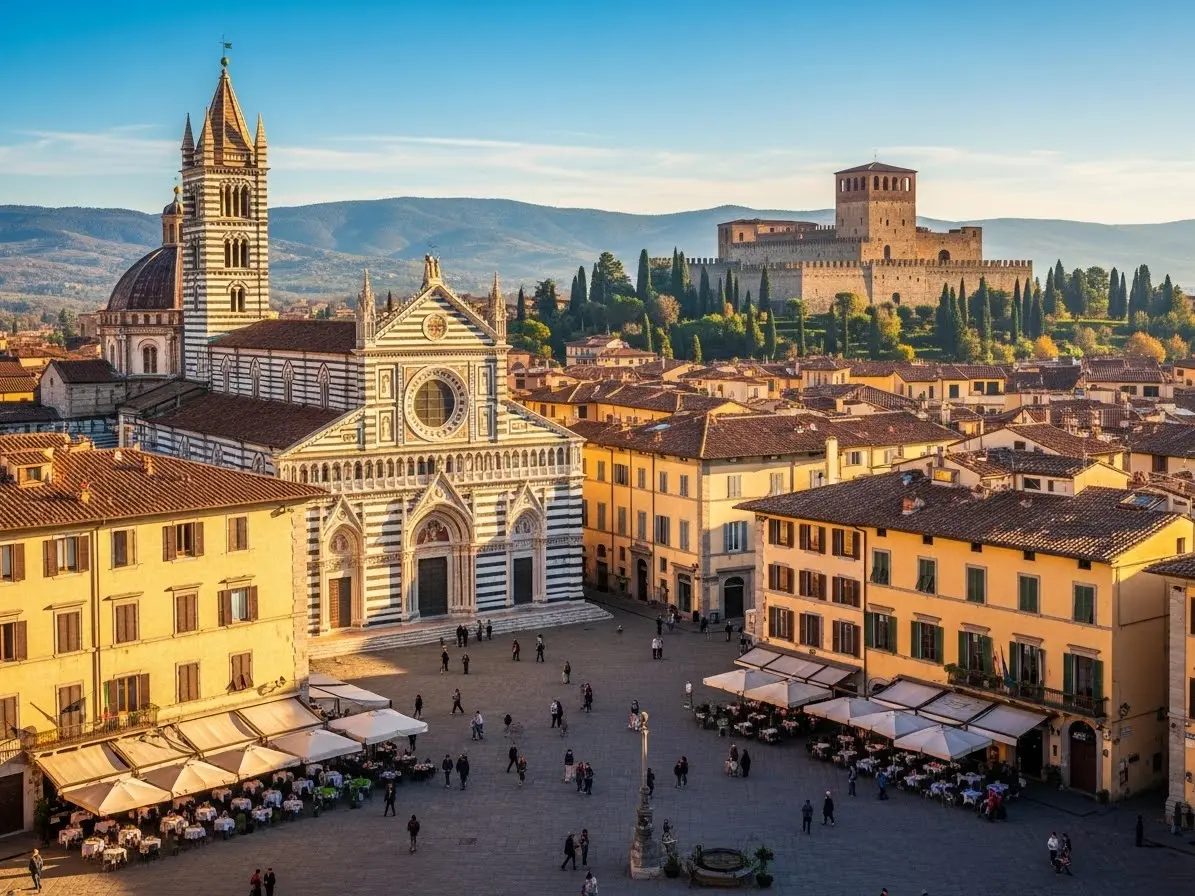
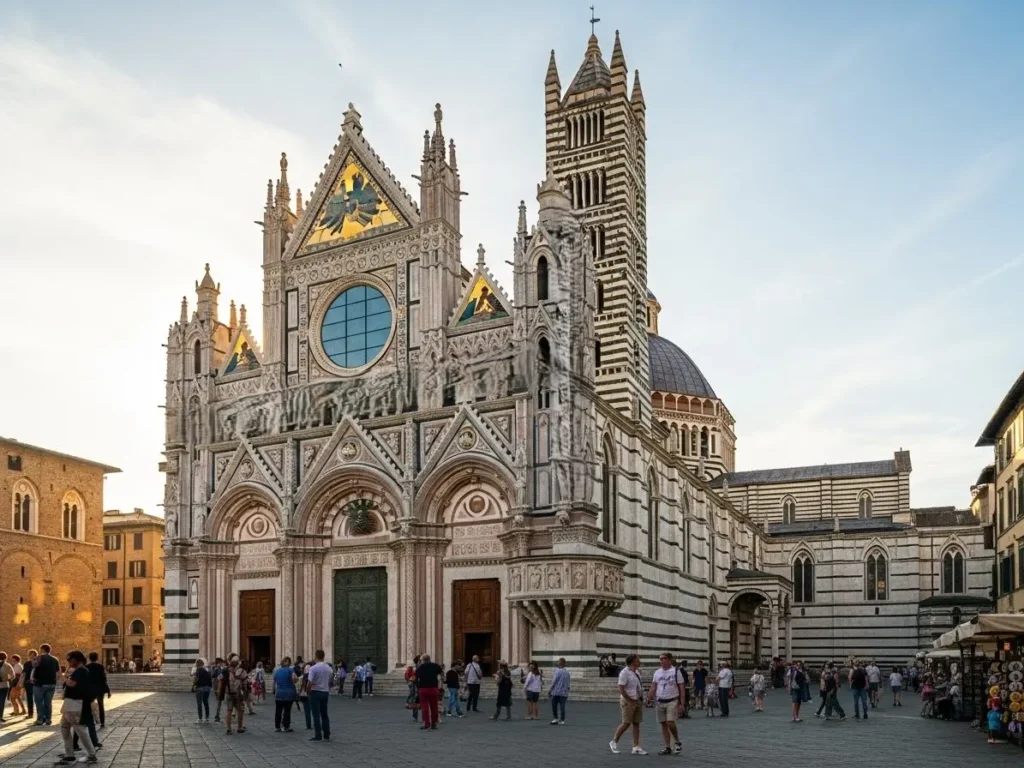
The Cathedral of Santo Stefano stands as Prato’s spiritual and artistic centerpiece, featuring one of Tuscany’s most remarkable Renaissance treasures. This Romanesque-Gothic structure, with its distinctive green and white marble façade, dominates the city’s main square and has welcomed worshippers since the 10th century.
The cathedral’s crown jewel is the Chapel of the Sacred Girdle (Cappella della Sacra Cintola), which houses what believers consider the Virgin Mary’s belt, brought to Prato from Jerusalem during the Crusades. The chapel’s frescoes by Agnolo Gaddi depict the belt’s legendary history in stunning 14th-century detail.
Inside the presbytery, you’ll find Filippo Lippi’s breathtaking fresco cycle depicting the lives of Saint Stephen and John the Baptist, completed between 1452 and 1465. These masterpieces showcase the Renaissance at its peak, with remarkable perspective, vibrant colors, and emotional depth that influenced generations of artists.
Don’t miss the exterior pulpit by Donatello and Michelozzo, an architectural marvel where the sacred belt is displayed to crowds five times yearly. The cathedral also houses works by other notable artists and a museum displaying precious liturgical objects and medieval sculptures.
Practical tip: Visit early morning or late afternoon to avoid tour groups, and allow at least an hour to fully appreciate the artistic treasures.
2. Castello dell’Imperatore
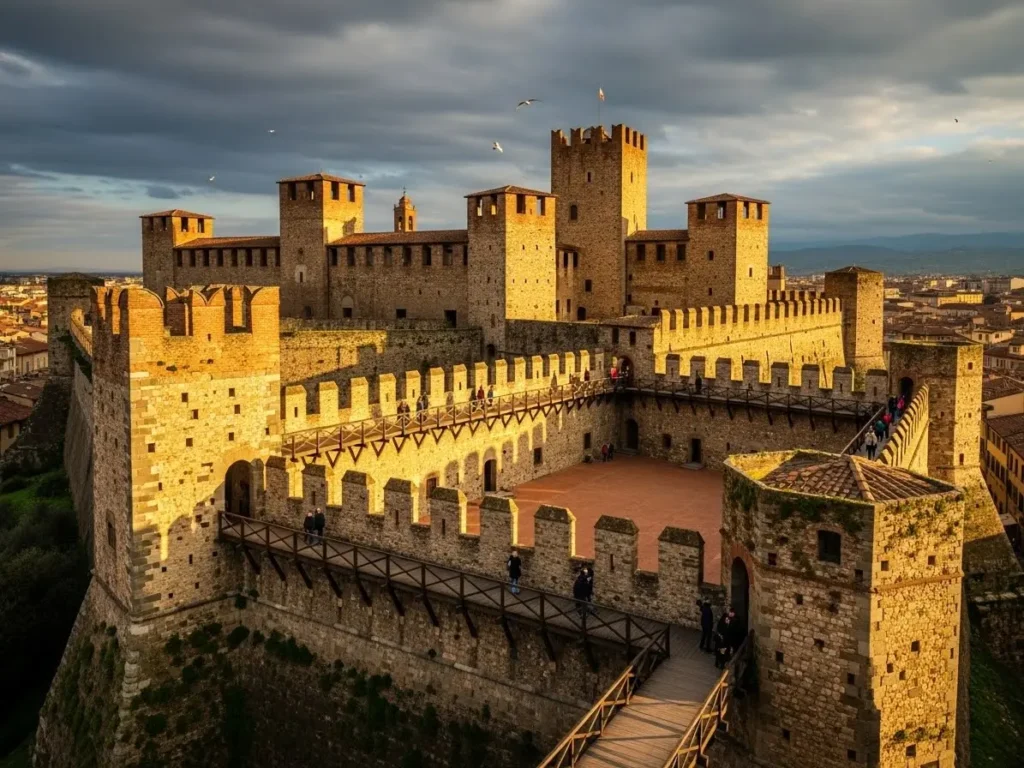
The imposing Castello dell’Imperatore rises dramatically from Prato’s landscape, representing one of the finest examples of Hohenstaufen military architecture in Italy. Built between 1237 and 1248 by Emperor Frederick II, this fortress stands as a powerful reminder of medieval imperial ambitions in Tuscany.
The castle’s distinctive swallowtail crenellations and massive square towers create a silhouette that defines Prato’s skyline. Unlike many Italian castles modified over centuries, this fortress retains its original austere military character, allowing visitors to genuinely experience medieval defensive architecture.
Climbing to the ramparts rewards you with panoramic views across Prato and the surrounding Tuscan countryside. The open courtyard, once used for military exercises and imperial ceremonies, now hosts cultural events and exhibitions during summer months, breathing new life into these ancient stones.
The castle’s strategic position connected it to the city walls, creating a formidable defensive system. Walking through the fortress, you’ll notice architectural details that reveal both its military function and imperial prestige—thick walls, narrow defensive windows, and grand entrance portals.
Practical tip: The castle is often less crowded than other Prato attractions, making it perfect for photography enthusiasts. Wear comfortable shoes for climbing the ramparts.
3. Santa Maria delle Carceri
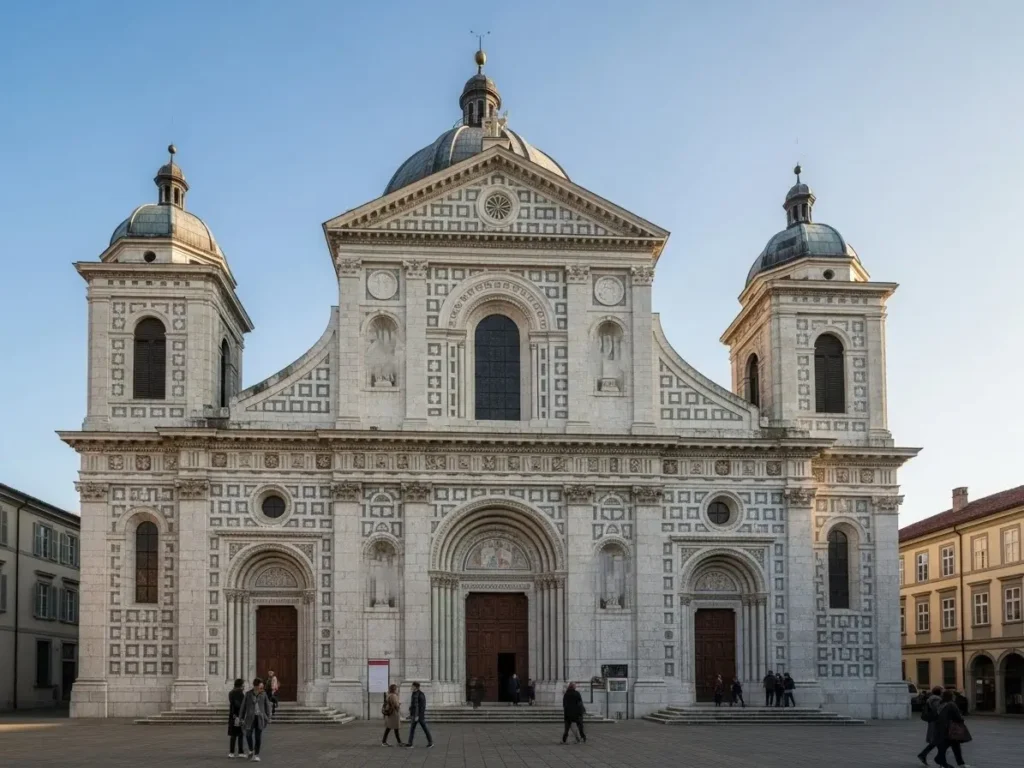
Santa Maria delle Carceri represents one of the Renaissance’s architectural masterpieces, designed by Giuliano da Sangallo between 1485 and 1506. This harmonious church exemplifies the Renaissance ideals of mathematical proportion, geometric perfection, and spiritual beauty.
The church’s Greek cross floor plan, crowned by a beautiful dome, creates a sense of balanced serenity that immediately calms visitors. Sangallo’s design influenced countless Renaissance churches across Italy, making this building architecturally significant beyond Prato itself.
Inside, Andrea della Robbia’s glazed terracotta decorations add vibrant color to the pristine white walls, creating a visual dialogue between architectural purity and artistic expression. The four medallions depicting the Evangelists rank among della Robbia’s finest works, showcasing the luminous beauty of majolica art.
The church originated from a miraculous event in 1484, when a painted image of the Virgin Mary on a prison wall (hence “delle Carceri”—of the prisons) allegedly spoke to a local man. This miracle sparked immediate construction of the church, funded by Prato’s grateful citizens.
Practical tip: Visit during late afternoon when sunlight streams through the dome’s oculus, creating dramatic lighting effects on the glazed terracotta.
4. Palazzo Pretorio
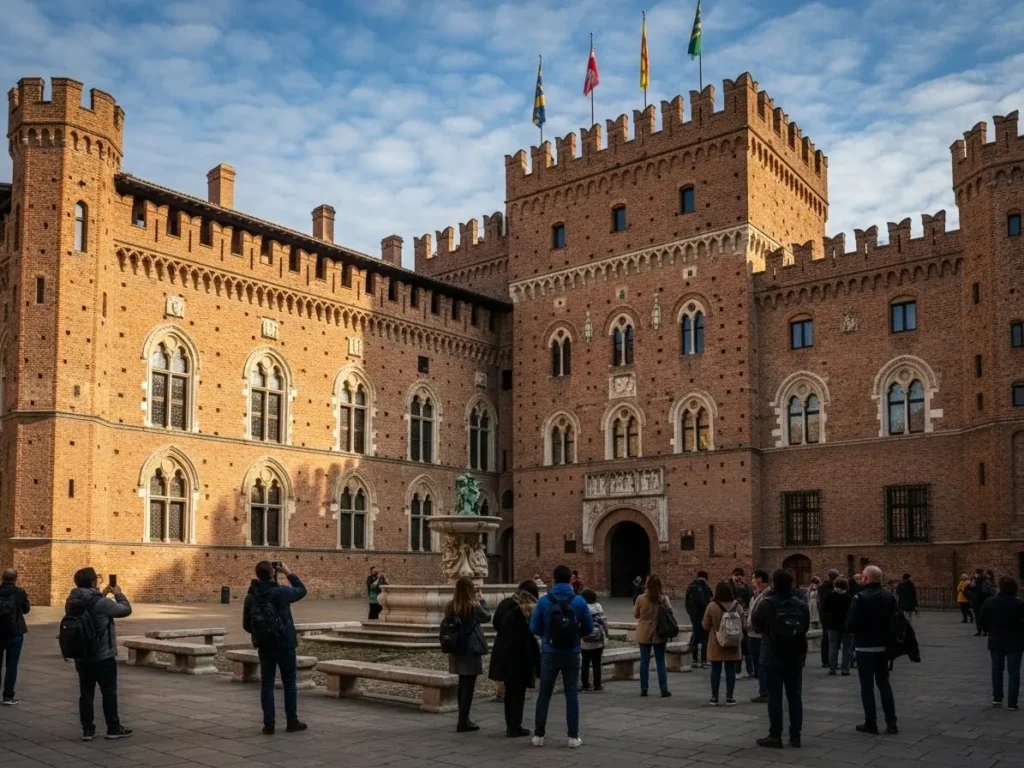
Palazzo Pretorio, Prato’s striking red-brick medieval palace, houses the city’s civic museum and offers a comprehensive journey through centuries of artistic achievement. The building itself, dating from the 13th century with later additions, presents a fascinating architectural study of medieval and Renaissance civic architecture.
The museum’s collection focuses on painting and sculpture from Prato and the surrounding region, spanning the medieval period through the 18th century. You’ll encounter works by Filippo Lippi, Giovanni da Milano, Bernardo Daddi, and other masters who shaped Tuscan art history.
The palace’s interior spaces, including frescoed halls and vaulted chambers, create an atmospheric setting that enhances the artworks displayed within. The building’s evolution mirrors Prato’s own history, with architectural layers revealing different periods of prosperity and cultural achievement.
One highlight is the collection of wooden sculptures and polychrome terracottas, demonstrating the high level of craftsmanship that characterized Tuscan workshops. The museum also displays liturgical objects, illuminated manuscripts, and decorative arts that provide context for understanding medieval religious life.
Practical tip: Combine your visit with the cathedral nearby, as a combined ticket often offers better value. The museum is rarely crowded, allowing for contemplative viewing.
5. Centro Pecci for Contemporary Art
Centro per l’arte contemporanea Luigi Pecci brings Prato firmly into the 21st century, offering one of Italy’s most innovative contemporary art spaces. This museum, dedicated to industrialist Luigi Pecci, bridges Prato’s textile heritage with cutting-edge artistic experimentation.
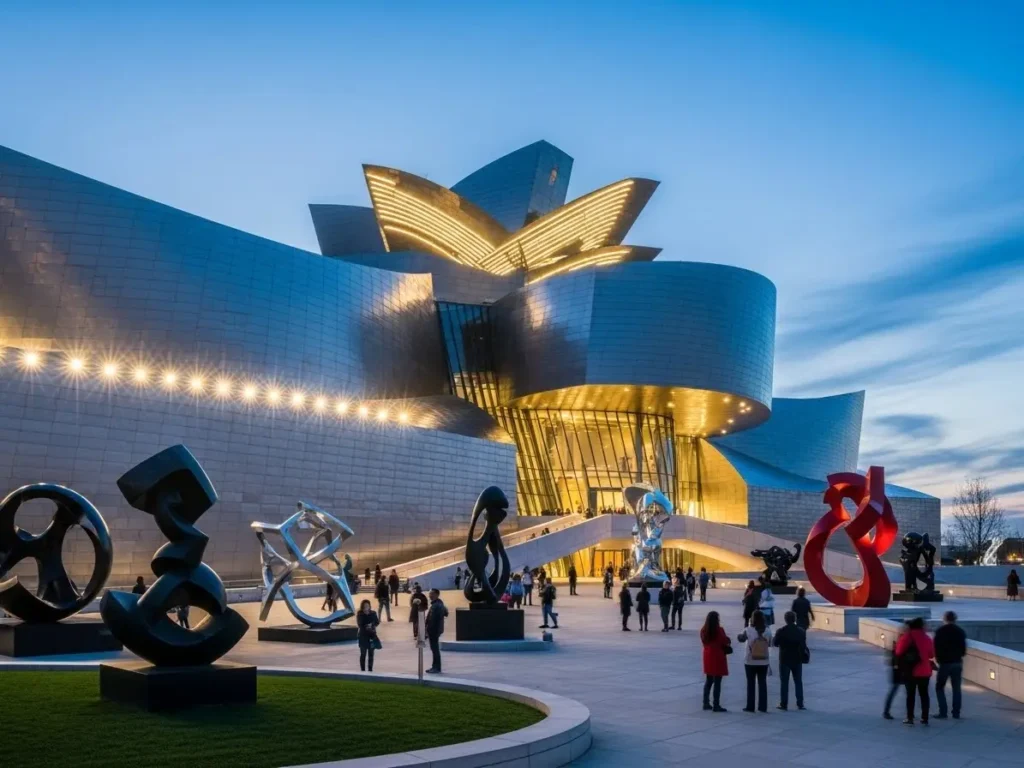
The building itself, designed by Italo Gamberini and recently expanded by architect Maurice Nio, makes a bold architectural statement with its distinctive angular forms and light-filled galleries. The expansion added significant exhibition space and a dramatic cantilevered structure that’s become an architectural landmark.
The permanent collection features works by major contemporary artists including Anish Kapoor, Richard Serra, Sol LeWitt, and Daniel Buren, alongside rotating exhibitions that showcase emerging talents and explore current cultural themes. The museum takes an interdisciplinary approach, incorporating video art, installations, performance, and new media.
Beyond exhibitions, Centro Pecci functions as a cultural hub hosting workshops, conferences, performances, and educational programs. The museum’s outdoor spaces feature large-scale sculptures and installations that dialogue with the architectural environment.
Practical tip: Check the website for current exhibitions and evening events, which often include artist talks and performances. The museum café offers excellent coffee and light meals.
6. Museo del Tessuto
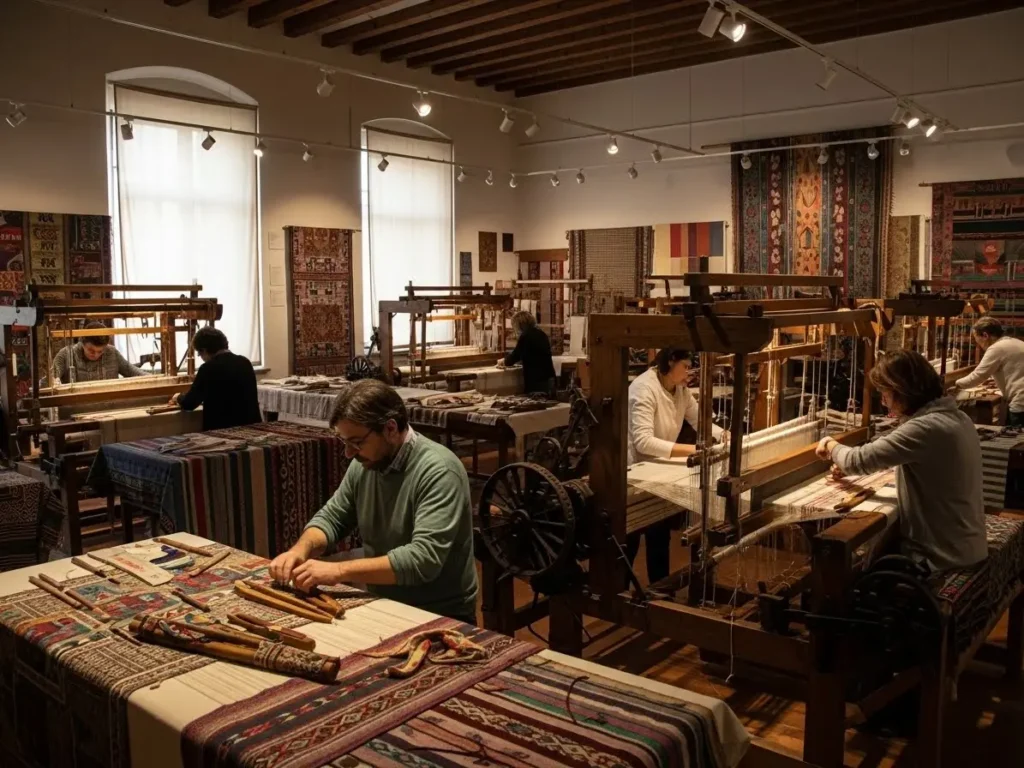
The Museo del Tessuto celebrates Prato’s identity as Europe’s most important textile center, offering a fascinating journey through centuries of fabric production, fashion, and industrial innovation. Housed in the restored Cimatoria Campolmi, a magnificent 19th-century textile factory, the museum itself represents industrial archaeology at its finest.
The collection spans from ancient textiles to contemporary fashion, with over 6,000 pieces documenting textile history from the 5th century to today. You’ll see precious medieval fabrics, Renaissance velvets, 18th-century silks, and avant-garde contemporary textiles, understanding how fabric both reflects and shapes cultural identity.
The museum excellently explains Prato’s transformation from medieval textile center to modern industrial powerhouse. Interactive displays demonstrate weaving techniques, dyeing processes, and manufacturing innovations that made Prato legendary in the global textile industry.
Special exhibitions explore connections between textiles, art, design, and fashion, hosting collaborations with major fashion houses and contemporary designers. The museum makes textile history accessible and engaging, even for visitors without specific interest in fabrics.
Practical tip: Allow at least 90 minutes for your visit. The museum shop offers beautiful textile products and books, perfect for distinctive souvenirs.
7. Palazzo Datini
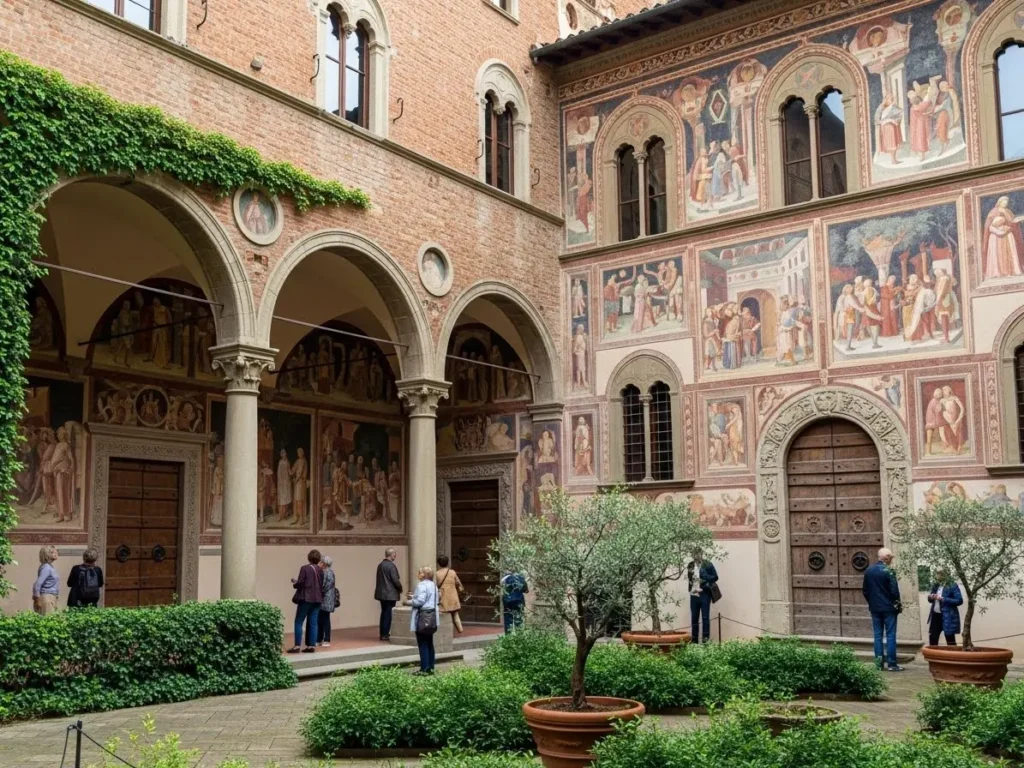
Palazzo Datini offers a rare glimpse into medieval merchant life through the preserved home of Francesco di Marco Datini, the 14th-century merchant whose business papers provide historians with invaluable insights into medieval commerce. The palace’s beautifully frescoed exterior immediately captures attention with its colorful geometric patterns.
Inside, you’ll discover rooms decorated with frescoes depicting both religious subjects and scenes of daily life, including one of the rare medieval domestic cycles showing a merchant’s household activities. These paintings provide a window into 14th-century Tuscan life that few other sites can match.
Datini, known as “the merchant of Prato,” built a vast trading network across Europe, and his preserved account books (now in the State Archives) represent the most complete medieval business archive in existence. The palace museum interprets his life, business practices, and the economic world of medieval Tuscany.
The palace also hosts temporary exhibitions exploring medieval and Renaissance themes, often focusing on economic history, daily life, and cultural exchanges that characterized the medieval Mediterranean world.
Practical tip: The palace is sometimes overlooked by visitors, meaning you’ll often have rooms to yourself. Visit on weekday mornings for the quietest experience.
8. Piazza Mercatale
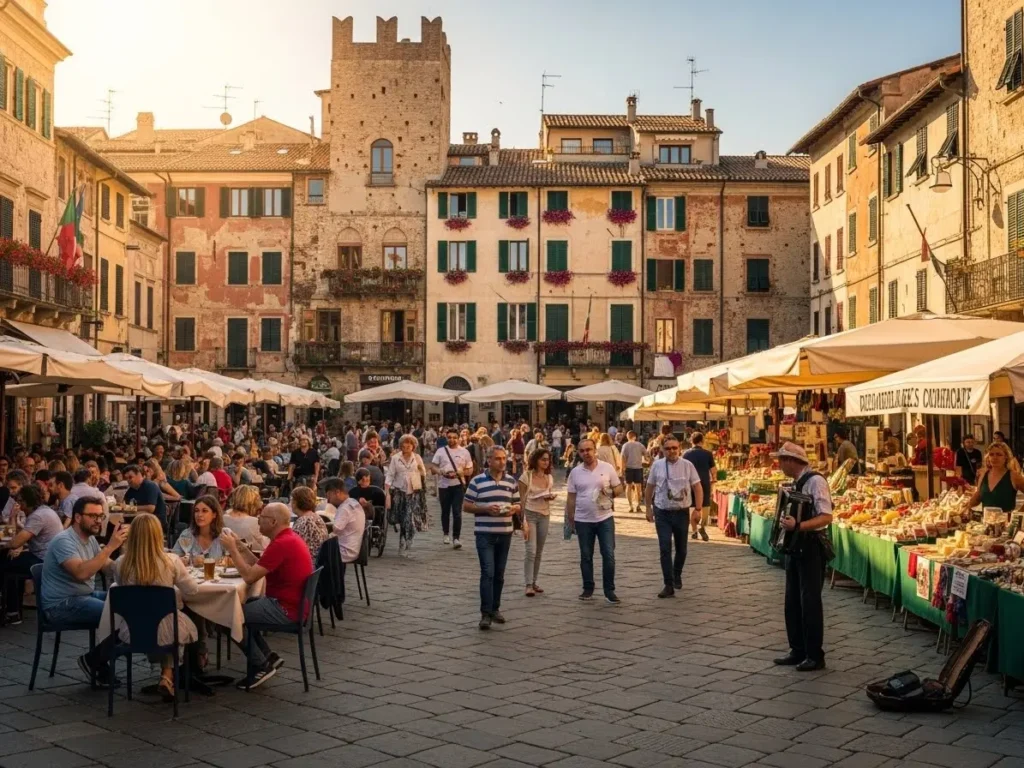
Piazza Mercatale represents Prato’s beating heart, a vast open square where medieval commerce, contemporary life, and local culture intersect. This historic marketplace, one of Tuscany’s largest piazzas, has hosted trade, festivals, and community gatherings for centuries.
The square stretches alongside the Bisenzio River, bordered by historic buildings that once served as warehouses for Prato’s textile trade. The weekly market (Wednesday and Saturday mornings) transforms the piazza into a colorful spectacle of local produce, textiles, clothing, and household goods, offering authentic insights into Tuscan daily life.
Beyond market days, the piazza serves as Prato’s outdoor living room. Cafés and restaurants line the perimeter, their outdoor seating perfect for people-watching while enjoying espresso or aperitivo. Evening brings a relaxed atmosphere as locals gather to socialize, creating scenes of Italian life that travelers cherish.
The piazza also hosts festivals, concerts, and cultural events throughout the year, particularly during summer months. From traditional festivals celebrating Prato’s patron saints to contemporary music performances, these events showcase the city’s vibrant cultural life.
Practical tip: Visit during market days for the most authentic experience, arriving by 9 AM for the best selection. Bring cash, as many vendors don’t accept cards.
9. Parco di Galceti
Parco di Galceti offers a serene escape into nature just minutes from Prato’s historic center. This beautiful park, situated in the hills above the city, combines natural beauty with spiritual heritage, centered around the ancient Convento di Santa Maria di Galceti.
The convent, founded in the 13th century, has served as a Franciscan monastery for centuries. Its simple yet elegant architecture embodies Franciscan ideals of poverty and contemplation. The cloister and church remain open to visitors, offering peaceful spaces for reflection away from tourist crowds.
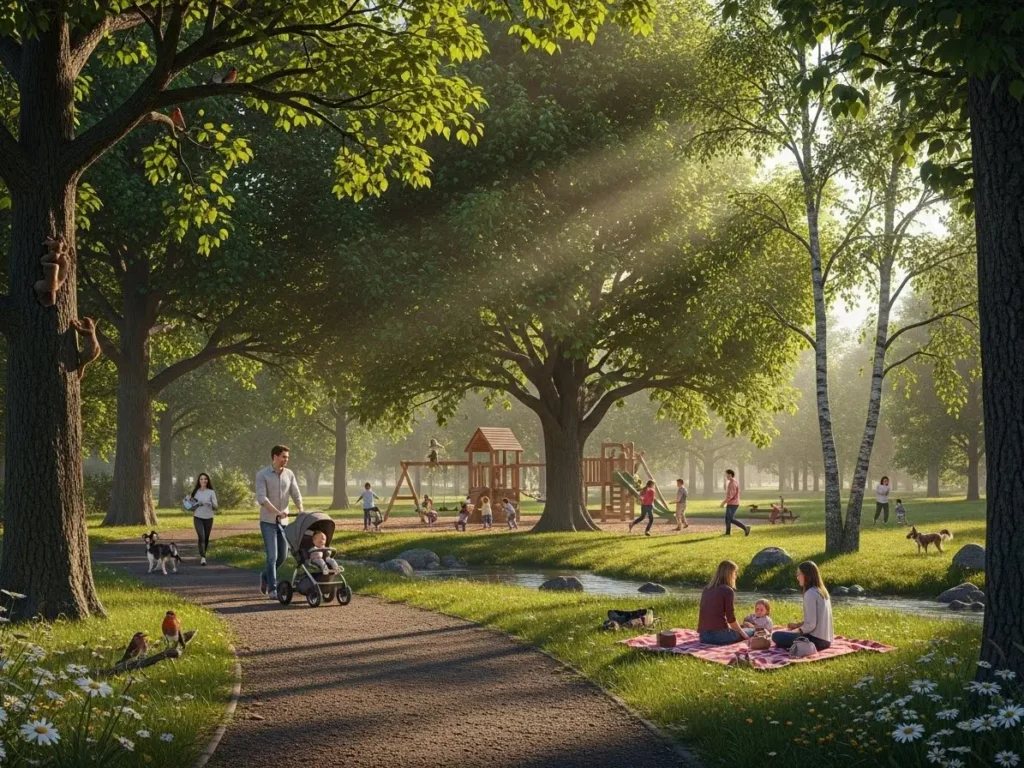
The surrounding parkland features walking trails through oak forests, meadows, and along streams, providing opportunities for hiking, picnicking, and nature observation. The elevated position offers magnificent views across Prato to the Tuscan hills beyond, particularly beautiful during sunset.
The park attracts local families, joggers, and anyone seeking respite from urban life. Well-maintained paths accommodate various fitness levels, from easy strolls to more challenging climbs into the surrounding hills. The area is particularly lovely in spring when wildflowers bloom.
Practical tip: The park makes an excellent picnic destination. Take bus number 1 from the city center, or enjoy a pleasant 30-minute walk from Piazza del Duomo.

10. Omnia Center
The Omnia Center represents Prato’s modern face, a contemporary shopping and entertainment complex that showcases the city’s evolution beyond its medieval heritage. This sleek facility offers shopping, dining, entertainment, and cultural spaces under one striking architectural roof.
Beyond retail therapy, the center includes a multiplex cinema, restaurants ranging from casual to upscale, and spaces for cultural events and exhibitions. The contemporary design creates bright, welcoming spaces that contrast beautifully with Prato’s historic architecture, showing the city’s ability to honor tradition while embracing modernity.
The center’s international brands sit alongside local boutiques, reflecting Prato’s character as both a traditional Tuscan city and a cosmopolitan commercial hub. The food court and restaurants offer diverse cuisines, from Tuscan specialties to international flavors, catering to the city’s multicultural population.
For travelers, Omnia Center provides practical services including bookstores, electronics shops, and everyday necessities, making it useful for both shopping and solving travel logistics. The comfortable seating areas and free WiFi make it a convenient stop for planning your itinerary.
Practical tip: Visit in the evening when locals gather here for shopping and dining, offering a glimpse into contemporary Prato life beyond the tourist sights.
FAQs About Prato
How many days do you need in Prato?
One full day allows you to see Prato’s major attractions comfortably, though two days enable deeper exploration and a more relaxed pace. Many visitors make Prato a day trip from Florence, spending 6-8 hours exploring the historic center. If you’re passionate about art, textiles, or simply want to experience the city beyond its highlights, two days provide time for museums, leisurely meals, and discovery of hidden corners. Prato also serves as an excellent base for exploring nearby Tuscan destinations, making a 2-3 day stay strategically valuable.
Is Prato worth visiting?
Absolutely. Prato offers authentic Tuscan culture without overwhelming crowds, exceptional Renaissance art, unique textile heritage, and delicious local cuisine at more reasonable prices than Florence. The city provides a genuine Italian experience where you’ll interact with locals rather than just tourists. If you appreciate art history, industrial heritage, or simply want to experience a working Italian city rather than a museum-town, Prato delivers tremendous value. Its proximity to Florence adds convenience without sacrificing authenticity.
What is Prato famous for?
Prato is renowned as Italy’s textile capital, producing fabrics for luxury fashion houses worldwide since medieval times. The city is also famous for its artistic treasures, particularly Filippo Lippi’s cathedral frescoes, and for cantucci (twice-baked almond biscuits) traditionally served with Vin Santo dessert wine. Historically, Prato gained fame for its merchant Francesco Datini, whose preserved business records illuminate medieval commerce. Today, the city balances its historical textile industry with contemporary art, showcased at the innovative Centro Pecci.
What is the main square in Prato?
Prato has two important squares serving different functions. Piazza del Duomo is the historic ceremonial heart, dominated by the cathedral and Palazzo Pretorio. However, Piazza Mercatale serves as the true community center—Tuscany’s largest square where markets, festivals, and daily life unfold. Locals consider Piazza Mercatale the city’s living room, while Piazza del Duomo represents its monumental face. Both squares are essential to understanding Prato’s character, so visit both during your stay.
How do I get from Florence to Prato?
Regional trains connect Florence and Prato every 15-30 minutes, departing from Florence Santa Maria Novella station and arriving at Prato Centrale station in just 15-20 minutes. Tickets cost approximately €2-4 and can be purchased at station machines or online. Upon arriving at Prato Centrale, the historic center is a pleasant 10-minute walk. Alternatively, buses operate between the cities, though trains are generally faster and more convenient. If driving, take the A11 autostrada (approximately 20 minutes), though parking in Prato’s historic center can be challenging.
What food should I try in Prato?
Don’t miss cantucci con Vin Santo, Prato’s signature dessert of almond biscuits dipped in sweet wine. Try mortadella di Prato (a local variation of the famous cold cut) and sedano alla pratese (celery baked with meat sauce). Pesche di Prato (Prato peaches) are a unique cake shaped like a peach, filled with cream and covered with almond paste—not actually made from peaches despite the name! For main courses, sample traditional Tuscan dishes like ribollita (bread and vegetable soup) and bistecca alla fiorentina. Prato’s multicultural population also means excellent Chinese and other international cuisines.
Conclusion
Prato reveals itself as a multifaceted treasure where medieval heritage meets contemporary innovation, offering experiences that rival better-known Tuscan destinations without the overwhelming crowds. From Filippo Lippi’s Renaissance masterpieces in the cathedral to cutting-edge installations at Centro Pecci, from the imposing Castello dell’Imperatore to the tranquil beauty of Parco di Galceti, this city rewards curious travelers with authenticity and depth.
The ten attractions explored in this guide represent just the beginning of what Prato offers. Each site tells part of the larger story—of merchant prosperity, artistic achievement, industrial innovation, and a community that honors its past while confidently embracing the future. Whether you’re drawn by art history, textile heritage, architectural beauty, or simply the pleasure of discovering a genuine Italian city, Prato delivers memorable experiences.
Ready to experience Tuscany beyond the tourist trail? Start planning your Prato adventure today. Book your train from Florence, mark these ten attractions on your map, and prepare to discover one of Italy’s most authentic and underrated cities. Your Tuscan adventure awaits just 15 minutes from Florence, where art, history, and genuine Italian life come together beautifully.
Join thousands of savvy travelers who’ve discovered Prato’s magic. Share this guide with fellow Italy enthusiasts, and after your visit, tell us which attraction captured your heart. The hidden gems of Tuscany are waiting—will Prato be your next unforgettable Italian discovery?