10 Modena Highlights Every Traveler Should Explore
Introduction
Planning a trip to Italy but tired of overcrowded tourist traps and cookie-cutter itineraries? You’re not alone. Many travelers struggle to find authentic Italian experiences that go beyond the usual Florence-Venice-Rome circuit, missing out on the country’s hidden cultural treasures.
Modena offers the perfect solution: a captivating blend of medieval architecture, world-renowned culinary traditions, and automotive passion, all without the overwhelming crowds. This Emilia-Romagna gem delivers an authentic slice of Italian life where you can wander UNESCO World Heritage sites in the morning and savor the world’s finest balsamic vinegar by afternoon.
As a content strategist specializing in European travel destinations, I’ve spent years researching Italy’s lesser-known cities to help travelers discover meaningful experiences. Through extensive exploration and local connections, I’ve identified the experiences that truly capture Modena’s essence.
In this guide, you’ll discover why Modena deserves a place on your Italian itinerary, explore ten unmissable highlights that showcase the city’s unique character, and get practical answers to common traveler questions about visiting this remarkable destination.
Table of Contents
Why You Should Visit Modena
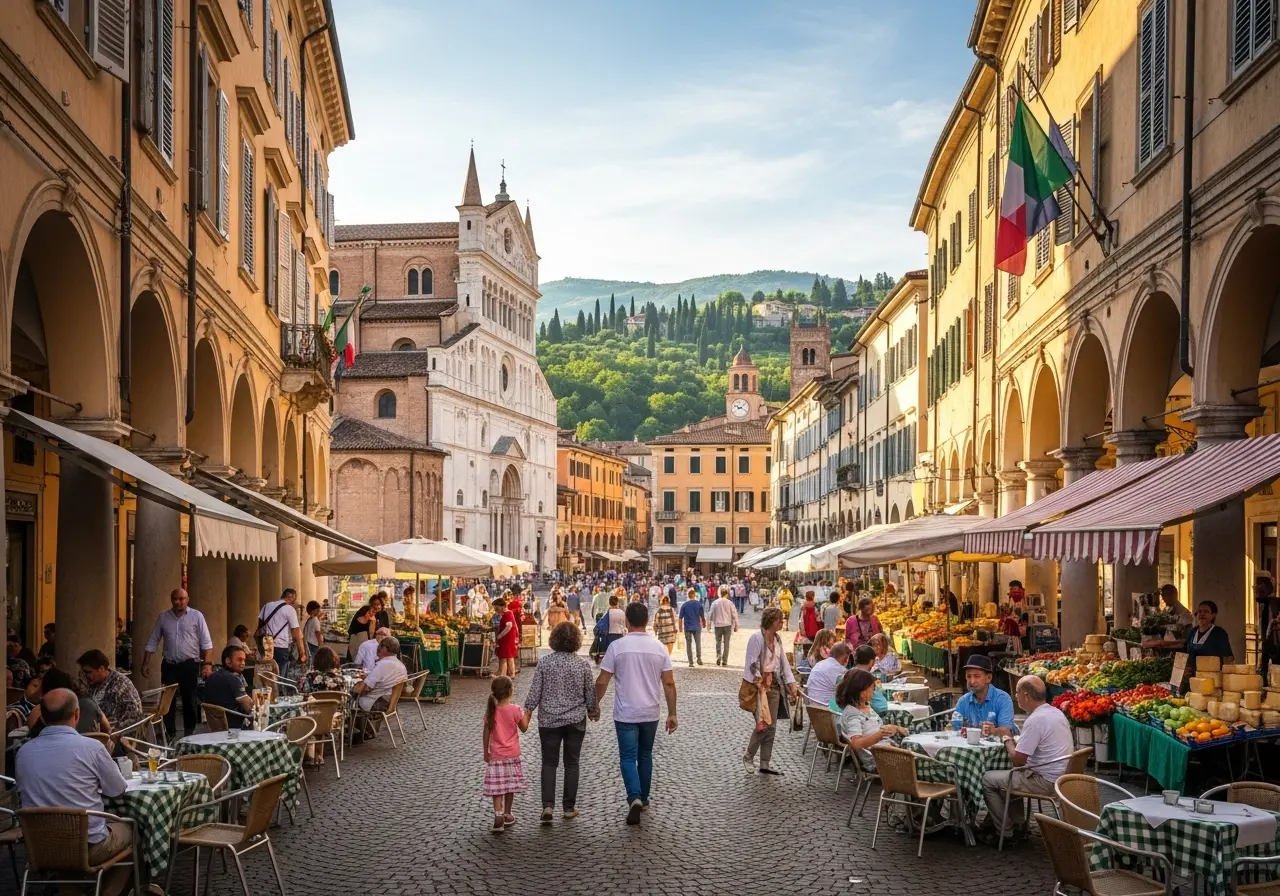
Modena represents the heart of authentic Italian culture, where centuries-old traditions thrive alongside contemporary innovation. This city of approximately 185,000 residents offers travelers an intimate glimpse into Italian life without the tourist saturation that defines larger destinations.
The city’s cultural richness is immediately apparent. As a UNESCO World Heritage site, Modena’s historic center preserves Romanesque architecture that has stood for nearly a millennium. Beyond its medieval masterpieces, the city pulses with artistic heritage—this is the birthplace of Luciano Pavarotti, whose legacy continues to inspire music lovers worldwide. The streets themselves tell stories, with elegant porticoes providing shelter and beauty in equal measure.
Convenience makes Modena particularly appealing for travelers. Located strategically in northern Italy, the city sits just 40 minutes by train from Bologna and offers easy access to other Emilia-Romagna destinations. Its compact historic center is entirely walkable, allowing you to experience the city’s highlights without exhausting transportation logistics. Unlike Venice or Florence, you won’t spend your visit navigating tourist bottlenecks or waiting in interminable queues.
The variety of experiences available in Modena is truly exceptional. Automotive enthusiasts can explore the region that birthed Ferrari, Maserati, and Lamborghini. Food lovers can indulge in the birthplace of balsamic vinegar, Parmigiano-Reggiano, and traditional dishes like tortellini and gnocco fritto. History buffs can trace centuries of Italian heritage through architectural landmarks, while art appreciators can discover both Renaissance masterpieces and contemporary creativity.
Perhaps most importantly, Modena offers something increasingly rare in popular Italian destinations: authenticity. The morning markets serve locals, not tour groups. The restaurants prepare traditional recipes passed down through generations rather than simplified versions for international palates. When you visit Modena, you’re experiencing Italy as Italians live it.
10 Modena Highlights Every Traveler Should Explore
1. Piazza Grande and the Historic City Center
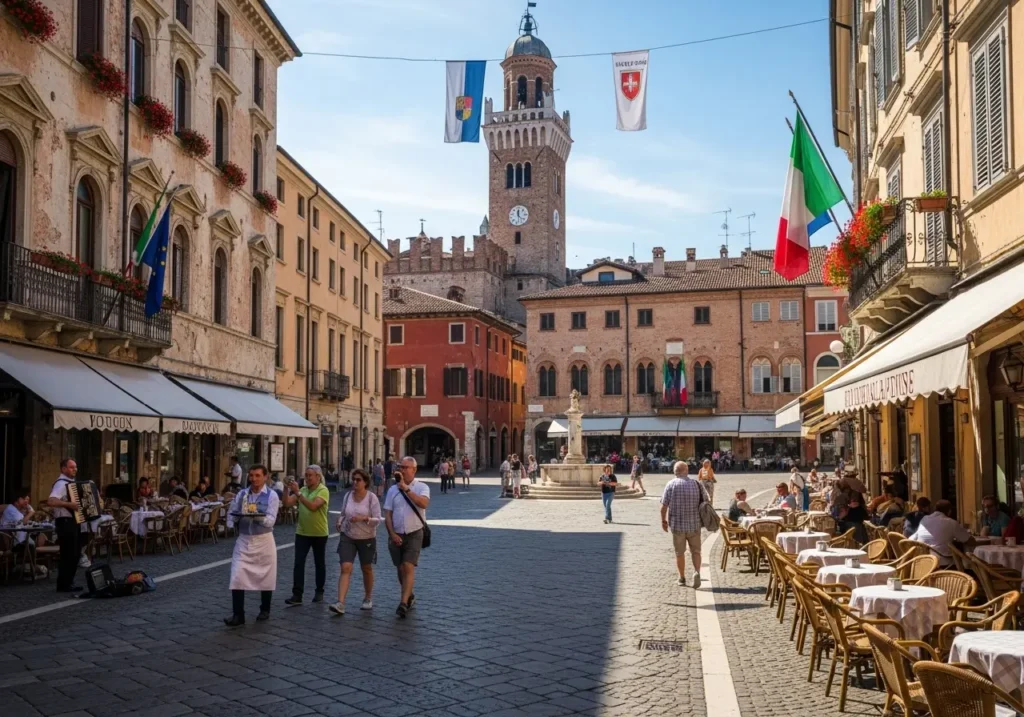
Piazza Grande serves as Modena’s living room, a magnificent square where locals have gathered for centuries. This expansive space forms the heart of the UNESCO World Heritage site, surrounded by architectural treasures that span nearly a thousand years of history. The piazza’s distinctive sloped design was originally created to facilitate medieval markets and public gatherings.
Walking through the historic center, you’ll discover narrow medieval lanes opening unexpectedly into charming squares. The area surrounding Piazza Grande maintains its original layout from the Middle Ages, creating an atmospheric maze perfect for wandering. Street performers, artisan shops, and historic cafés line the pedestrian-friendly streets, offering countless opportunities to pause and absorb the ambiance.
The square truly comes alive during the evening passeggiata, when residents stroll through the center, greeting friends and enjoying aperitivos at outdoor cafés. This is your chance to participate in authentic Italian culture, observing social rituals that have remained unchanged for generations.
2. Modena Cathedral, a UNESCO World Heritage Masterpiece
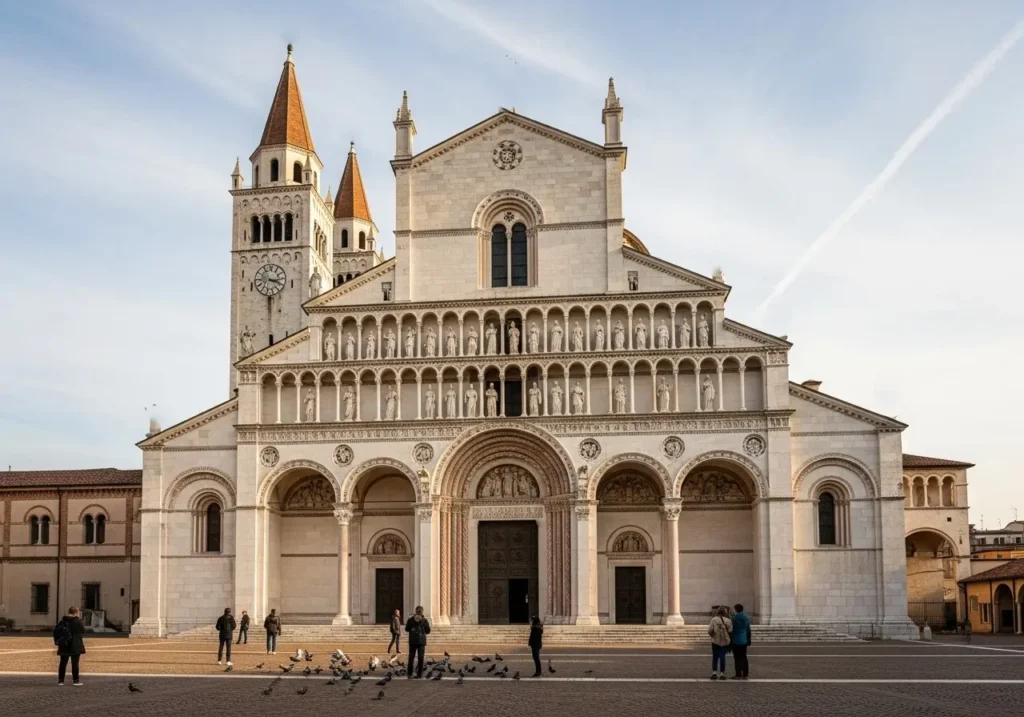
The Duomo di Modena stands as one of Europe’s finest examples of Romanesque architecture, consecrated in 1184 after decades of construction. Architect Lanfranco and sculptor Wiligelmo created this masterpiece, which became a UNESCO World Heritage site in 1997 alongside the Ghirlandina Tower and Piazza Grande.
The cathedral’s façade captivates with intricate stone carvings depicting biblical scenes and medieval life. Wiligelmo’s sculptures around the main portal represent some of the most significant Romanesque artwork in existence, telling the story of Genesis with remarkable emotional depth. Inside, the solemn beauty continues with Gothic additions, Renaissance paintings, and the crypt containing the remains of Saint Geminianus, Modena’s patron saint.
Take time to examine the details—the rose window filtering light into colored patterns, the carved capitals featuring fantastical creatures, and the centuries-old frescoes that still retain their pigmentation. The cathedral represents not just religious devotion but the artistic ambition of medieval Modena, when the city’s wealth and influence reached across Italy.
3. Ghirlandina Tower with Panoramic City Views
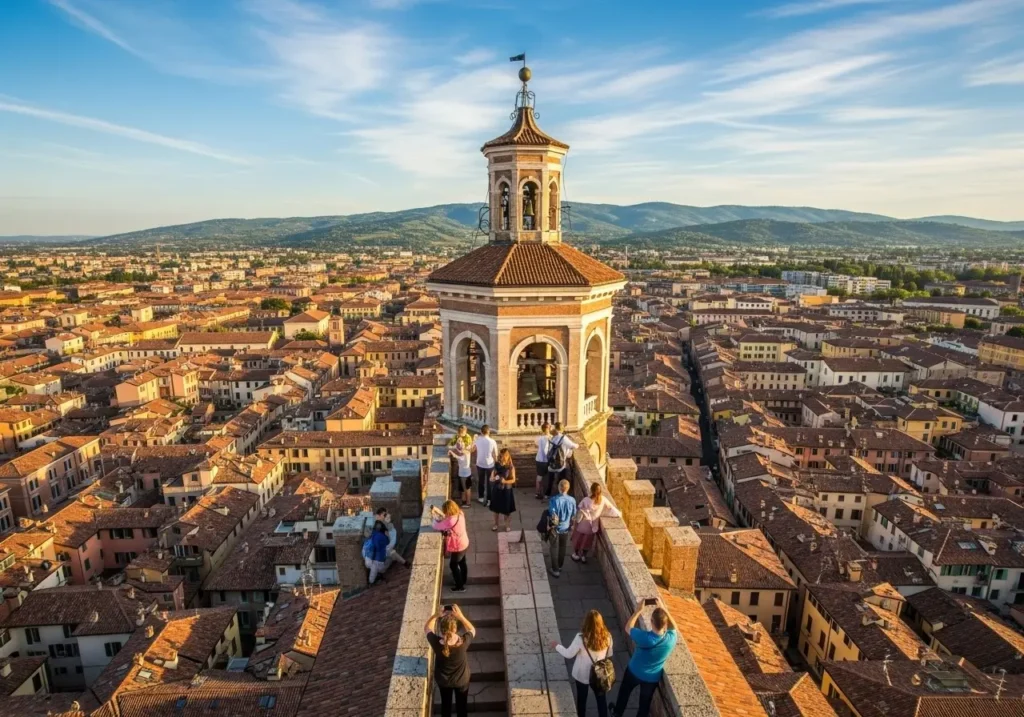
Rising 86.12 meters above Piazza Grande, the Ghirlandina Tower has defined Modena’s skyline since the 12th century. Its distinctive name comes from the bronze garlands adorning the spire, though locals also affectionately refer to it as “la Ghirlandina” for its graceful, slender proportions.
Climbing the tower’s 200 steps rewards you with spectacular panoramic views across Modena’s terracotta rooftops, stretching to the Apennine Mountains on clear days. The ascent itself provides interest, passing through chambers that once housed the city’s treasures and the famous “Secchia Rapita,” a wooden bucket that sparked a war between Modena and Bologna in 1325.
The tower functions as Modena’s historical compass point—from its height, you can orient yourself to the city’s layout and identify landmarks you want to explore. Morning visits offer the best photography light, while late afternoon climbs provide softer illumination perfect for capturing the city’s golden hour glow.
4. Enzo Ferrari Museum Showcasing Iconic Automotive History
The Enzo Ferrari Museum celebrates the life of Modena’s most famous son and the legendary marque he created. The striking yellow building, designed to evoke Ferrari’s iconic color, houses two distinct sections: Enzo Ferrari’s restored childhood home and workshop, plus a futuristic exhibition space shaped like a car hood.
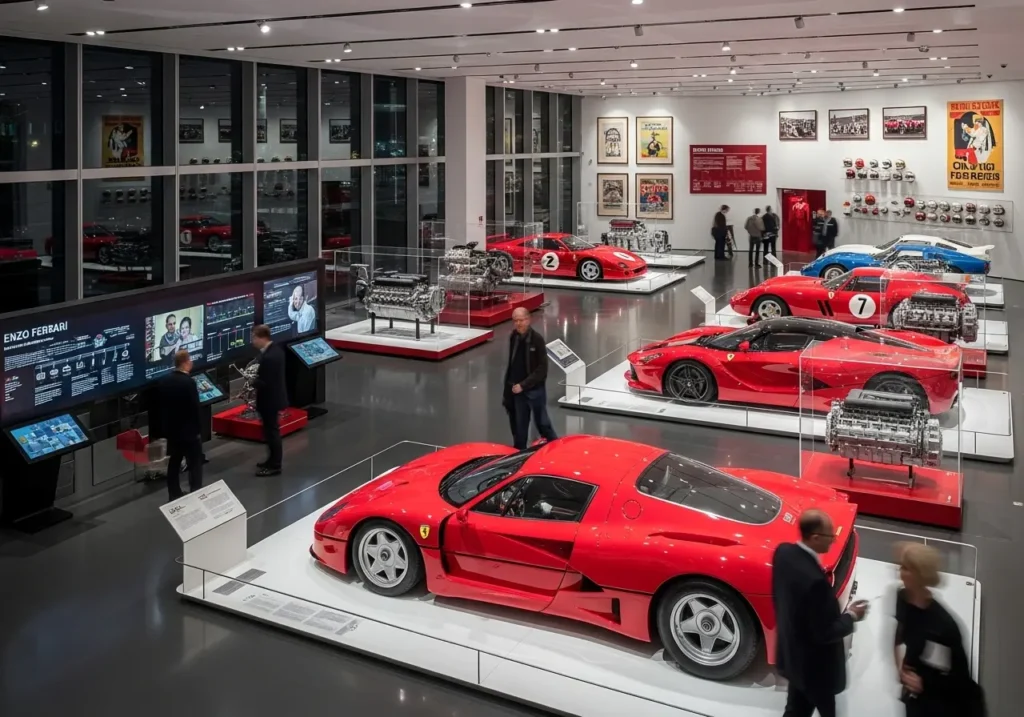
Inside, you’ll encounter an ever-rotating collection of historic and contemporary Ferraris, from early racing victories to cutting-edge Formula One technology. Interactive exhibits trace Enzo Ferrari’s journey from racing driver to team manager to automotive visionary, providing context for his relentless pursuit of perfection.
The museum skillfully balances technical automotive details with human storytelling, making it engaging whether you’re a gearhead or simply curious about Italian industrial design. Temporary exhibitions frequently explore broader themes like automotive art, racing history, and Italian engineering innovation. The museum’s proximity to the Maranello factory (just 20 kilometers away) makes it possible to visit both in a single day for the ultimate Ferrari experience.
5. Casa Museo Luciano Pavarotti, the Singer’s Vibrant Home
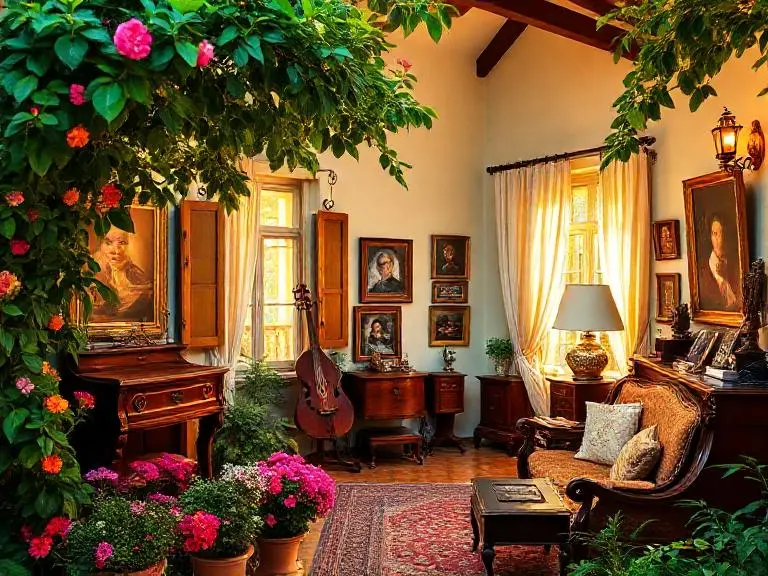
Located in the countryside just outside Modena’s center, Casa Museo Luciano Pavarotti preserves the beloved tenor’s home exactly as he left it. The villa reflects Pavarotti’s exuberant personality, filled with colorful art, personal mementos, stage costumes, and the countless awards that marked his legendary career.
Guided tours lead you through intimate spaces where Pavarotti lived, studied, and entertained friends. His music room contains the piano where he practiced daily, his studio displays the white handkerchiefs that became his trademark, and his personal quarters reveal a man who remained grounded despite international superstardom. Video recordings throughout the house bring Pavarotti’s presence back to life, his unmistakable voice filling the rooms once more.
The museum grounds include beautiful gardens where Pavarotti relaxed between performances, offering peaceful walking paths and views of the Emilia-Romagna countryside he loved. This isn’t simply a museum dedicated to a famous person—it’s a touching portrait of how Pavarotti balanced worldwide fame with his deep attachment to Modena and its traditions.
6. Mercato Albinelli, Modena’s Bustling Food Market
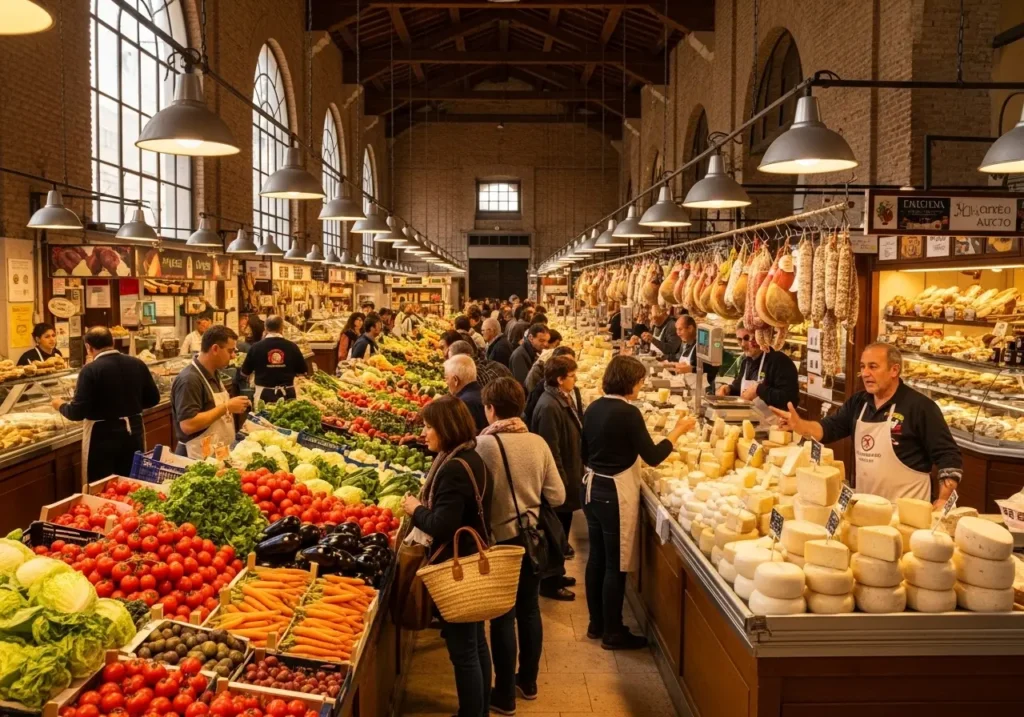
Since 1931, Mercato Albinelli has served as Modena’s premier covered market, housed in an elegant Art Nouveau structure with cast-iron columns and colorful glass panels. The market buzzes with energy as local vendors display the region’s legendary ingredients: wheels of Parmigiano-Reggiano, traditional balsamic vinegar, fresh pasta, cured meats, seasonal produce, and seafood.
Wandering the market stalls provides an education in Emilia-Romagna’s culinary traditions. Vendors enthusiastically explain their products, offer tastings, and share preparation tips. You’ll see ingredients you’ve never encountered and familiar items presented with a quality that transforms them completely. The market’s bars serve excellent espresso and local wines, perfect for a mid-morning break.
Visit in the morning for the fullest selection and liveliest atmosphere. Many travelers purchase ingredients for picnics or bring vacuum-sealed specialties home as edible souvenirs. Even if you’re not buying, the market offers invaluable insight into what makes Modenese cuisine so exceptional—it starts with ingredients sourced from surrounding farms and produced using methods refined over centuries.
7. Traditional Balsamic Vinegar Tasting at an Authentic Acetaia
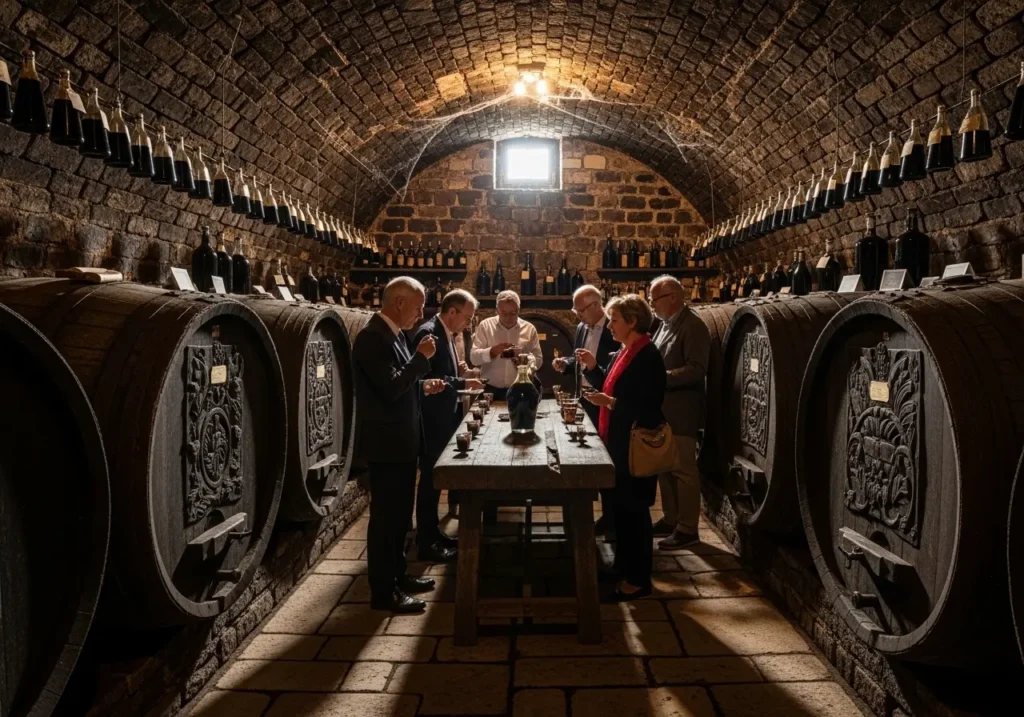
True Traditional Balsamic Vinegar of Modena (Aceto Balsamico Tradizionale di Modena) bears little resemblance to supermarket balsamic vinegar. This protected designation product requires at least 12 years of aging in progressively smaller wooden barrels, creating a complex, syrupy condiment that represents one of Italy’s most prized culinary achievements.
Visiting an acetaia (vinegar house) reveals the patient artistry behind this extraordinary product. Producers maintain barrel batteries in climate-controlled attics, where temperature fluctuations concentrate the vinegar through evaporation. During tastings, you’ll sample vinegars of different ages—12, 25, and sometimes 50+ years—understanding how time develops layers of sweet, tart, and woody flavors.
These experiences typically include tours of the aging rooms, explanations of the production process, and guidance on using traditional balsamic vinegar properly (sparingly, as a finishing touch rather than a cooking ingredient). Many acetaie are family operations where knowledge passes through generations, offering authentic connection to Modena’s agricultural heritage. Reservations are essential, as these remain working facilities rather than tourist attractions.
8. Palazzo Ducale, Home of the Military Academy
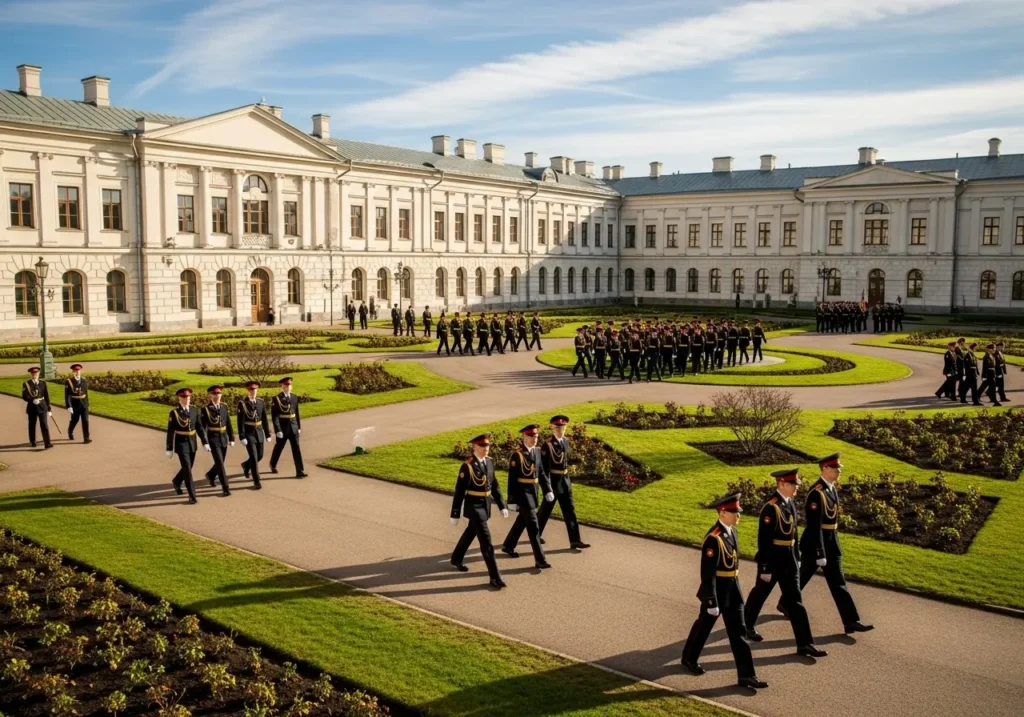
The imposing Palazzo Ducale dominates the southern edge of Modena’s historic center, a baroque masterpiece begun in 1634 for the Este dukes who ruled Modena for centuries. Today, the palace houses Italy’s prestigious Military Academy, limiting public access but making available visits even more special when they occur.
The palace’s scale impresses immediately—250 rooms surrounding two vast courtyards, creating one of Italy’s largest baroque structures. The d’Este family spared no expense, commissioning frescoes from leading artists, installing elaborate stuccowork, and creating ceremonial spaces designed to overwhelm visitors with ducal power and taste.
The palace gardens, known as the Giardini Ducali, remain accessible to the public and provide a tranquil escape from the city center. These geometric gardens follow Italian baroque design principles, with manicured hedges, classical statuary, and shaded walkways perfect for contemplative strolls. The gardens offer particularly lovely views of the palace’s baroque façade, allowing you to appreciate its architectural ambition without entering the restricted interior.
9. Modena’s Charming Streets Lined with Colorful Porticoes
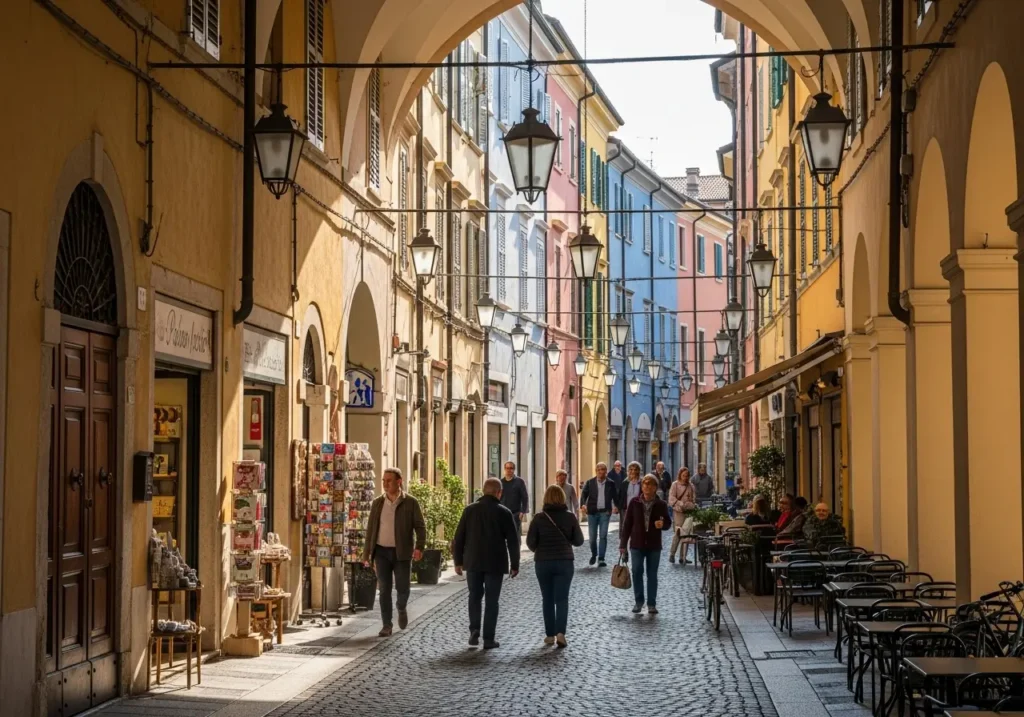
Modena’s porticoes create covered walkways that extend for kilometers throughout the city, providing architectural continuity and practical shelter from sun and rain. These arcaded passages define the Modenese streetscape, their columns and arches forming rhythmic perspectives that draw the eye down seemingly endless corridors.
The porticoes serve both aesthetic and social functions. Their covered spaces host boutiques, bookshops, artisan workshops, and cafés, creating protected environments for commerce and conversation. Walking beneath the porticoes, you’ll notice how they encourage leisurely exploration—you’re never rushed by weather, and the architectural framing highlights details you might otherwise miss.
Different neighborhoods display varying portico styles, from medieval stone columns to elegant baroque designs to restrained neoclassical interpretations. Via Emilia, Modena’s main thoroughfare, showcases particularly fine examples, while smaller streets reveal more intimate, neighborhood-focused passages. Photography enthusiasts find endless inspiration in the porticoes’ play of light and shadow, especially during golden hour when sunlight angles through the arches.
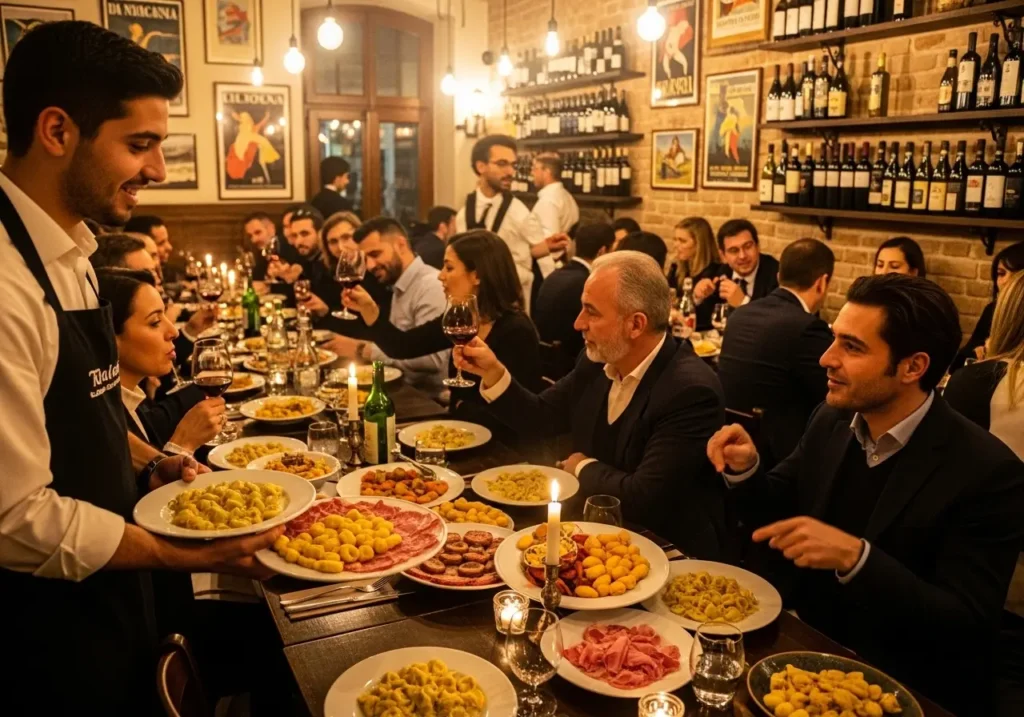
10. Osterie and Trattorie Serving Classic Modenese Cuisine
Modena’s culinary reputation extends far beyond balsamic vinegar and Parmigiano-Reggiano. The city’s traditional restaurants, from humble osterie to celebrated trattorie, serve dishes that define Emilia-Romagna cuisine: handmade tortellini in rich brodo, cotechino sausage with creamy lentils, gnocco fritto accompanied by cured meats, and bollito misto with its traditional sauces.
These establishments maintain recipes and techniques passed through families for generations. Pasta is rolled by hand each morning, stocks simmer for hours, and seasonal ingredients dictate daily menus. The atmosphere emphasizes conviviality rather than formality—checked tablecloths, communal wine carafes, and staff who treat regulars like extended family.
Dining at Modena’s traditional restaurants provides more than excellent food—it offers immersion in Italian food culture. Meals unfold at a civilized pace, with antipasti, primi, secondi, and dolci courses designed to be savored over hours. Locals fill these restaurants every evening, validating their authenticity. Make reservations, especially for well-known establishments like Osteria Francescana’s more casual sister restaurants, where you can experience Michelin-star chef Massimo Bottura’s approach to traditional cuisine at accessible prices.
FAQs About Modena
How many days should I spend in Modena?
Two to three days allows you to experience Modena’s major highlights without rushing. A two-day visit covers the historic center, cathedral complex, one museum, and several dining experiences. Adding a third day permits a traditional balsamic vinegar tour, a trip to the Ferrari museums, or leisurely exploration of neighborhoods beyond the center. Modena also serves well as a base for day trips to nearby Bologna, Parma, or the Apennine foothills.
What is the best time to visit Modena?
Spring (April to June) and fall (September to October) offer ideal conditions with comfortable temperatures, fewer tourists than peak summer, and excellent seasonal cuisine. Fall brings truffle season and harvest festivals. Summer (July to August) can be quite hot and sees many local businesses close for August holidays. Winter (November to March) is quieter with occasional fog, but Christmas markets and winter cuisine make it appealing for those seeking fewer crowds.
Is Modena expensive to visit?
Modena offers better value than major Italian tourist cities like Venice or Florence, though it’s not a budget destination. Accommodation ranges from affordable B&Bs to luxury hotels. Dining can be economical at osterie and the food market or splurge-worthy at celebrated restaurants. Museum admission is reasonable, and many highlights like the cathedral and wandering the historic center are free. Overall, Modena provides solid value, especially considering the quality of experiences available.
Do I need to rent a car in Modena?
A car isn’t necessary for exploring Modena’s compact historic center, which is best experienced on foot. However, renting a car enhances your ability to visit surrounding attractions like acetaie (vinegar houses), the Ferrari factory in Maranello, and countryside destinations. Modena’s excellent train connections make Bologna, Parma, and other regional cities easily accessible without driving. Consider your specific itinerary—city-focused visits don’t require a car, while rural explorations benefit from vehicle flexibility.
What should I buy as souvenirs from Modena?
Traditional Balsamic Vinegar of Modena makes an exceptional souvenir, though authentic aged versions are investment purchases. More affordable options include quality balsamic condiments, Parmigiano-Reggiano, local lambrusco wine, handmade pasta, and mostarda (fruit preserve with mustard). Mercato Albinelli vendors can vacuum-seal perishables for travel. Non-food options include locally made ceramics, leather goods from artisan workshops, and books about Emilia-Romagna cuisine and culture.
Is Modena family-friendly?
Modena welcomes families with its walkable streets, public parks, and engaging museums. The Ferrari Museum captivates children and adults alike, while climbing the Ghirlandina Tower provides adventure. Italian restaurants accommodate families naturally, often offering simple pasta dishes even at upscale establishments. The city’s relaxed pace suits family travel better than more hectic tourist destinations. That said, some acetaia visits and formal dining experiences may be better suited to adults or older children.
What language is spoken in Modena?
Italian is the primary language, with a distinctive Emilian dialect spoken among locals. English proficiency varies—staff at hotels, major museums, and tourist-focused restaurants typically speak English, while traditional markets and neighborhood establishments may not. Learning basic Italian phrases enhances your experience and is always appreciated. Many restaurants provide English menus, and younger residents generally have stronger English skills than older generations.
Can I visit Modena as a day trip from Bologna?
Yes, Modena makes an excellent day trip from Bologna, located just 40 minutes away by frequent regional trains. A day trip allows you to explore the historic center, visit the cathedral complex, enjoy a market lunch, and perhaps squeeze in one museum. However, this schedule necessarily omits experiences like acetaia visits or the Pavarotti Museum, and you’ll miss experiencing Modena’s atmospheric evenings. Consider whether a day trip or an overnight stay better matches your travel priorities and pace preferences.
Conclusion
Modena offers everything that draws travelers to Italy—breathtaking architecture, world-class cuisine, rich artistic heritage, and warm hospitality—without the overwhelming crowds that diminish experiences in more famous destinations. From the medieval majesty of its UNESCO cathedral to the cutting-edge innovation of its automotive museums, from centuries-old culinary traditions to vibrant contemporary culture, Modena delivers authenticity and quality in equal measure.
The ten highlights explored in this guide represent just the beginning of what you’ll discover in this remarkable city. Each cobblestone street, every family-run osteria, and all the unexpected encounters that emerge from unhurried exploration add layers to your Modena experience. This is a city that rewards presence and curiosity, where slowing down to savor a properly aged balsamic vinegar or lingering over a three-hour dinner reveals more than any rushed itinerary ever could.
Start planning your Modena adventure today. Book accommodation in the historic center to maximize your walkability, reserve your acetaia visit to guarantee this unique experience, and research dining options to secure tables at restaurants that capture your interest. Consider extending your stay beyond the typical day trip to fully absorb Modena’s rhythms and discover why those who visit once often return again.
Travelers who’ve made Modena a priority consistently report it as their favorite Italian destination—a place where they connected with authentic culture, enjoyed extraordinary food without pretense, and experienced the Italy they’d always imagined. Join the growing number of informed travelers who are discovering that some of Italy’s greatest treasures lie beyond the most traveled routes, waiting in cities like Modena where quality, tradition, and genuine hospitality remain the standards by which everything is measured.