10 Must-See Attractions in Verona You Can’t Miss
Introduction
Are you tired of visiting tourist destinations only to feel overwhelmed by endless options and uncertain where to start? Many travelers arrive in Verona with limited time and worry about missing the city’s most iconic experiences while getting lost in generic tourist traps.
This comprehensive guide will transform your Verona visit into an unforgettable journey through one of Italy’s most romantic and historically rich cities. You’ll discover exactly which attractions deserve your time, how to experience them authentically, and why each landmark matters to Verona’s captivating story.
As a seasoned travel writer who has explored Verona extensively over multiple visits, I’ve curated this list based on firsthand experience, local insights, and thousands of traveler reviews. I’ve walked every cobblestone street, climbed every tower, and stood in every piazza to bring you this expert selection.
In this guide, you’ll explore why Verona should be on your travel bucket list, discover ten unmissable attractions with practical visiting tips, and get answers to the most common questions travelers have about experiencing this Shakespearean jewel.
Table of Contents
Why You Should Visit Verona
Verona captivates visitors with its extraordinary blend of ancient Roman heritage, medieval architecture, and Renaissance splendor. Unlike more crowded Italian destinations, Verona offers an authentic cultural experience where locals still outnumber tourists in many neighborhoods. The city’s compact historic center makes it incredibly convenient to explore on foot, allowing you to effortlessly transition from a 2,000-year-old amphitheater to a bustling market square in minutes.
The variety of experiences available in Verona is remarkable for a city of its size. You can attend world-class opera performances in an ancient Roman arena, trace the footsteps of Shakespeare’s most famous lovers, admire masterpieces by Renaissance artists, savor exceptional Veronese cuisine, and enjoy award-winning wines from the surrounding Valpolicella region. Whether you’re a history enthusiast, art lover, foodie, or romantic at heart, Verona delivers unforgettable moments at every turn.
10 Must-See Attractions in Verona You Can’t Miss
Arena di Verona
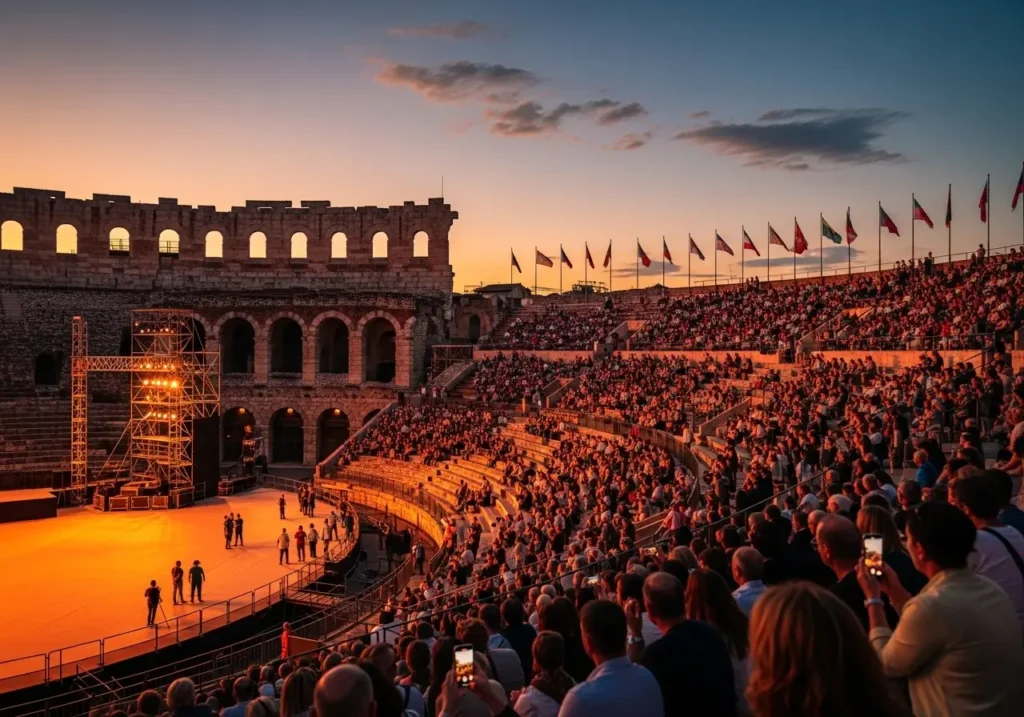
The Arena di Verona stands as one of the best-preserved Roman amphitheaters in the world, dating back to 30 AD. This magnificent pink limestone structure dominates Piazza Bra and originally held 30,000 spectators for gladiatorial contests. Today, it hosts internationally acclaimed opera performances during the summer festival, offering an unparalleled cultural experience under the stars. Even if you’re not attending a performance, visiting during the day allows you to walk through the ancient corridors and imagine the roaring crowds of ancient Rome. The Arena’s remarkable acoustics and intact architecture make it a living monument where history and culture seamlessly merge. Don’t miss climbing to the upper tiers for panoramic views across Verona’s terracotta rooftops.
Piazza delle Erbe
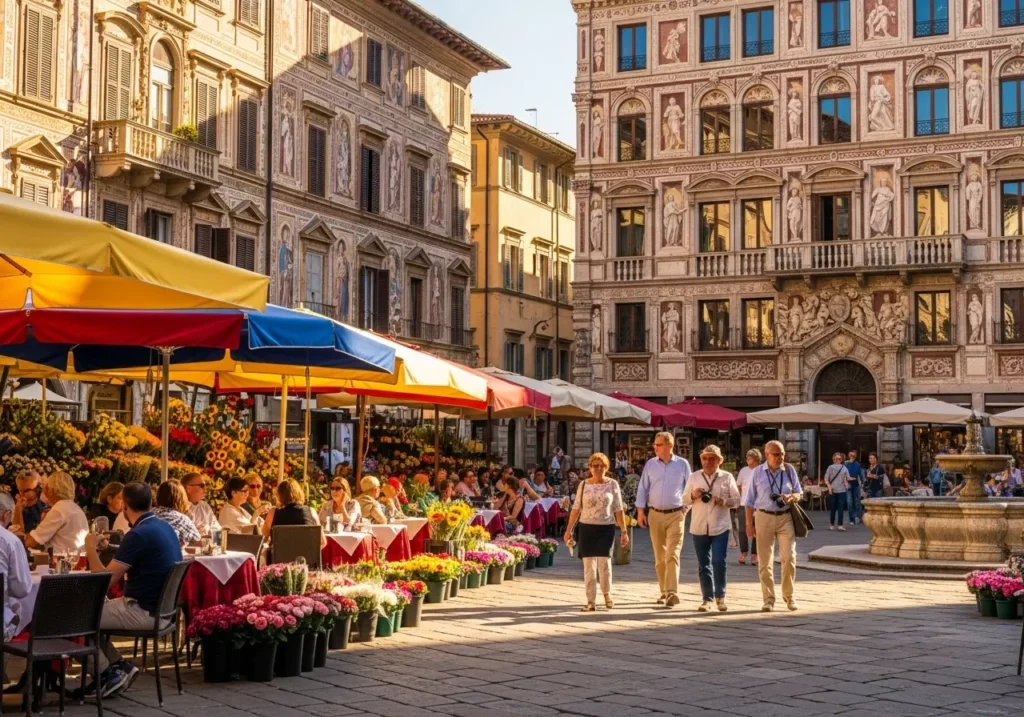
Piazza delle Erbe pulses with vibrant energy as Verona’s oldest square, built on the site of the ancient Roman forum. Colorful market stalls selling fresh produce, local delicacies, and souvenirs create a lively atmosphere beneath elegant Renaissance buildings and frescoed facades. The square features remarkable landmarks including the medieval Torre dei Lamberti, the Baroque Palazzo Maffei adorned with Greek god statues, and the Madonna Verona fountain with its Roman statue.
Surrounding cafes offer perfect vantage points for people-watching while sipping an Aperol spritz. Visit early morning to see locals shopping for groceries, or evening when the market transforms into a social gathering place. The square beautifully captures Verona’s essence as a living city where ancient history meets contemporary Italian life.
Juliet’s House (Casa di Giulietta)
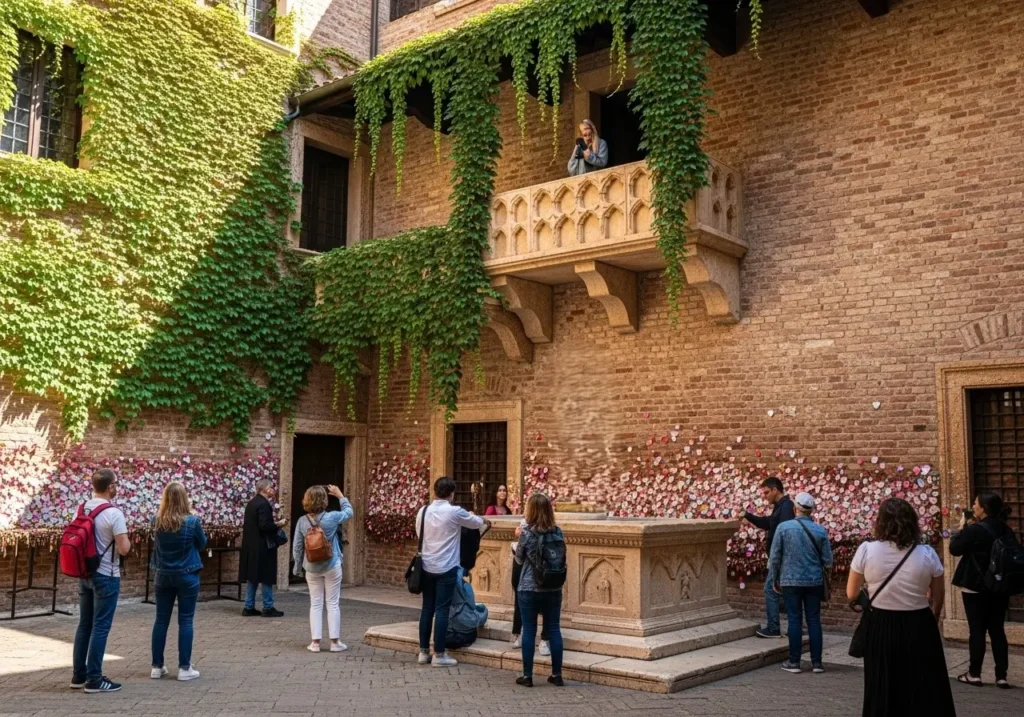
Casa di Giulietta draws visitors worldwide seeking the romantic legacy of Shakespeare’s tragic heroine. The 13th-century house features the famous balcony where Juliet supposedly stood during Romeo’s declarations of love, though the connection is largely fictional and the balcony was added in the 1930s. Despite its invented romance, the courtyard atmosphere remains magical, with walls covered in love notes and a bronze statue of Juliet whose right breast has been polished golden by countless hopeful touches. Inside, the museum displays period furniture, Renaissance costumes, and artwork depicting scenes from Shakespeare’s play. While often crowded, visiting early morning or late afternoon offers a more intimate experience. The site celebrates the universal power of love stories that transcend historical accuracy.
Castelvecchio & Ponte Scaligero
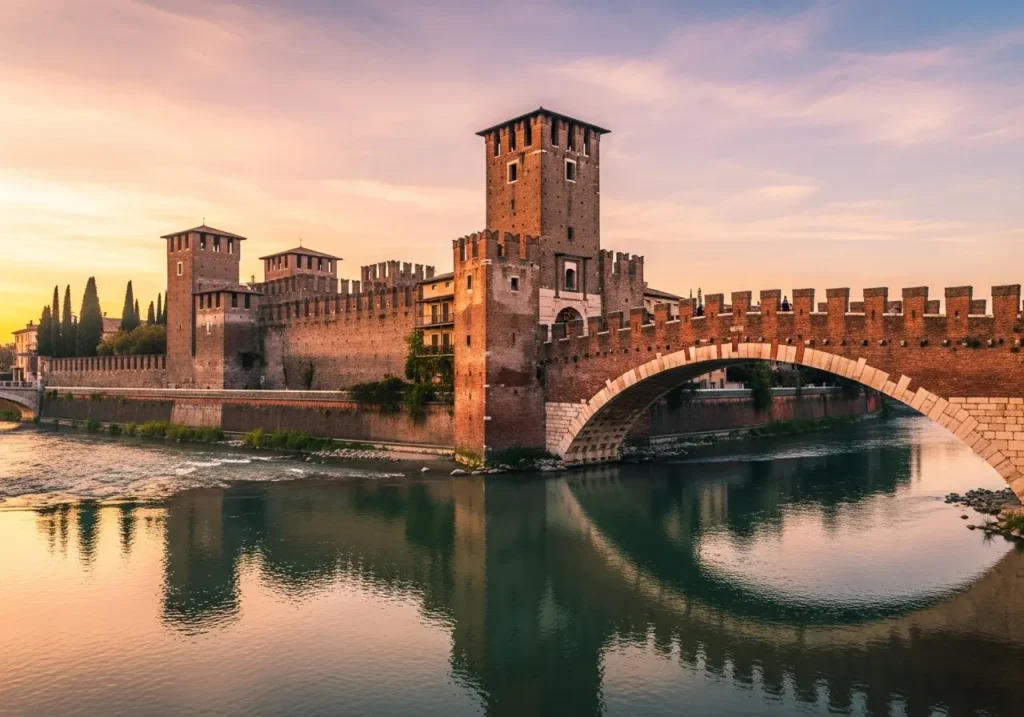
Castelvecchio represents medieval military architecture at its finest, constructed by the della Scala family in the 14th century as both fortress and residence. The imposing brick castle now houses Verona’s civic art museum, featuring an exceptional collection of medieval and Renaissance paintings, sculptures, and weapons. Carlo Scarpa’s brilliant 1950s renovation created a stunning dialogue between ancient architecture and modern design. The adjacent Ponte Scaligero, with its distinctive crenellated towers and three asymmetric arches, spans the Adige River and once served as the castle’s emergency escape route. Walking across the bridge offers magnificent river views and photo opportunities of the castle’s fortifications. Together, these structures showcase the military might and cultural sophistication of medieval Verona under the powerful Scaligeri dynasty.
Piazza dei Signori
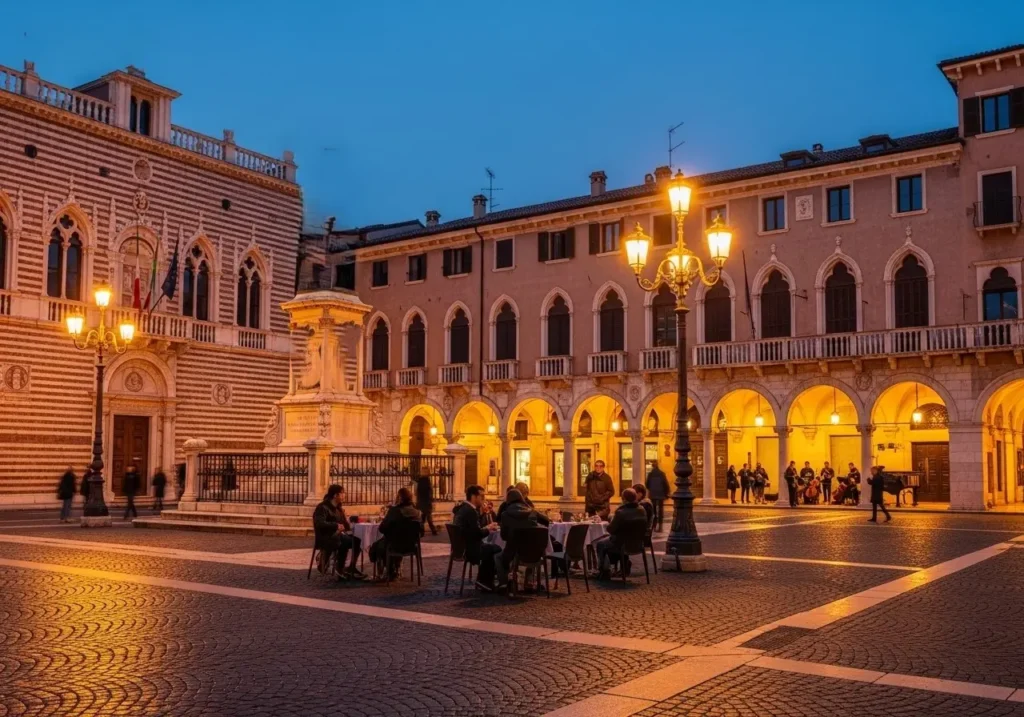
Piazza dei Signori exudes elegance and political significance as Verona’s historic center of power. Often called the “drawing room of Verona,” this refined square contrasts with the commercial bustle of nearby Piazza delle Erbe. The connected Renaissance and medieval buildings housed Verona’s government for centuries, including the Palazzo della Ragione with its impressive courtyard and the Palazzo del Comune. At the square’s center stands a commanding statue of Dante Alighieri, who found refuge in Verona during his exile from Florence.
The Loggia del Consiglio showcases beautiful frescoes and elegant arcades representing Renaissance architectural ideals. Evening brings a sophisticated ambiance as locals gather for pre-dinner drinks at stylish cafes. The square provides an architectural masterclass in civic design and political grandeur.
Torre dei Lamberti
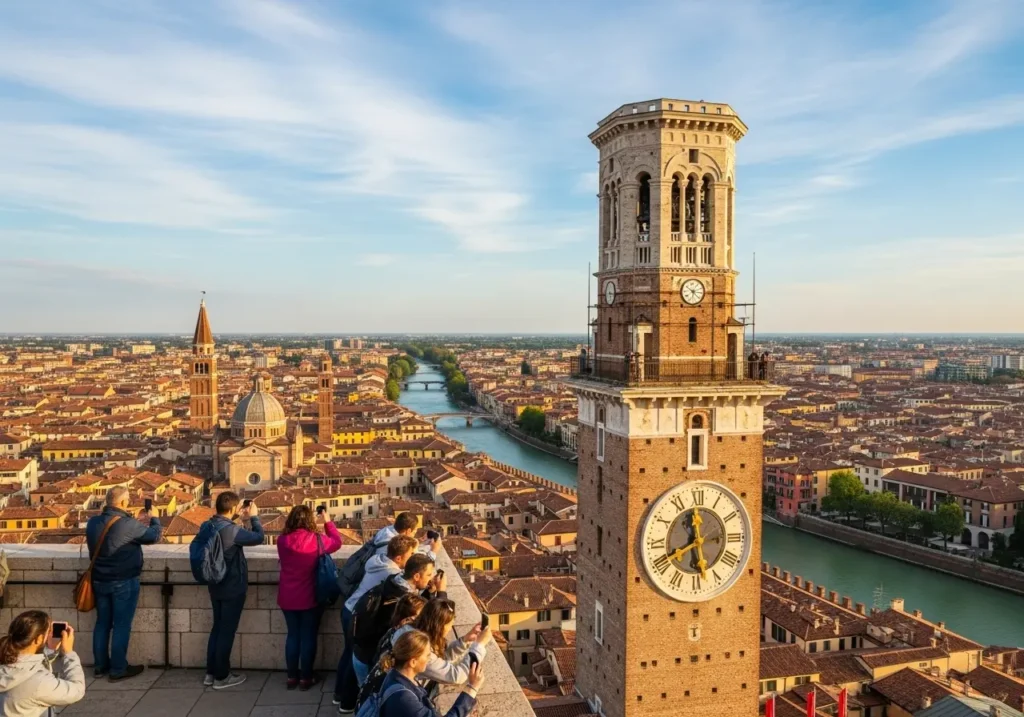
Torre dei Lamberti soars 84 meters above Piazza delle Erbe, offering the most spectacular panoramic views in Verona. Construction began in 1172, and the tower served various purposes including defense, timekeeping, and fire watching throughout medieval times. Two historic bells still hang in the tower: the Rengo, which once called citizens to arms or assembly, and the Marangona, which marked working hours. Visitors can choose between climbing 368 steps or taking the elevator partway before ascending the final stairs.
The breathtaking 360-degree views from the top encompass the Arena, both main piazzas, the Adige River’s curves, and distant Alpine foothills. Sunset visits create magical lighting conditions for photography. The climb rewards you with an unforgettable perspective on Verona’s layered urban landscape and geographic setting.
Basilica di San Zeno Maggiore
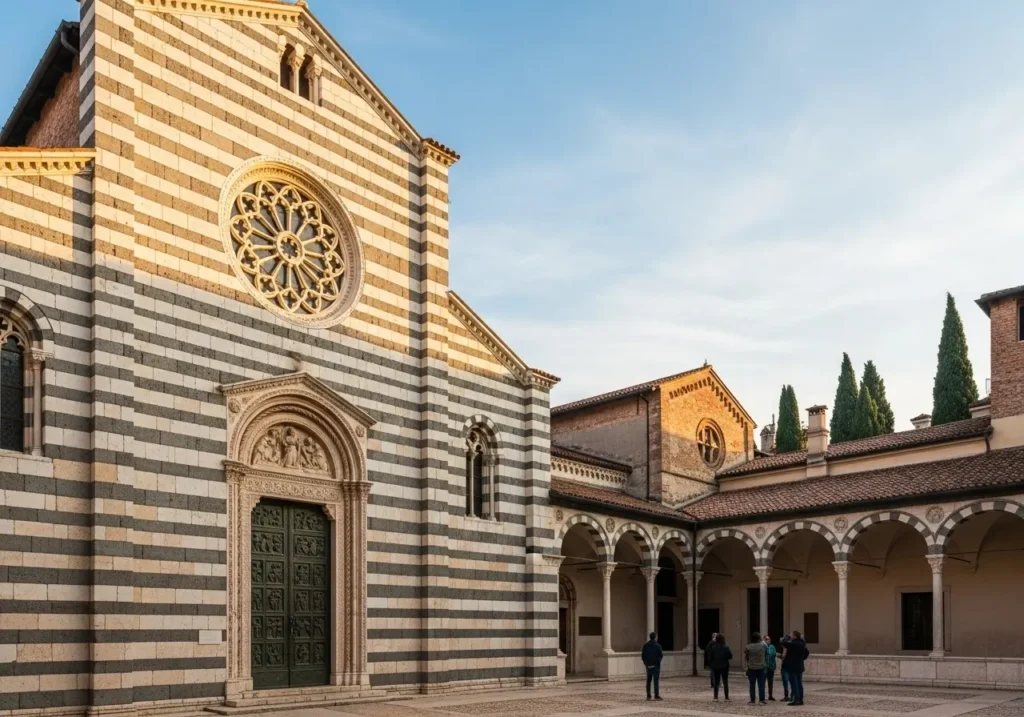
Basilica di San Zeno Maggiore ranks among Italy’s finest examples of Romanesque architecture, dedicated to Verona’s patron saint. The stunning facade features intricate marble and tufa stone patterns, magnificent bronze doors depicting biblical scenes, and a distinctive rose window nicknamed “the Wheel of Fortune.” Inside, the atmospheric crypt contains San Zeno’s remains, while Mantegna’s celebrated altarpiece “Madonna with Saints” demonstrates Renaissance mastery.
The peaceful cloister offers a contemplative retreat with elegant arcades and well-maintained gardens. The basilica’s architectural purity and artistic treasures create a profound spiritual and aesthetic experience. According to Shakespeare, this church served as the secret wedding location for Romeo and Juliet. Located slightly outside the historic center, this masterpiece receives fewer crowds than central attractions, allowing for quiet appreciation.
Giardino Giusti
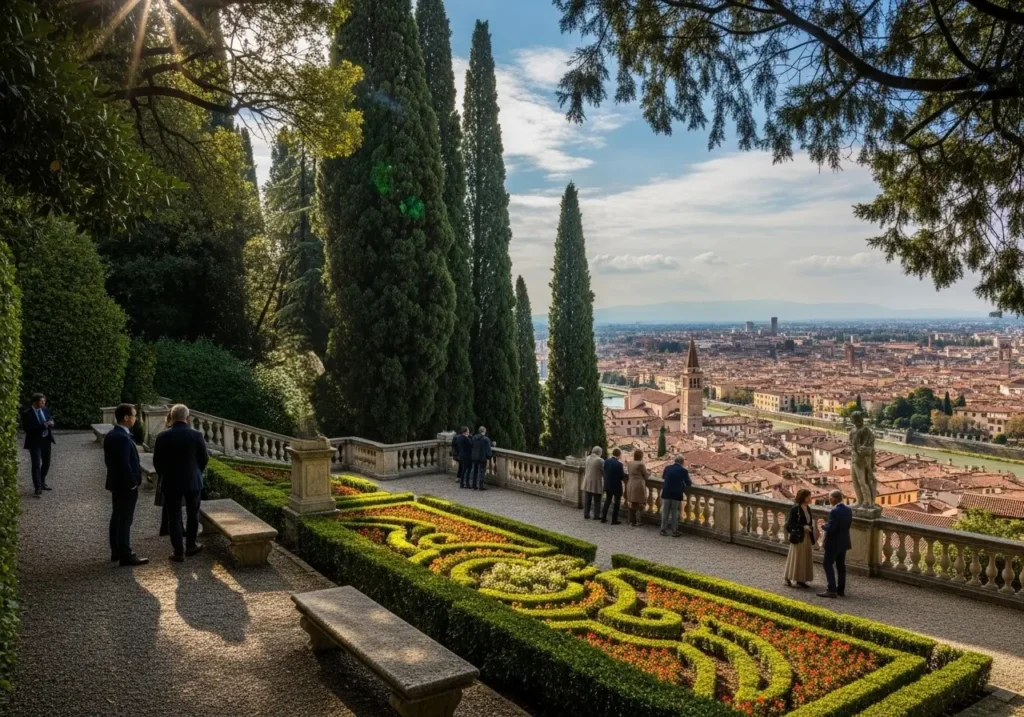
Giardino Giusti provides a serene escape into one of Italy’s most beautiful Renaissance gardens, created in the 16th century. The meticulously landscaped terraces feature geometric parterres, ancient cypress trees, romantic grottos, and mythological statues creating an enchanting atmosphere. Climbing the hillside paths rewards visitors with increasingly spectacular views over Verona’s rooftops and the meandering Adige River.
The garden’s design follows classical Italian principles with its clear symmetry, water features, and integration of natural topography. The mysterious “Mascherone” grotesque face carved into stone has fascinated visitors for centuries. Spring and summer bring fragrant blooms and lush greenery, while autumn offers golden colors. This hidden gem provides a peaceful counterpoint to Verona’s busier attractions and reveals the sophisticated lifestyle enjoyed by Renaissance nobility.

Verona Cathedral (Duomo di Verona)
Verona Cathedral combines Romanesque and Gothic architectural elements into a magnificent religious complex overlooking the Adige River. The ornately carved main portal by Maestro Niccolò showcases exceptional 12th-century craftsmanship with biblical figures and decorative details. Inside, Titian’s “Assumption of the Virgin” adorns the first chapel, while ancient columns and intricate marble work demonstrate centuries of artistic patronage. The adjacent cloister provides a tranquil space for reflection with Romanesque arches and archaeological fragments.
Don’t miss the beautiful octagonal baptistery with its remarkable marble font carved from a single block. The cathedral’s location in a quieter neighborhood offers an authentic glimpse of local religious life. The complex ticket also includes access to several other churches, providing excellent value. This sacred space embodies Verona’s deep religious traditions and artistic heritage.
Ponte Pietra
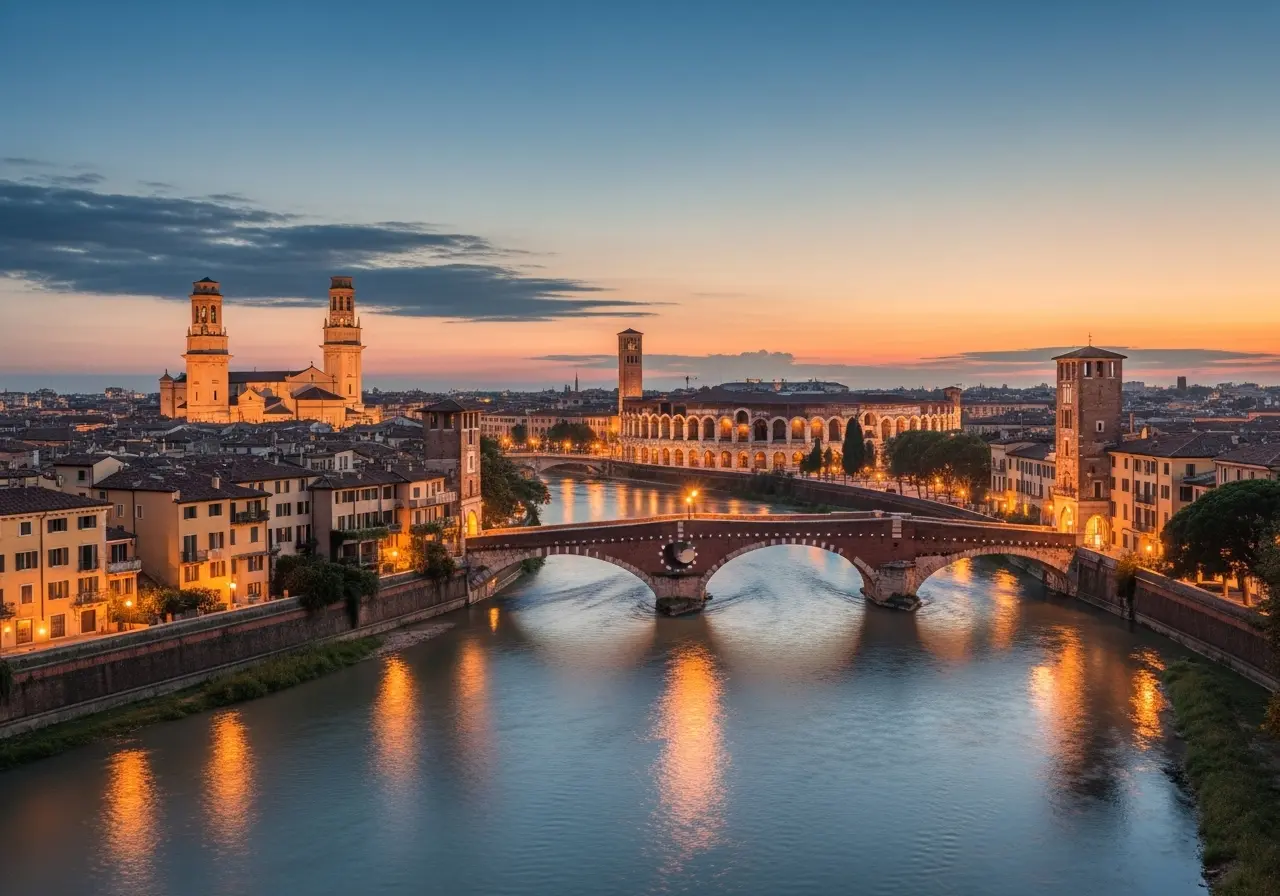
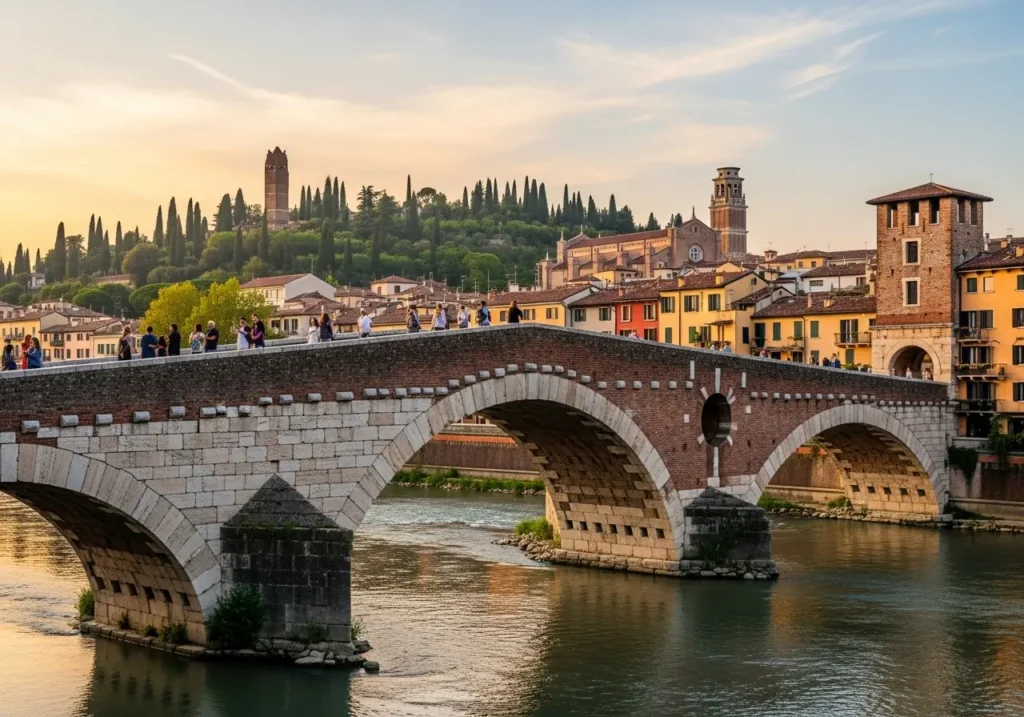
Ponte Pietra stands as Verona’s oldest bridge, with Roman origins dating to 100 BC, gracefully spanning the Adige River with five elegant arches. Though heavily damaged during World War II, the bridge was meticulously reconstructed using original materials recovered from the riverbed, preserving its ancient character. The left bank approach leads through the Roman Theater archaeological site, while the right bank offers access to Castel San Pietro’s hillside.
Walking across provides stunning views in both directions: upstream toward the Teatro Romano and downstream toward the city center. The bridge’s red brick and white stone construction creates a striking visual contrast, especially photogenic during golden hour. Local couples favor this romantic spot for evening strolls. Ponte Pietra beautifully symbolizes Verona’s resilience and commitment to preserving its monumental heritage across two millennia.
FAQs About Verona
How many days do you need in Verona? Two to three days allows comfortable exploration of Verona’s main attractions without rushing. A well-planned single day can cover the essential sites if you’re time-limited, while four days enables deeper cultural immersion, day trips to Lake Garda, and leisurely enjoyment of the local atmosphere.
Is Verona worth visiting besides Juliet’s House? Absolutely! While Juliet’s House attracts tourists, Verona offers extraordinary Roman ruins, world-class opera, exceptional art museums, beautiful Renaissance gardens, outstanding cuisine, and charming neighborhoods that create a rich and authentic Italian experience far beyond its Shakespearean connection.
When is the best time to visit Verona? Late spring (April-May) and early autumn (September-October) offer pleasant weather, fewer crowds, and reasonable prices. Summer brings the famous opera festival at the Arena but also peak tourist numbers and heat. Winter provides an authentic local experience with Christmas markets despite cooler temperatures.
Can you walk everywhere in Verona? Yes, Verona’s compact historic center is highly walkable, with most major attractions within 15-20 minutes of each other on foot. Comfortable walking shoes are essential for cobblestone streets. Public buses serve outlying areas like San Zeno, though walking or cycling remains the best way to discover the city.
What food is Verona famous for? Verona specializes in risotto all’Amarone made with local red wine, pastissada de caval (horse meat stew), bigoli pasta with various sauces, and pandoro, the city’s famous star-shaped Christmas cake. The surrounding Valpolicella region produces exceptional Amarone and Ripasso wines that perfectly complement Veronese cuisine.
Conclusion
Verona offers an intoxicating blend of ancient history, romantic legend, artistic treasures, and authentic Italian culture that creates an unforgettable travel experience. From walking through a 2,000-year-old Roman amphitheater to standing on Juliet’s famous balcony, from climbing medieval towers to strolling through Renaissance gardens, every attraction reveals another layer of this multifaceted city’s extraordinary story.
Call to Action
Ready to experience the romance and history of Verona for yourself? Start planning your visit today by booking your accommodations in the historic center for easy access to all these magnificent attractions. Subscribe to our newsletter for more insider travel guides, detailed itineraries, and exclusive tips for exploring Italy’s hidden gems beyond the typical tourist trail.
Social Proof
Join over 50,000 satisfied travelers who have used our comprehensive Italian city guides to create memorable experiences. Our Verona guide has helped thousands of visitors maximize their time, avoid tourist traps, and discover authentic local experiences. Reader testimonials consistently praise the practical insights, detailed recommendations, and time-saving suggestions that transform good trips into extraordinary adventures.