12 Stromboli Activities Perfect for Adventure Seekers
Introduction
Are you tired of overcrowded tourist destinations where “adventure” means standing in line for hours just to take the same photo as everyone else? Do you crave raw, authentic experiences that will leave you breathless—both from exertion and awe?
Welcome to Stromboli, the living volcano that transforms adventure seekers into storytellers. This isn’t just another island getaway; this is where you’ll witness nature’s most powerful spectacle while hiking volcanic trails, kayaking through crystalline waters, and camping under erupting skies. By the time you finish reading this guide, you’ll have a complete roadmap to experiencing one of the Mediterranean’s most thrilling destinations.
Table of Contents
12 Stromboli Activities Perfect for Adventure Seekers
1. Hike to the Summit of Stromboli Volcano for an Active Eruption View
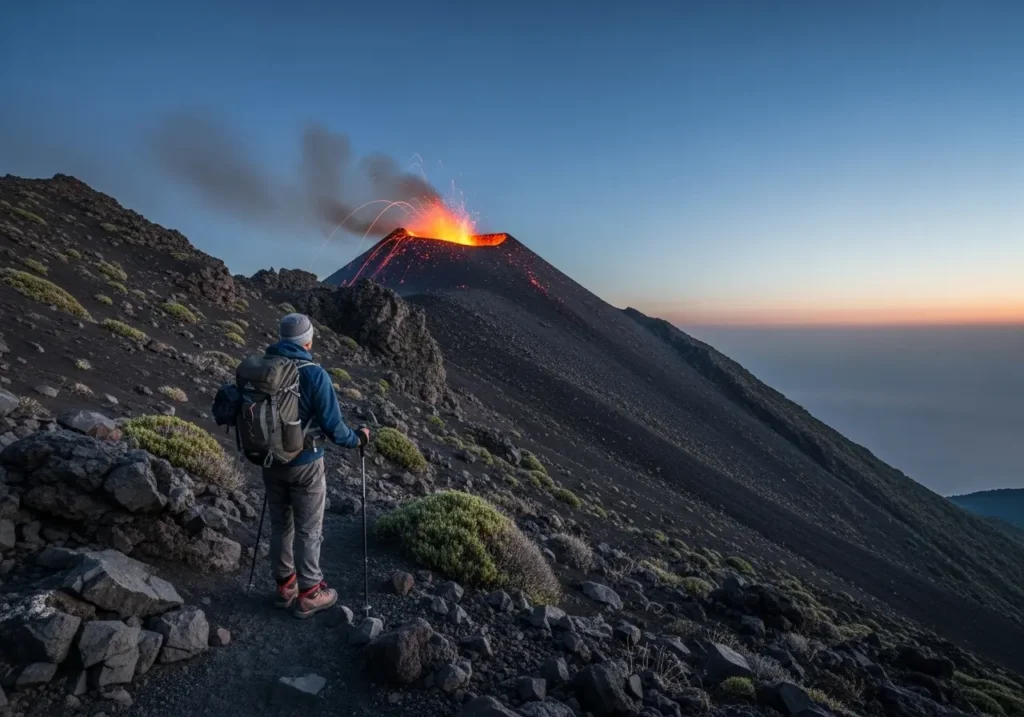
The crown jewel of Stromboli experiences, the summit hike takes you to approximately $924$ meters above sea level, where you’ll stand at the edge of an actively erupting crater. This isn’t a passive viewpoint—you’ll feel the ground tremble, hear the roar of explosions, and watch as incandescent lava bombs arc through the night sky.
What to Expect:
- Duration: 5-6 hours round trip
- Difficulty: Challenging; requires good fitness
- Best Time: Late afternoon start for sunset and night eruption viewing
- Must Know: Mandatory to hire a certified guide (required by local regulations since 2005)
The trek follows ancient mule paths through Mediterranean vegetation before transitioning to barren volcanic slopes. As darkness falls and you approach the summit, the spectacle intensifies. Guides typically position groups at safe observation points $200-300$ meters from the active vents, close enough for incredible views while maintaining safety protocols.
Pro Tips:
- Bring layers—temperatures drop significantly at the summit
- Pack a headlamp, but let your eyes adjust to darkness for better eruption visibility
- Book guides several days in advance during peak season (June-September)
- Consider trekking poles for the steep, loose terrain
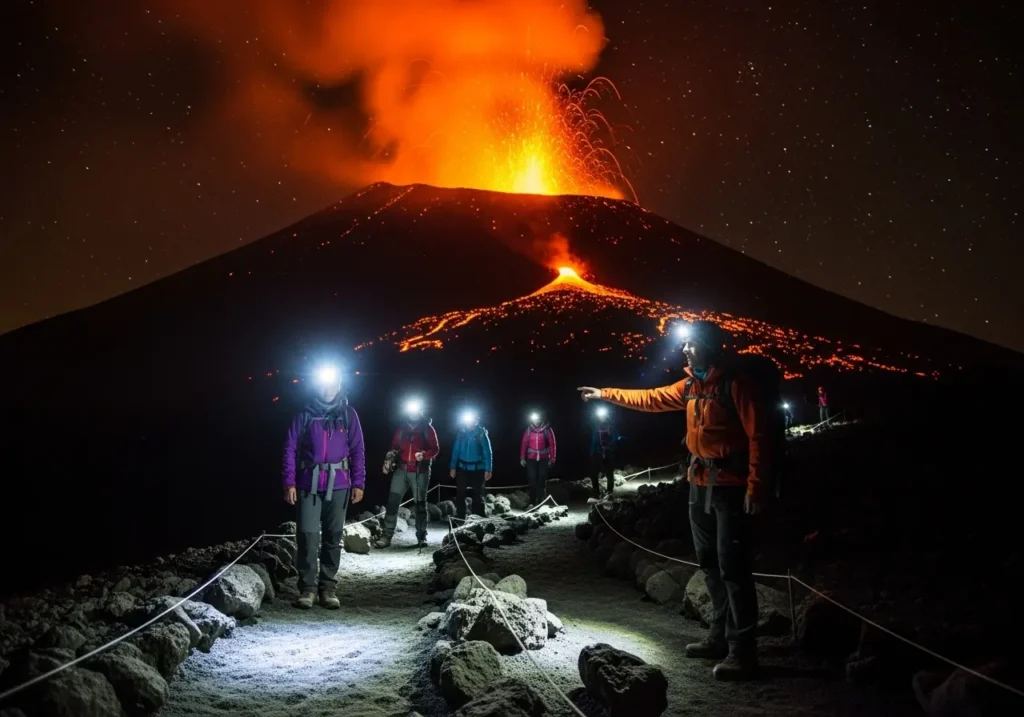
2. Take a Guided Night Tour to Witness Glowing Lava Safely
For travelers who want the volcanic experience without the strenuous summit climb, guided night tours to lower viewpoints offer spectacular eruption views with moderate effort. These tours typically ascend to approximately $400$ meters, reaching vantage points that provide safe, dramatic perspectives of the Sciara del Fuoco.
Why Choose This Option:
- Accessible for families with teenagers and older adults
- Still requires a guide but involves less technical terrain
- Perfect for combining with daytime water activities
- Shorter duration ($3-4$ hours) allows for flexible scheduling
From these elevated positions, you’ll watch lava flows cascade down the volcano’s flank, creating rivers of molten rock that glow against the volcanic darkness. The visual impact is extraordinary, especially when eruptions are particularly active.
Booking Advice:
- Tours depart around sunset (timing varies seasonally)
- Groups are typically limited to 15-20 people
- Cost ranges from €25-35 per person
- Wear closed-toe hiking shoes with good grip
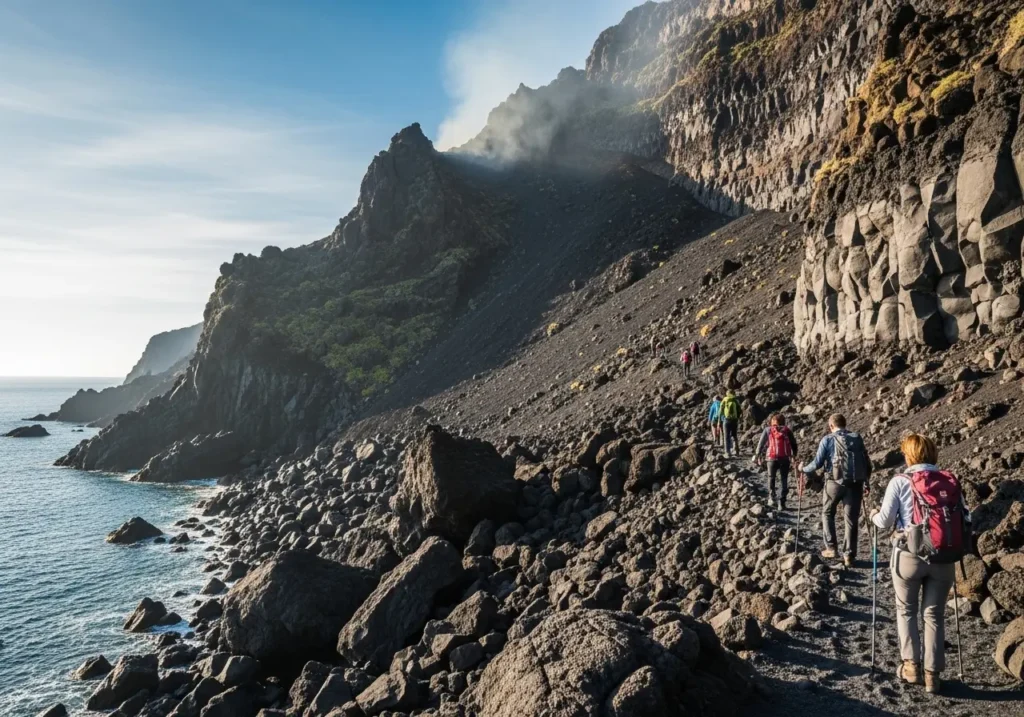
3. Explore Sciara del Fuoco, the Volcanic Debris Slope Along the Coast
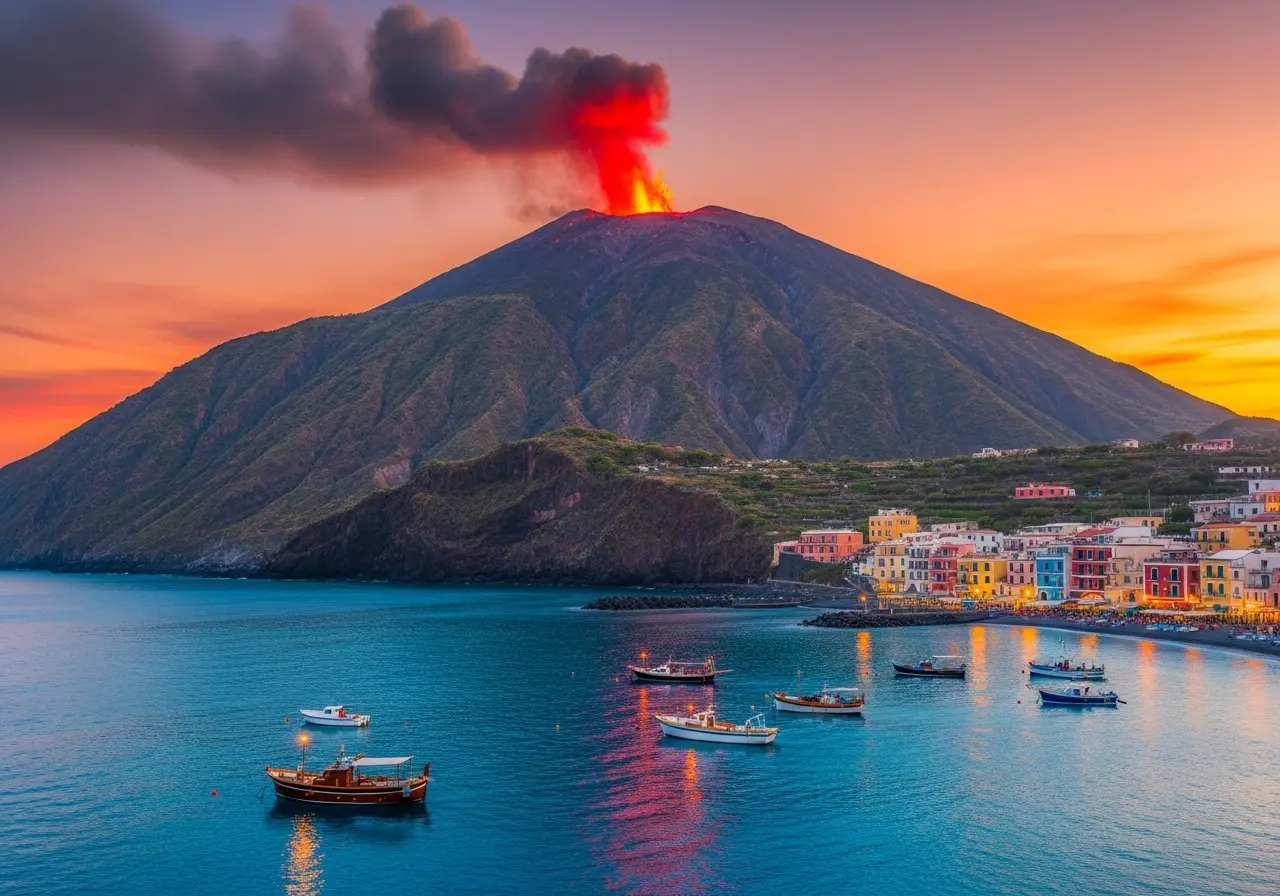
The Sciara del Fuoco (“Stream of Fire”) is a massive horseshoe-shaped depression on Stromboli’s northwest flank, where volcanic material tumbles from the crater straight into the sea. This natural chute has formed over millennia and provides the safest outlet for lava flows, creating one of the most visually stunning geological features in the Mediterranean.
Exploration Options:
By Boat: The most popular method involves evening boat tours that position you offshore as darkness falls. From this vantage point, you’ll see:
- Lava bombs rolling down the steep slope
- Material glowing red against the black volcanic rock
- Steam plumes where hot lava meets seawater
- The entire $2$ kilometer length of the Sciara
By Land (Lower Sections): You can hike to viewpoints overlooking the base of the Sciara without a guide, though you cannot access the active summit areas independently.
Photography Paradise: The Sciara del Fuoco offers some of the world’s best volcanic photography opportunities. Bring:
- Tripod for long exposures
- Wide-angle lens to capture the scale
- Extra batteries (cold depletes them quickly)
- Neutral density filters for sunset shots
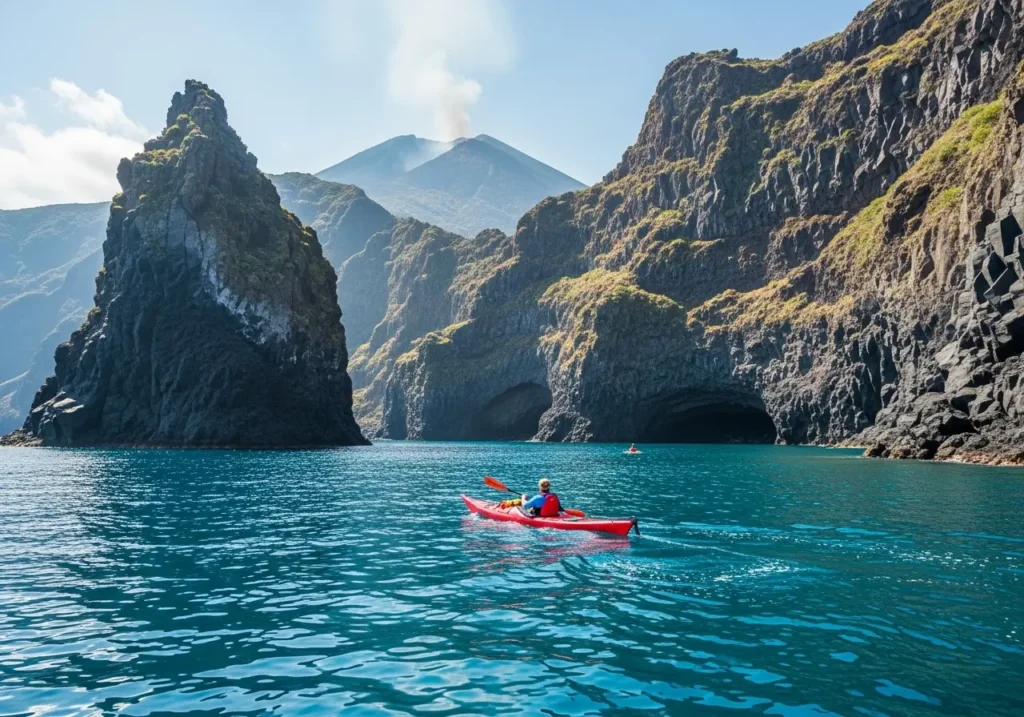
4. Go Sea Kayaking Around the Island for a Unique Perspective
Sea kayaking around Stromboli provides an intimate encounter with the island’s volcanic coastline, hidden coves, and dramatic sea stacks. Paddling these waters offers a completely different perspective than landlubber activities, with the volcano looming above as you navigate the crystal-clear Mediterranean.
Tour Highlights:
- Strombolicchio: Paddle out to this dramatic volcanic plug rising $49$ meters from the sea
- Hidden beaches: Access secluded black sand coves unreachable by land
- Sea caves: Explore grottos carved by wave action into volcanic rock
- Marine life: Spot flying fish, sea turtles, and dolphins
Recommended Tours:
Most guided kayak tours last 3-4 hours and include:
- All equipment (kayak, paddle, life vest, dry bag)
- Snorkeling stops at prime locations
- Expert guidance on volcanic geology and marine ecosystems
- Snacks and water
Skill Level: Beginner-friendly tours are available, though some paddling experience helps. Tours typically stay within $1.5$ kilometers of shore for safety.
Best Timing: Morning departures (8-9 AM) offer calmer seas and better visibility. The sun angle also provides excellent photo opportunities of the island’s eastern coast.
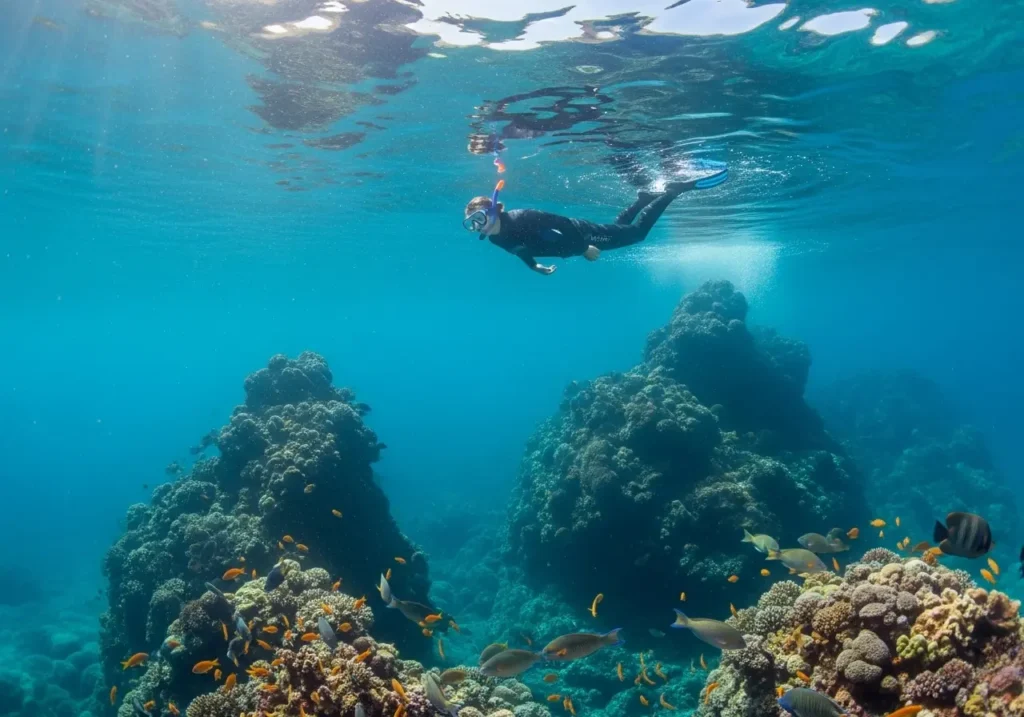
5. Snorkel or Dive in Crystal-Clear Waters to See Volcanic Underwater Formations
Stromboli’s underwater world is a submerged extension of its volcanic landscape, featuring lava pillars, steam vents (fumaroles), and vibrant marine ecosystems that thrive in these mineral-rich waters. The visibility often exceeds $30$ meters, making it a premier diving destination in the Aeolian archipelago.
Top Dive Sites:
Strombolicchio: This volcanic neck offers dramatic walls dropping to $40$ meters, encrusted with corals, sponges, and frequented by large groupers and barracuda.
Sciara del Fuoco (Base): Dive among recent lava flows that have cooled underwater, creating an otherworldly landscape of black volcanic formations. You might observe underwater fumaroles releasing gas bubbles.
Punta Labronzo: Features swim-throughs, overhangs, and excellent macro life including nudibranchs and octopi.
Snorkeling Spots:
- Ficogrande Beach: Shallow reefs perfect for beginners
- Piscità: Rocky coastline with good fish populations
- Scari: Mix of sand and rock with interesting volcanic formations
Technical Details:
- Water temperature: $22-27°C$ in summer, $14-16°C$ in winter
- Recommended certification: Open Water Diver minimum
- Best months: May-October
- Local dive centers offer equipment rental and guided dives

6. Try Paragliding for a Thrilling Aerial View of the Island
Tandem paragliding over Stromboli delivers an adrenaline rush unlike any other, combining the thrill of free flight with bird’s-eye views of an active volcano. Launching from elevated points on the island, you’ll soar above the volcanic landscape, circular coastline, and surrounding Tyrrhenian Sea.
The Experience:
- Flight duration: $15-25$ minutes
- Altitude: Up to $900$ meters
- Launch sites: Typically from elevated points on the volcano’s flanks
- Pilot expertise: Experienced tandem pilots handle all technical aspects
What You’ll See:
From above, Stromboli’s circular structure becomes apparent, along with:
- The active summit crater releasing steam
- Color contrasts between volcanic black, vegetation green, and ocean blue
- Neighboring Aeolian Islands on clear days
- The patterns of lava flows scarring the Sciara del Fuoco
Requirements & Safety:
- Weight limits: Typically $45-100$ kg
- Age requirements: Usually 12+ years with parental consent
- Weather dependent: Requires specific wind conditions
- Safety record: Excellent with professional operators
Booking Notes: This activity is offered seasonally (primarily April-October) and requires advance reservation. Costs range from €80-120 per flight.
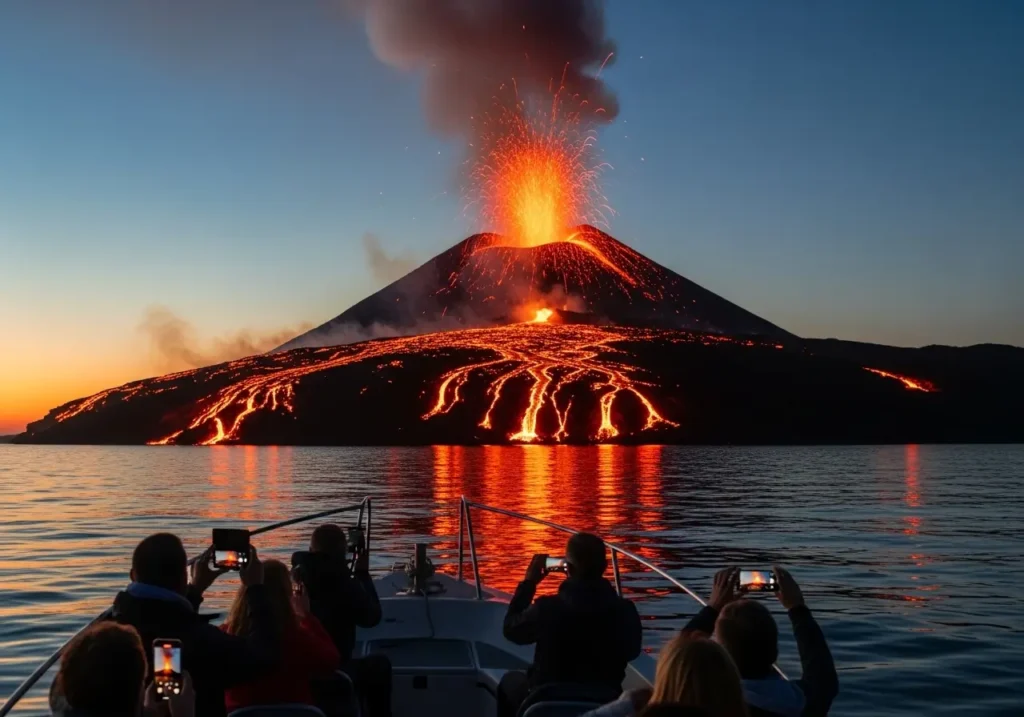
7. Take a Boat Tour to Observe Lava Flows from the Sea
Evening boat excursions to view Stromboli’s eruptions from the water are among the most popular activities on the island. These tours offer a safe, comfortable way to witness volcanic activity while learning about geology from experienced captains who’ve spent lifetimes studying the volcano.
Typical Tour Structure:
- Departure: Late afternoon from Stromboli port or nearby islands
- Circumnavigation: Complete circuit of the island with geological commentary
- Positioning: Anchor offshore from Sciara del Fuoco as darkness falls
- Duration: Approximately $2-3$ hours total
- Return: After witnessing multiple eruptions
What Makes This Special:
- No hiking required: Suitable for all ages and fitness levels
- Stable viewing platform: Modern boats provide comfortable seating
- Multiple eruptions: Witness 8-12 explosions during typical tours
- Perspective: The scale of the island becomes apparent from sea level
- Group atmosphere: Shared excitement enhances the experience
Tour Variations:
- Sunset cruises: Include aperitivo and Aeolian snacks
- Photography-focused tours: Minimize lighting for better shooting conditions
- Multi-island tours: Combine Stromboli with Panarea or other Aeolian Islands
Practical Considerations:
- Book ahead during summer months
- Bring seasickness medication if prone to motion sickness
- Dress warmly—sea breezes are cool even in summer
- Costs: €25-50 per person depending on boat type and inclusions
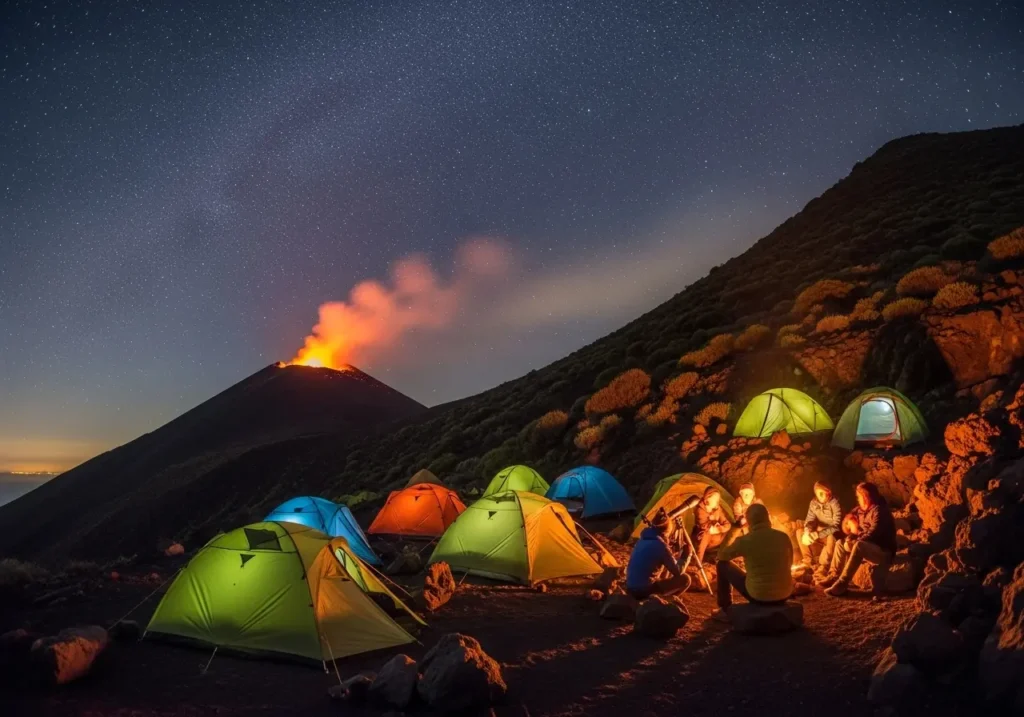
8. Camp on the Volcano’s Slopes Under the Stars
For the ultimate immersive experience, camping on Stromboli’s volcanic slopes connects you with the island’s raw power in a profoundly personal way. Imagine falling asleep to the rumble of eruptions and waking to sunrise over the Aeolian archipelago, surrounded by volcanic terrain.
Where to Camp:
- Designated areas: Camping is restricted to specific zones to protect both visitors and the environment
- Altitude: Most camping sites are located at $300-500$ meters elevation
- Facilities: Basic; bring all supplies from the villages
The Experience:
At night, camped on the volcano, you’ll experience:
- Sound: The deep rumble of eruptions echoing across the slopes
- Visuals: If positioned correctly, glimpses of lava arcs against the stars
- Stargazing: Minimal light pollution creates spectacular celestial views
- Isolation: Profound sense of connection with nature’s power
Essential Equipment:
- Lightweight tent designed for wind resistance
- Warm sleeping bag (temperatures can drop to $10-15°C$ at night, even in summer)
- Insulated sleeping pad (ground is cold and hard)
- Headlamp with extra batteries
- Sufficient food and water (minimum $3$ liters per person)
- First aid kit
Regulations & Safety:
- Check current camping regulations (they can change based on volcanic activity)
- Some areas require permits
- Never camp above $400$ meters without authorized guides
- Be prepared to evacuate quickly if activity increases
- Inform accommodation hosts or local authorities of plans
Best For: Experienced campers comfortable with primitive conditions and willing to carry gear uphill.

9. Trek Through Rugged Lava Trails for an Off-the-Beaten-Path Adventure
Beyond the main summit route, Stromboli offers numerous hiking trails that explore different facets of the volcanic landscape. These paths traverse ancient lava flows, pass through vegetation zones, and offer solitude that the popular summit trail can’t match.
Notable Trails:
Semaforo Loop Trail:
- Distance: Approximately $5$ kilometers round trip
- Difficulty: Moderate
- Highlights: Coastal views, lighthouse ruins, wildflowers in spring
- No guide required
Punta Labronzo Coastal Path:
- Distance: $3$ kilometers one-way
- Terrain: Follows the eastern coastline
- Features: Black sand beaches, volcanic rock formations, crystal-clear coves
- Swimming opportunities along the route
Vallonazzo Trail:
- Elevation gain: Approximately $200$ meters
- Character: Through Mediterranean scrubland to volcanic slopes
- Views: Excellent perspectives of the Sciara del Fuoco
- Best timing: Early morning or late afternoon
What You’ll Discover:
- Botanical diversity: Endemic plants adapted to volcanic soil
- Geological variety: Different ages and types of lava flows
- Solitude: Even in peak season, these trails see minimal traffic
- Wildlife: Lizards, birds, and occasionally rabbits
Trail Etiquette:
- Stay on marked paths to prevent erosion
- Carry out all trash
- Bring adequate water ($1.5$ liters minimum per person)
- Wear proper hiking footwear
- Check volcanic alert levels before departing
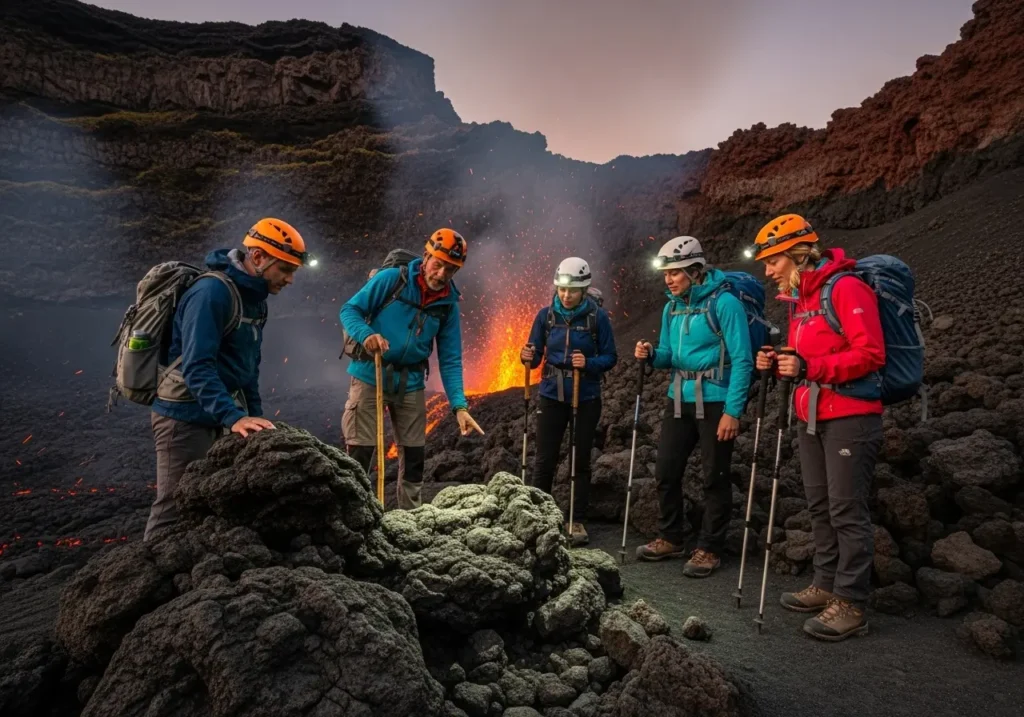
10. Join a Geology-Focused Tour to Learn About Stromboli’s Eruptions
For intellectually curious travelers, specialized geological tours transform Stromboli from a spectacular sight into a comprehensible natural system. Led by volcanologists or trained geologists, these experiences decode the island’s eruptive behavior, formation history, and place within the broader Mediterranean volcanic arc.
What You’ll Learn:
Eruptive Mechanisms:
- Why Stromboli erupts so regularly (every $15-20$ minutes on average)
- The role of gas pressure in “Strombolian” eruptions
- How magma composition affects eruption style
- Monitoring techniques used by the INGV (National Institute of Geophysics and Volcanology)
Geological History:
- Island formation over $200,000+$ years
- Major flank collapses that created the Sciara del Fuoco
- How the current crater system evolved
- Relationship to the African-Eurasian tectonic boundary
Volcanic Products:
- Identifying different types of volcanic rocks
- Understanding bombs, lapilli, and ash
- How sulfur deposits form
- The evolution of lava flows
Tour Formats:
- Walking seminars: Combine hiking with educational stops
- Workshop style: Hands-on examination of volcanic samples
- Observatory visits: If accessible, tours may include monitoring stations
- Duration: Typically $4-6$ hours
Ideal For:
- Students and educators
- Geology enthusiasts
- Photographers wanting to understand what they’re capturing
- Anyone seeking deeper context for what they’re witnessing
Finding Tours: Book through volcanology organizations or specialized adventure travel companies. Tours may require minimum group sizes and are typically offered during peak season.
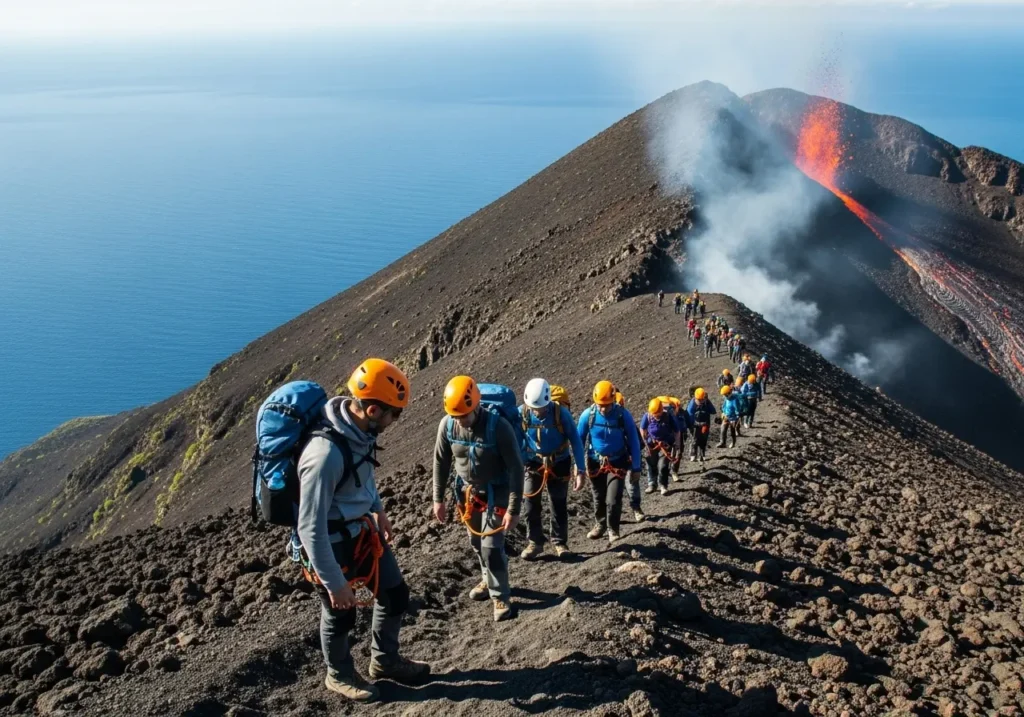
11. Climb to the Crater Rim During Daytime with an Experienced Guide
While night ascents steal the spotlight, daytime summit climbs offer their own compelling advantages. The ability to clearly see the terrain, observe the crater system in detail, and experience the volcano without darkness creates a different but equally valuable experience.
Advantages of Daytime Climbing:
Visual Clarity:
- Detailed observation of crater morphology
- Clear views of the active vents and their positions
- Ability to identify different volcanic deposits
- Safer footing on challenging terrain
Broader Perspectives:
- Panoramic views of the entire Aeolian archipelago
- Visibility of Sicily on clear days (including Mount Etna)
- Understanding of vegetations zones from sea level to barren summit
- Better photography of landscape composition
Educational Opportunities:
- Guides can point out geological features more effectively
- Easier to understand eruptive mechanics when seeing the system
- Observation of gas emissions and fumarole activity
- Context for how eruptions interact with terrain
Climate Considerations:
- Daytime temperatures can exceed $30°C$ in summer
- Sun exposure is intense; proper protection essential
- Afternoon wind patterns can be challenging
- Less dramatic visual impact than night eruptions
Optimal Timing:
- Early morning starts (6-7 AM) to avoid peak heat
- Autumn/spring offer cooler temperatures
- Clear weather provides best visibility for distant views
What to Bring:
- Minimum $3$ liters of water per person
- High SPF sunscreen and lip protection
- Wide-brimmed hat or cap
- Sunglasses with good UV protection
- Light, moisture-wicking layers
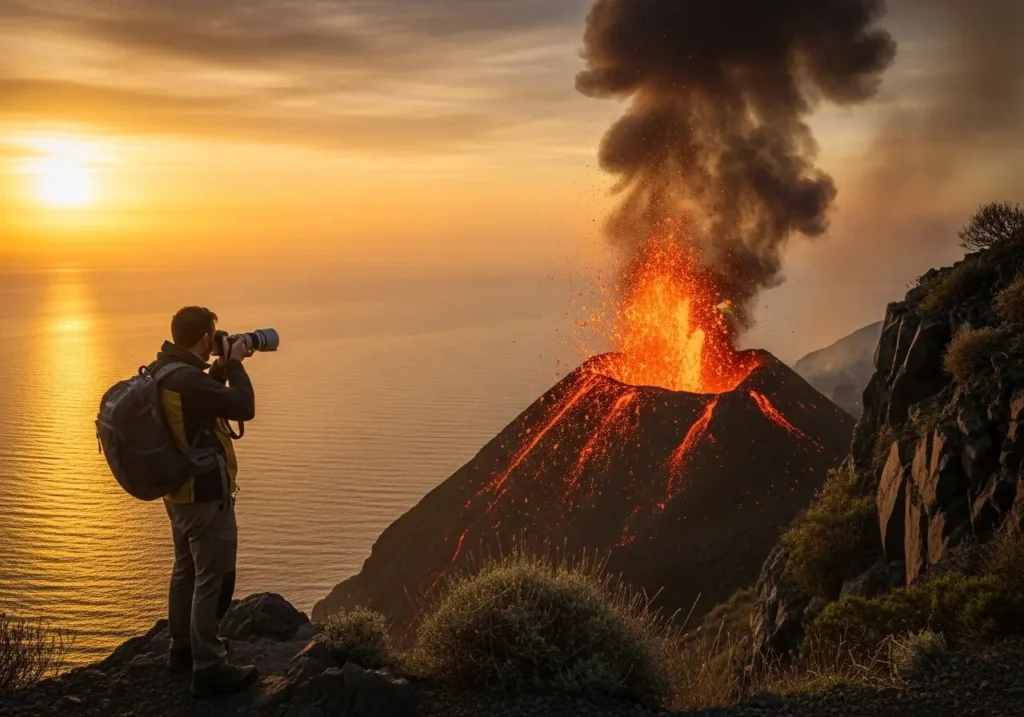
12. Capture Epic Sunset and Eruption Photography from Safe Vantage Points
Stromboli is a photographer’s paradise, offering compositions that range from intimate village scenes to dramatic volcanic explosions. Whether you’re a serious photographer with professional gear or an enthusiastic smartphone shooter, these vantage points and techniques will help you capture memorable images.
Prime Photography Locations:
Summit (With Guide):
- Long exposures capturing lava arcs against stars
- Required equipment: Sturdy tripod, wide-angle lens, remote shutter
- Settings: ISO $1600-3200$, aperture $f/2.8-5.6$, exposures $15-30$ seconds
Observation Point ($400m$ elevation):
- Mid-range shots of eruptions against the crater rim
- Advantage: Less strenuous approach, still dramatic views
- Best timing: Blue hour (30 minutes after sunset)
Sciara del Fuoco Viewpoint:
- Land-based perspective of lava flows
- Accessible without guide to lower viewpoints
- Golden hour provides excellent color temperature
From the Sea:
- Evening boat tours offer stable platforms
- Wide compositions showing island scale
- Use faster shutter speeds for boat movement
Village Scenes:
- Whitewashed architecture with volcano backdrop
- Dawn light on Stromboli town
- Lifestyle photography of island culture
Technical Tips:
For Eruption Photography:
- Use Bulb mode or long exposures ($10-30$ seconds)
- Lower ISO to reduce noise (when using long exposures)
- Bracket exposures—volcanic light is unpredictable
- Bring extra batteries (cold drains them quickly)
- Use a cable release or 2-second timer to prevent shake
Composition Strategies:
- Include foreground elements (rocks, vegetation) for depth
- Position the horizon strategically (rule of thirds)
- Capture human scale by including tiny hikers in frame
- Experiment with different angles of the same eruption
Smartphone Photography:
- Use night mode on recent smartphones
- Props your phone against a stable surface for long exposures
- Download apps that allow manual control (ISO, shutter speed)
- Bring a portable charger—long exposures drain batteries
Ethical Considerations:
- Never compromise safety for a shot
- Follow guide instructions strictly
- Don’t use bright lights that disturb other viewers
- Respect designated off-limits areas
Best Months for Photography:
- June-September: Warm, clear nights but busier
- April-May & October: Excellent weather with fewer crowds
- November-March: Dramatic storms but unpredictable conditions
FAQs About Stromboli
Q: Is it safe to visit Stromboli?
A: Yes, when following established safety protocols. Stromboli has been continuously active for millennia, and local authorities have developed comprehensive safety systems. The volcano is constantly monitored by INGV (National Institute of Geophysics and Volcanology), and alert levels are adjusted based on activity. Guided tours are mandatory for summit attempts, and these guides are trained in volcanic emergency procedures. That said, it is an active volcano—there is inherent risk, and visitors must respect regulations and guide instructions.
Q: How much does it cost to climb Stromboli?
A: Guided summit climbs typically cost €25-35 per person for the ascent to approximately $400$ meters, and €50-80 for full summit climbs to $924$ meters. These fees include the certified guide, safety equipment, and often insurance. Lower viewpoint night tours range from €25-35. Boat tours to observe eruptions from sea cost €25-50. Budget an additional €10-15 for equipment rental if needed (headlamps, trekking poles).
Q: What is the best time of year to visit Stromboli?
A: May through October offers the best conditions for volcanic tourism. July and August are peak months with guaranteed warm weather but also maximum crowds and highest prices. May, June, and September provide an ideal balance of good weather, smaller crowds, and comfortable temperatures. April and October are possible but weather is less predictable. November through March sees reduced services, rougher seas affecting ferry schedules, and colder summit conditions, though dramatic winter photography opportunities exist.
Conclusion
Stromboli isn’t just a destination—it’s a transformative experience that redefines what adventure travel means. From the moment you step onto the volcanic black sand beaches, you enter a world where Earth’s raw power becomes palpable, where nature operates on its own spectacular timeline, and where modern life’s noise fades into insignificance beneath a sky lit by erupting lava.
The 12 activities outlined in this guide create a comprehensive framework for experiencing everything this remarkable island offers. Whether you’re challenging yourself with the summit climb, exploring underwater volcanic formations, or simply watching eruptions from the comfort of a boat, each experience builds a deeper connection with one of our planet’s most accessible yet awe-inspiring natural phenomena.