12 Best Bologna Attractions You Can’t Miss
Introduction
Are you tired of overcrowded tourist traps that feel more like theme parks than authentic Italian experiences? Bologna offers something refreshingly different. This medieval city combines stunning architecture, world-class cuisine, and vibrant culture without the overwhelming crowds of Rome or Venice.
As someone who has explored Italy extensively and guided countless travelers through Bologna’s charming porticoed streets, I can confidently say this city deserves a spot on every Italy itinerary. Whether you’re a history buff, food lover, or art enthusiast, Bologna delivers unforgettable experiences around every corner.
In this guide, I’ll walk you through the 12 best Bologna attractions that showcase why locals call it “La Dotta, La Grassa, La Rossa” (The Learned, The Fat, The Red). You’ll discover must-see landmarks, hidden gems, and practical tips to make the most of your visit to this captivating city.
Table of Contents
Why You Should Visit Bologna
Bologna captivates visitors with its authentic Italian atmosphere that hasn’t been diluted by mass tourism. The city’s culture runs deep—home to the world’s oldest university founded in 1088, Bologna has been a center of learning and intellectual exchange for nearly a millennium. Students from around the globe fill the streets with youthful energy, creating a dynamic blend of ancient tradition and contemporary vitality.
Convenience is another hallmark of Bologna. The compact historic center is easily walkable, with nearly 40 kilometers of covered porticoes providing shelter from sun and rain. These UNESCO-protected arcades connect all major attractions, making sightseeing comfortable year-round. The city also serves as a perfect base for day trips to Florence, Venice, Modena, and Parma.
Variety defines the Bologna experience. Beyond architectural marvels, you’ll find world-renowned cuisine (tortellini and ragù originated here), thriving contemporary art scenes, bustling markets, and hidden canals that remind you of the city’s medieval merchant past. Bologna offers depth and diversity that keeps revealing new layers the longer you stay.
12 Best Bologna Attractions You Can’t Miss
Piazza Maggiore
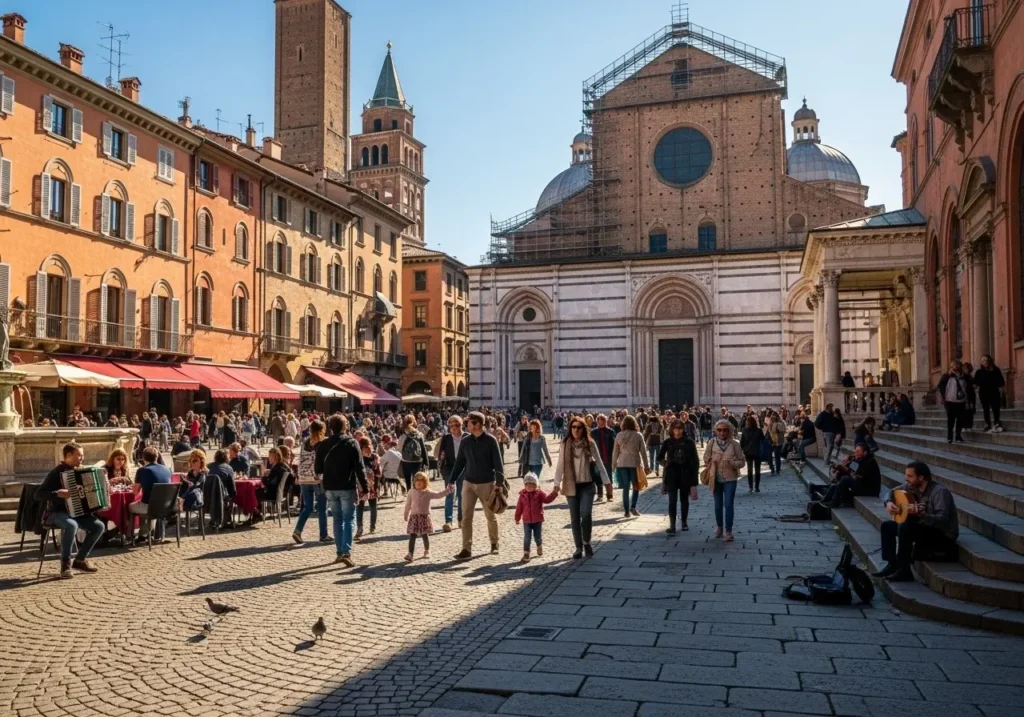
Piazza Maggiore serves as Bologna’s beating heart and the perfect starting point for any visit. This expansive medieval square, dating back to the 13th century, is surrounded by some of the city’s most important buildings, including the Basilica di San Petronio and Palazzo d’Accursio. The square’s irregular shape reflects centuries of organic development, giving it character that perfectly planned plazas lack. Locals gather here throughout the day—students meeting for coffee, families strolling in the evening, and visitors simply absorbing the atmosphere. The adjacent Piazza del Nettuno features the famous Neptune Fountain, a magnificent bronze sculpture by Giambologna that has become one of Bologna’s most photographed landmarks.
Two Towers (Le Due Torri)
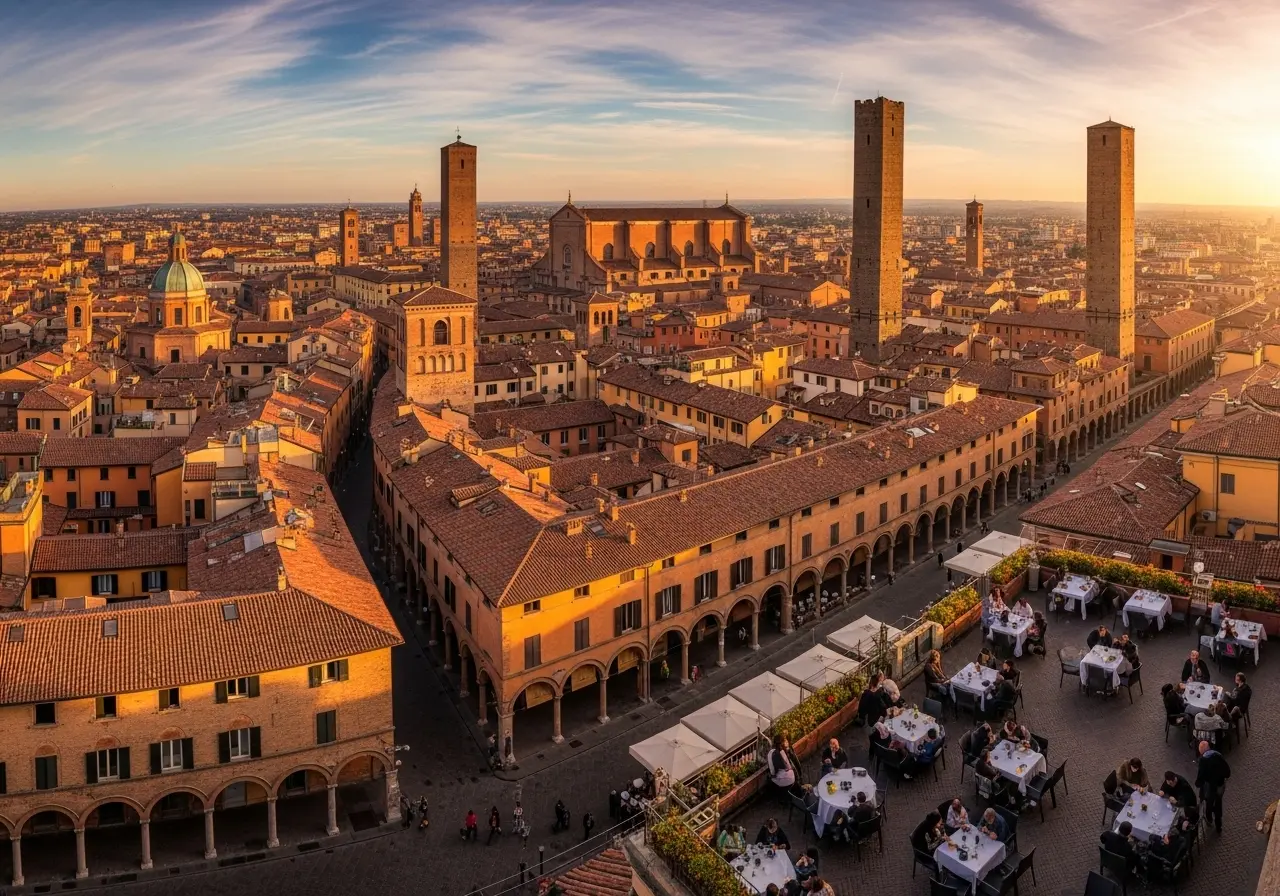
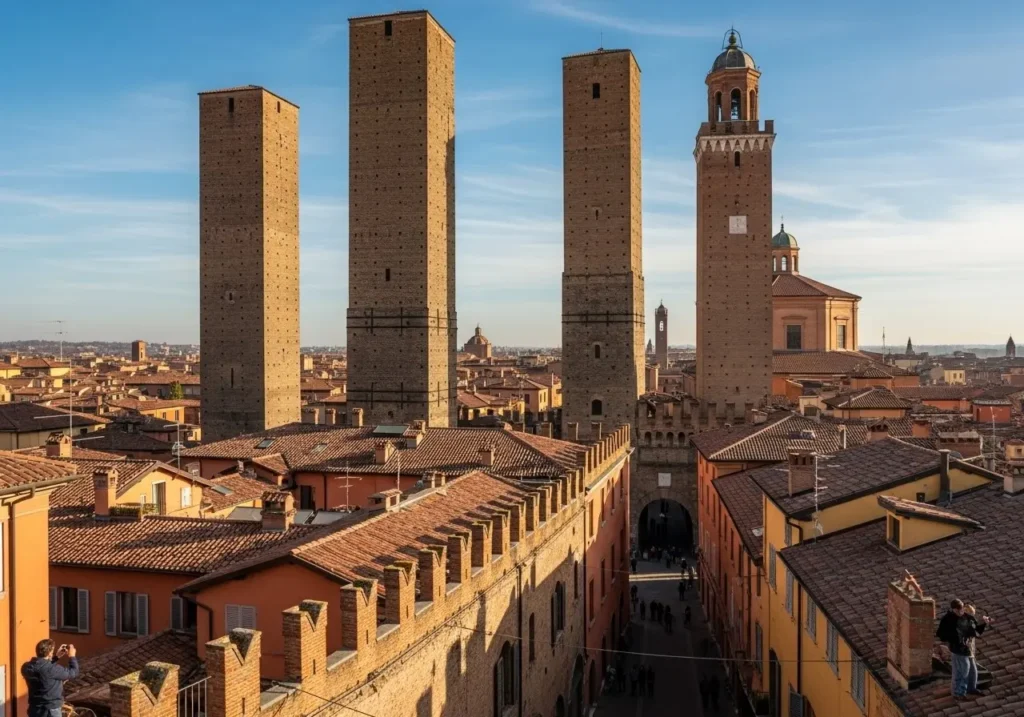
The Two Towers, Asinelli and Garisenda, are Bologna’s most iconic symbols and surviving examples of the hundreds of medieval towers that once dotted the skyline. Built in the 12th century by noble families competing for status, these leaning towers demonstrate both medieval engineering ambition and imperfection. Torre degli Asinelli stands 97 meters tall with a slight lean, and climbing its 498 wooden steps rewards you with breathtaking panoramic views across Bologna’s terracotta rooftops to the Apennine Mountains beyond. The neighboring Garisenda Tower, though shorter at 48 meters, leans even more dramatically than Pisa’s famous tower. These towers have inspired artists and writers for centuries, including Dante who mentioned them in his Divine Comedy.
Basilica di San Petronio
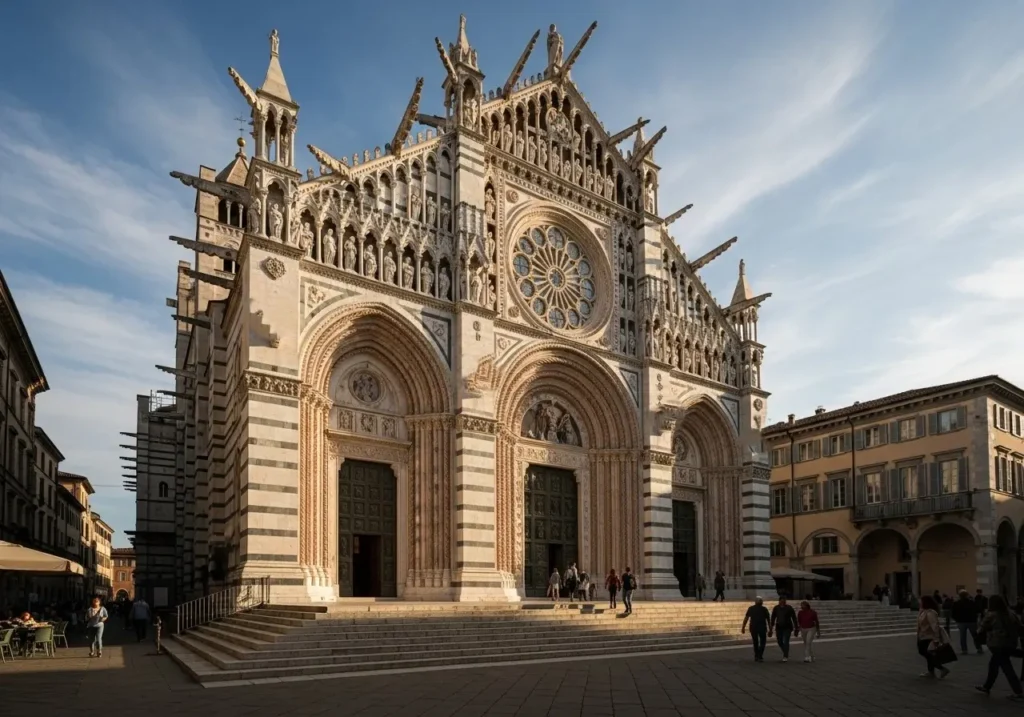
The Basilica di San Petronio dominates Piazza Maggiore with its imposing unfinished façade—a fascinating story of ambition that exceeded resources. Construction began in 1390 with plans to create a church larger than St. Peter’s in Rome, but the project was never completed, leaving the upper portion covered in plain brick. Despite its incomplete state, the basilica’s interior is magnificent, featuring Gothic vaulted ceilings soaring 45 meters high and stunning chapels decorated by Renaissance masters. The church houses the world’s longest sundial, a meridian line stretching 67 meters across the floor, used for astronomical calculations. Art lovers shouldn’t miss the beautiful frescoes and the museum containing original architectural plans showing what this ambitious cathedral was meant to become.
Archiginnasio of Bologna
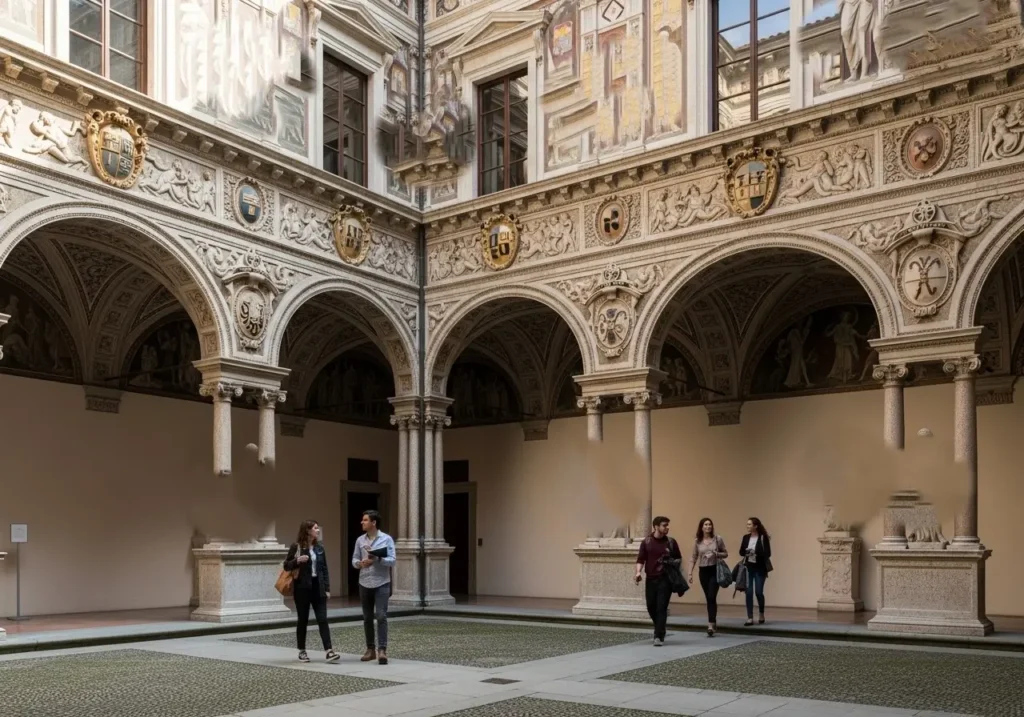
The Archiginnasio served as the main building of the University of Bologna from 1563 to 1803 and remains one of Europe’s most fascinating academic landmarks. Its walls are covered with over 6,000 student coats of arms and heraldic emblems, creating a colorful visual history of centuries of scholars who studied here. The building’s courtyard arcades feature memorial plaques honoring distinguished professors and alumni.
The highlight is the magnificent Teatro Anatomico, an exquisitely carved wooden amphitheater where anatomy lessons were conducted. Despite suffering severe damage during World War II bombing, careful restoration has preserved this treasure. Today the Archiginnasio houses Bologna’s civic library with over 800,000 volumes, making it both a monument to historical learning and a living center of knowledge.
Sanctuary of the Madonna di San Luca
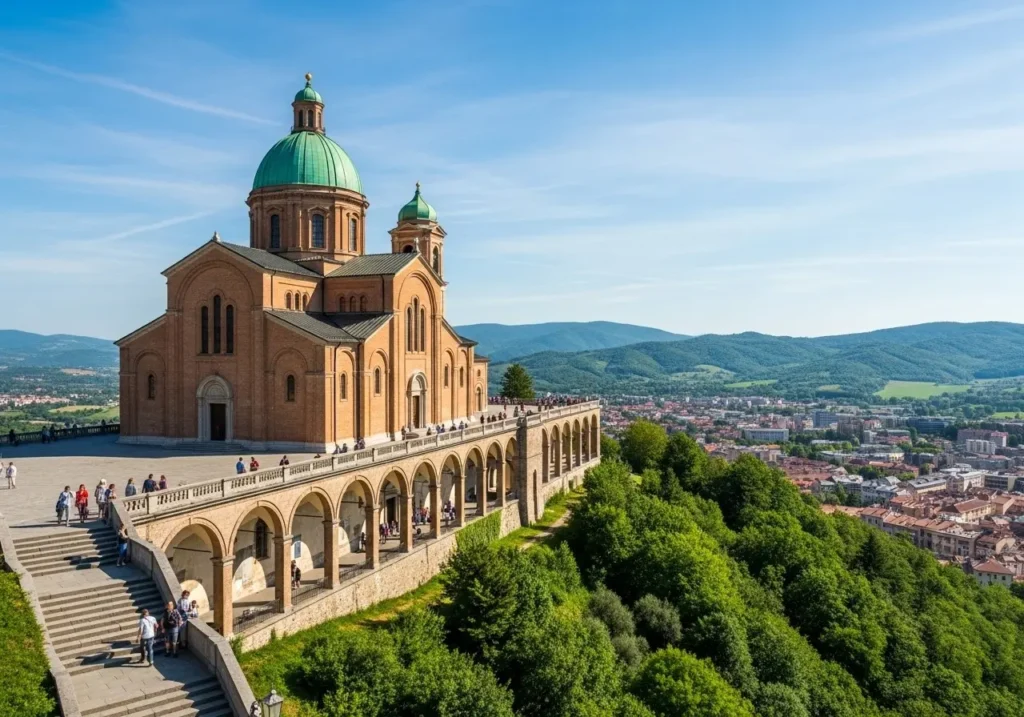
Perched dramatically on Colle della Guardia hill overlooking Bologna, the Sanctuary of the Madonna di San Luca is reached via the world’s longest portico—an extraordinary 3.8-kilometer covered walkway comprising 666 arches. This architectural marvel, built between 1674 and 1793, allows pilgrims to reach the sanctuary in any weather.
The climb takes about an hour but offers increasingly spectacular views over the city and surrounding countryside. The sanctuary itself, with its distinctive circular design and bright orange façade, houses a revered Byzantine icon of the Madonna and Child allegedly painted by Saint Luke. Inside, the richly decorated baroque interior features stunning frescoes and marble work. The sanctuary remains an important pilgrimage site, and each year the icon is ceremonially carried down to Bologna’s cathedral for a week-long celebration.
Quadrilatero Market
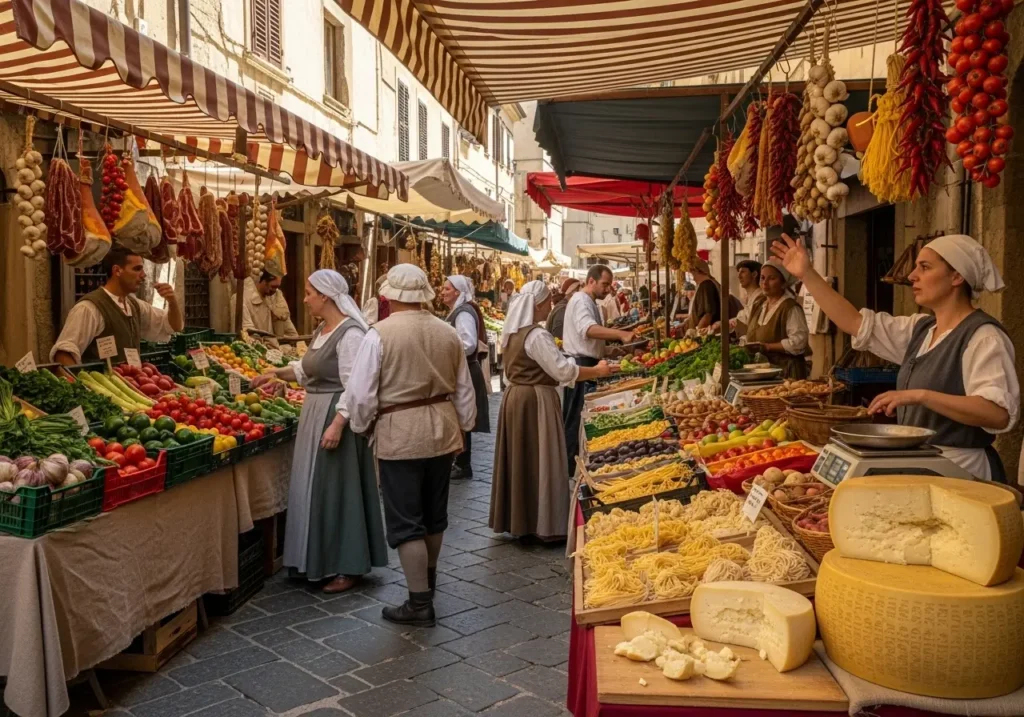
The Quadrilatero is Bologna’s historic market district, a maze of narrow medieval streets where locals have shopped for fresh produce, meat, cheese, and specialty foods for centuries. This atmospheric neighborhood comes alive early morning when vendors arrange colorful displays of seasonal vegetables, hanging salumi, wheels of Parmigiano-Reggiano, and fresh pasta. Unlike sanitized tourist markets, the Quadrilatero remains authentically local—you’ll see nonnas selecting tomatoes and chefs sourcing ingredients for their restaurants. Beyond food stalls, the area is packed with specialty shops, wine bars, and traditional trattorias where you can sample Bologna’s famous cuisine. Evening transforms the district into an aperitivo hotspot where crowds spill from bars onto cobblestone streets with drinks in hand, creating an infectious social energy.
Bologna National Gallery (Pinacoteca Nazionale)
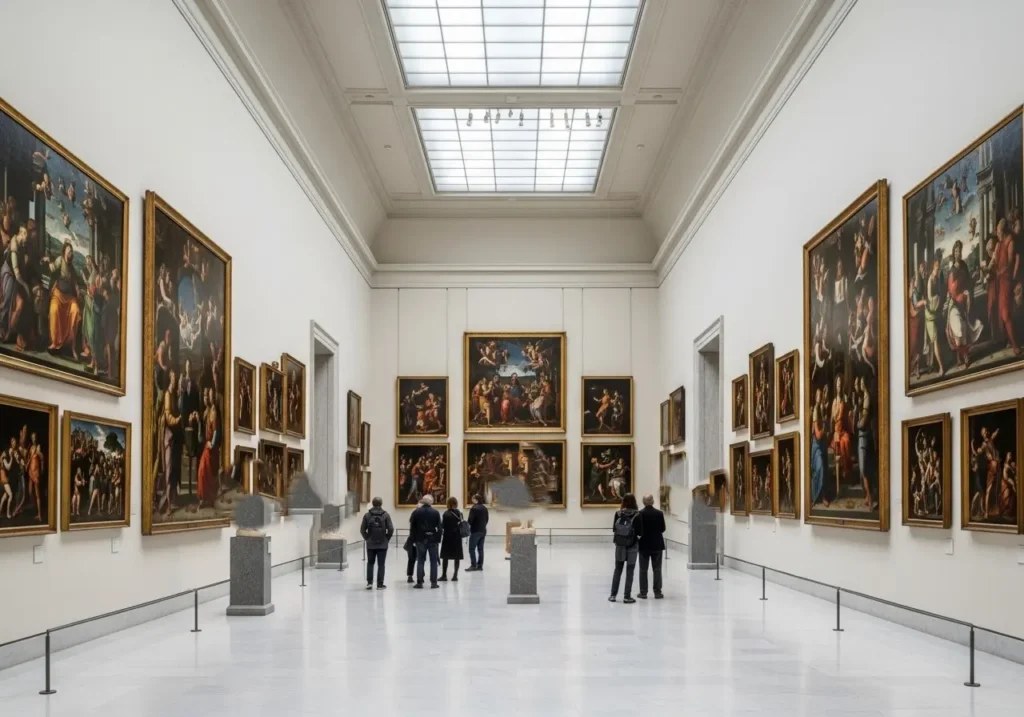
The Pinacoteca Nazionale houses one of Italy’s finest collections of Emilian painting from the 13th to 18th centuries in a former Jesuit novitiate building. The gallery showcases masterpieces by regional artists including Giotto, Raphael, Guido Reni, and the Carracci family whose baroque works defined an era. Unlike overwhelming mega-museums, the Pinacoteca’s manageable size allows visitors to appreciate each painting without museum fatigue. Room after room reveals the evolution of Italian art, from medieval altarpieces with gold backgrounds to dramatic baroque compositions full of movement and emotion.
Particularly notable is Raphael’s “Ecstasy of Saint Cecilia,” a luminous Renaissance masterpiece. The museum also features fascinating works by female baroque painter Elisabetta Sirani, who challenged gender conventions of her time. Art enthusiasts will find this collection essential for understanding Italian painting’s development.
Museo di Palazzo Poggi
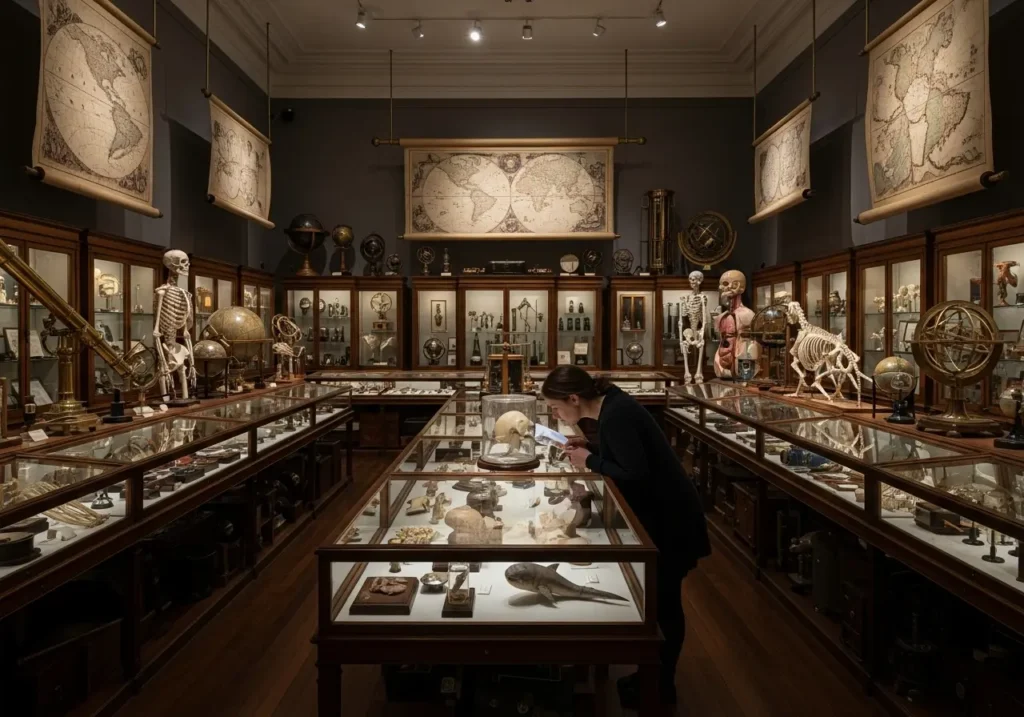
Museo di Palazzo Poggi offers an extraordinary journey through scientific history in a beautifully preserved 16th-century palace. This unique museum showcases the University of Bologna’s historic scientific collections, including anatomical wax models, obstetric illustrations, physics instruments, military architecture drawings, and natural history specimens. The anatomical collection is particularly remarkable—incredibly detailed 18th-century wax models created for medical teaching that remain both scientifically valuable and artistically beautiful.
The museum also features a fascinating room dedicated to Luigi Galvani’s pioneering electrical experiments that gave us the term “galvanism.” Geography and navigation enthusiasts will appreciate the antique maps and navigational instruments. Unlike typical science museums with modern interactive displays, Palazzo Poggi preserves the cabinet-of-curiosities atmosphere of Enlightenment-era learning, making it feel like discovering a time capsule of Renaissance scientific inquiry.
Teatro Anatomico
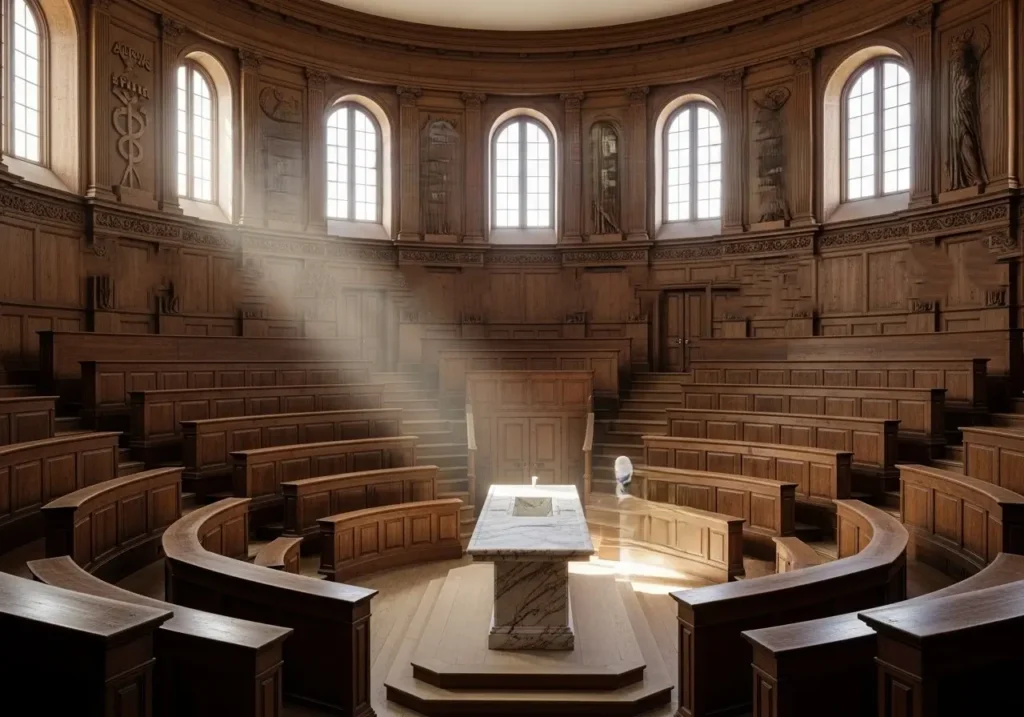
The Teatro Anatomico represents one of the world’s most beautiful anatomy theaters, originally built in 1637 within the Archiginnasio. This wooden amphitheater features rising tiers of seats arranged around a central marble dissection table, all intricately carved from spruce wood. The anatomist’s chair sits beneath a canopy held by two striking figures called “spellati” (skinless ones)—écorché statues showing exposed musculature that served as permanent teaching aids.
The ceiling features Apollo, god of medicine, surrounded by allegorical figures and constellations. Medical students would gather here to observe dissections, which were only permitted during winter months when bodies decomposed more slowly. Though destroyed by World War II bombing, the theater was meticulously reconstructed using original fragments and historical records. Today it stands as a monument to medical history and Bologna’s pioneering role in anatomical studies.
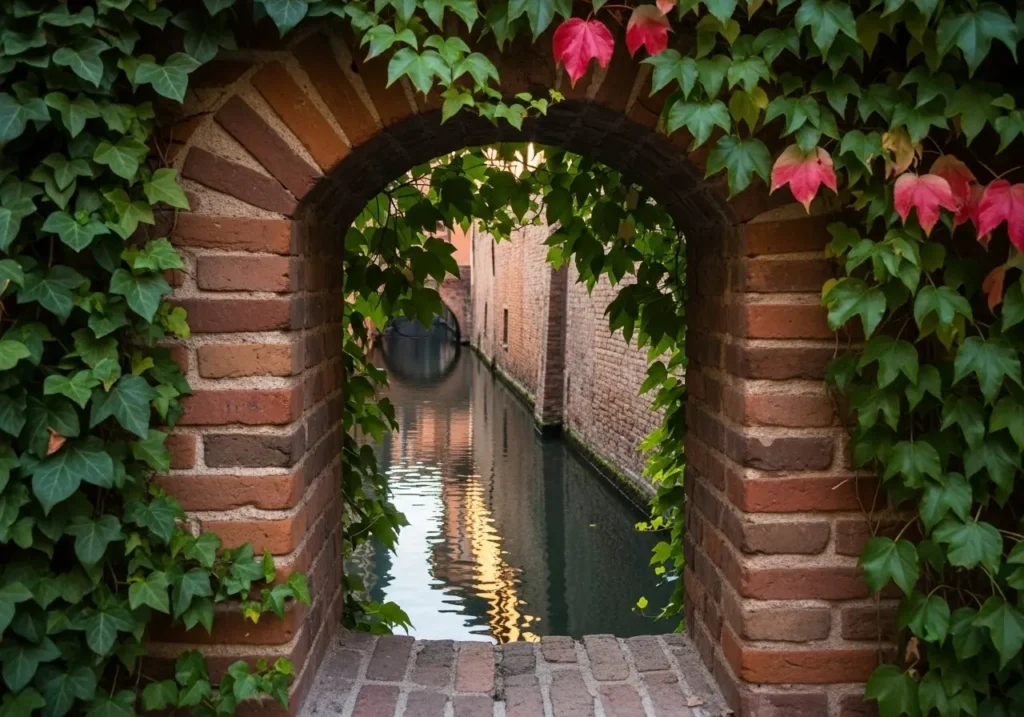
Finestrella di Via Piella
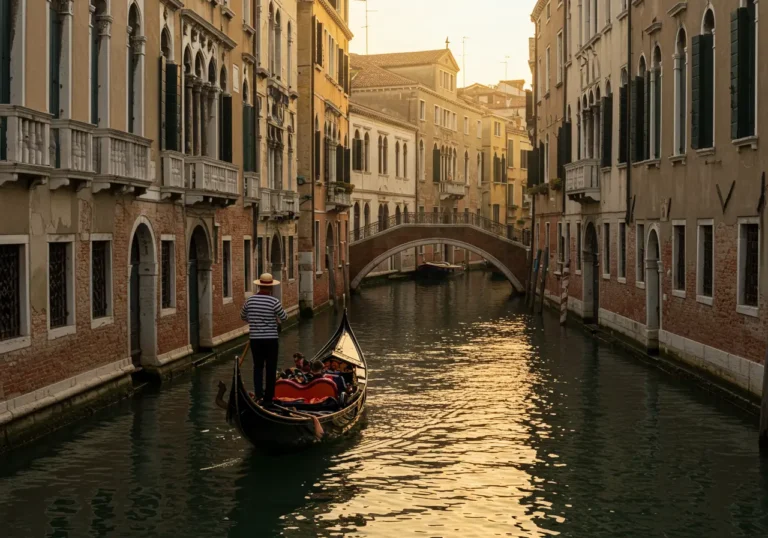
The Finestrella di Via Piella offers a surprising glimpse into Bologna’s hidden waterways, earning it the nickname “Little Venice Window.” This small opening in a wall along Via Piella reveals a picturesque canal scene that most visitors never suspect exists—the Canale delle Moline flowing between colorful buildings, complete with reflections and a charming stone bridge. Bologna was once crisscrossed by an extensive network of canals that powered mills and facilitated trade, but most were covered during the 20th century for sanitary and urban development reasons.
This secret window preserves a romantic reminder of that lost aquatic past. The canal system was so crucial that specialized occupations like “barcaioli” (boatmen) once thrived here. Finding this hidden gem feels like discovering a secret that locals have kept, making it especially rewarding for curious explorers.
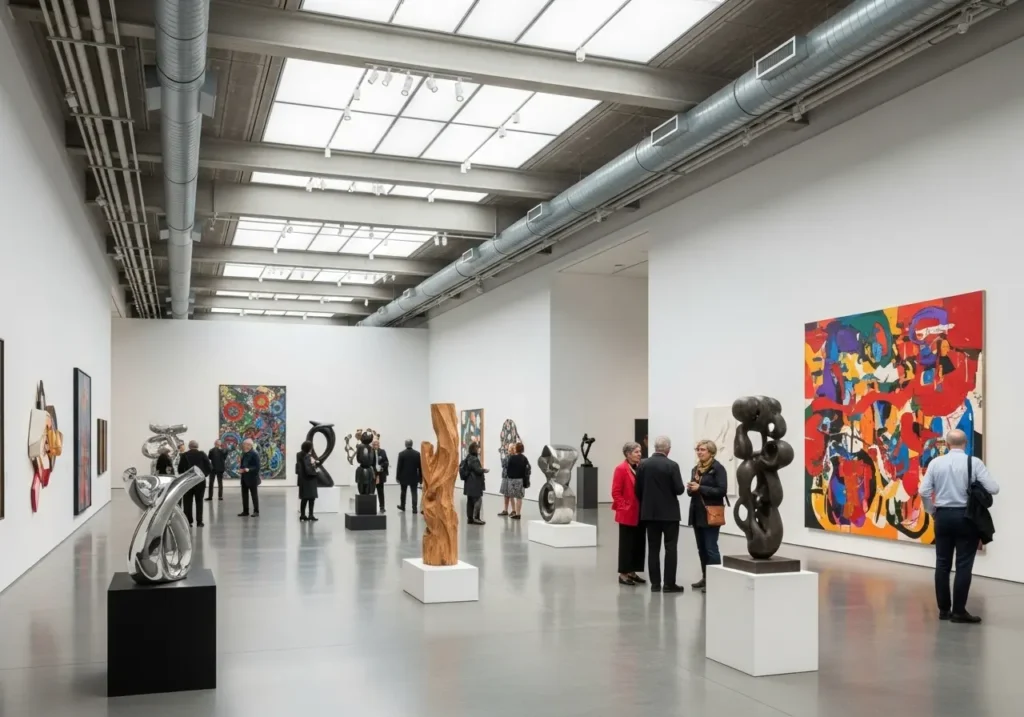
MAMbo – Museum of Modern Art
MAMbo showcases Italian contemporary and modern art in a converted industrial bakery, reflecting Bologna’s commitment to progressive culture. The permanent collection traces Italian art from World War II to present day, featuring works by Giorgio Morandi, the Bologna-born master of still life whose subtle paintings captured international acclaim. The museum’s temporary exhibitions bring cutting-edge contemporary artists to Bologna, often featuring provocative installations and multimedia works that challenge conventional art viewing.
The spacious industrial architecture provides an ideal backdrop for large-scale contemporary pieces. MAMbo also hosts film screenings, performances, and educational programs, functioning as a living cultural center rather than a static museum. The museum cafe-restaurant, with its stylish design and garden terrace, has become a popular spot for Bologna’s creative community, making MAMbo both an art destination and social hub.
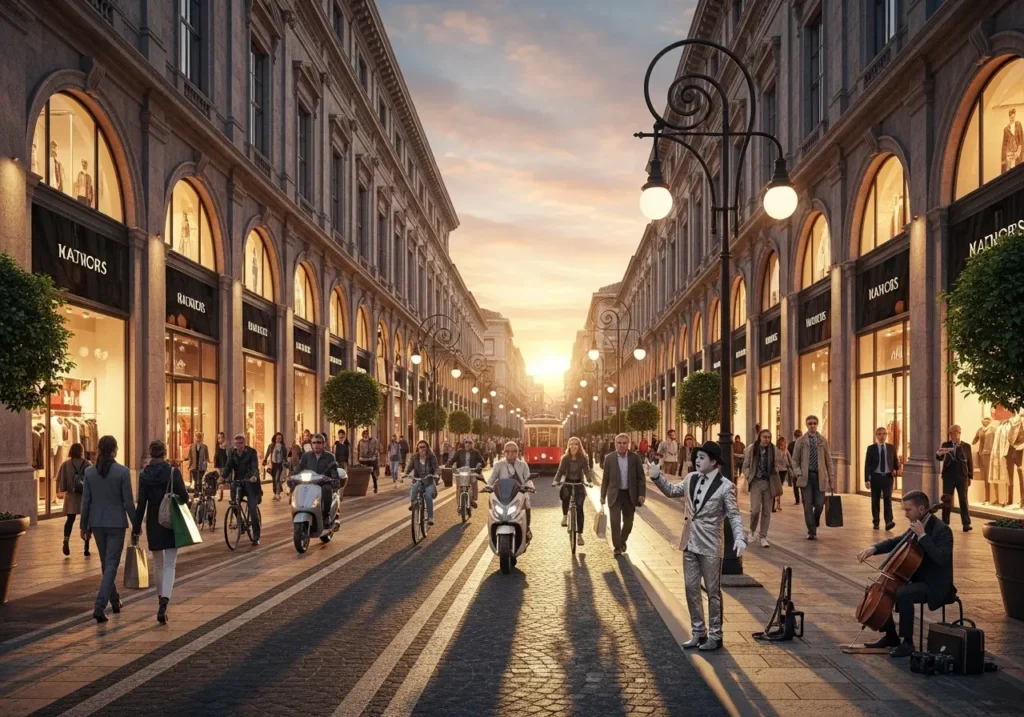
Via dell’Indipendenza
Via dell’Indipendenza serves as Bologna’s main thoroughfare, a broad porticoed street connecting the train station to the historic center’s core. This elegant avenue showcases Bologna’s architectural evolution, with buildings ranging from medieval structures to 20th-century developments. The street is lined with shops, from international chains to local boutiques, making it the city’s primary shopping destination. The porticoes provide comfortable all-weather shopping, a practical feature Bolognese have perfected over centuries.
Notable landmarks along the route include the Church of San Giacomo Maggiore with its Renaissance artworks and the historic Gran Caffè Zanarini, perfect for experiencing Italian cafe culture. Street performers and vendors add vibrancy, especially during evening passeggiata when locals promenade before dinner. Walking Via dell’Indipendenza gives you an authentic sense of contemporary Bologna life while staying architecturally connected to the past.
FAQs Bologna
How many days do I need in Bologna? Three days allows you to explore major attractions comfortably, enjoy the food scene, and take a day trip to nearby cities. Two days covers the essentials but feels rushed, while a week lets you discover deeper layers and develop a local rhythm.
What is Bologna famous for? Bologna is renowned for its medieval towers, the world’s oldest university, stunning porticoes, and exceptional cuisine including ragù bolognese, tortellini, and mortadella. The city is also known as a center of left-wing politics and progressive culture in Italy.
Is Bologna worth visiting? Absolutely. Bologna offers authentic Italian culture without overwhelming tourist crowds, exceptional food at reasonable prices, beautiful architecture, and fascinating museums. It combines the best of Italian cities while remaining refreshingly genuine and livable.
What’s the best time to visit Bologna? Spring (April-May) and fall (September-October) offer pleasant weather and fewer crowds. Summer can be hot and many locals vacation in August. Winter is quietest with occasional fog but brings truffle season and cozy trattorias without tourists.
Do I need to speak Italian in Bologna? While English is spoken in tourist areas and hotels, Bologna is less English-fluent than Rome or Florence. Learning basic Italian phrases enhances your experience and is appreciated by locals. The university presence means younger people generally speak better English.
Conclusion
Bologna rewards travelers who seek substance over superficiality. From climbing the Asinelli Tower for breathtaking views to savoring hand-rolled tortellini in a family-run osteria, from admiring Renaissance masterpieces to discovering hidden canals, this city offers experiences that feel genuinely Italian rather than manufactured for tourism.
The 12 attractions covered in this guide provide a comprehensive introduction to Bologna’s diverse appeal, but they’re just the beginning. The city’s true magic emerges between these landmarks—in spontaneous conversations with locals, in the play of light through portico arches, in the satisfaction of finding a perfect wine bar down an unmarked alley.
Don’t let Bologna remain Italy’s best-kept secret. Start planning your visit today and discover why those who know Italy best consistently rank Bologna among their favorite cities. Book your accommodations early, especially during trade fair seasons, and prepare for a city that will likely exceed your expectations and keep calling you back.
Join thousands of travelers who’ve discovered that Bologna isn’t just worth visiting—it’s worth returning to again and again. Share your own Bologna experiences in the comments below and help fellow travelers discover this extraordinary city that perfectly balances historic grandeur with contemporary vitality.