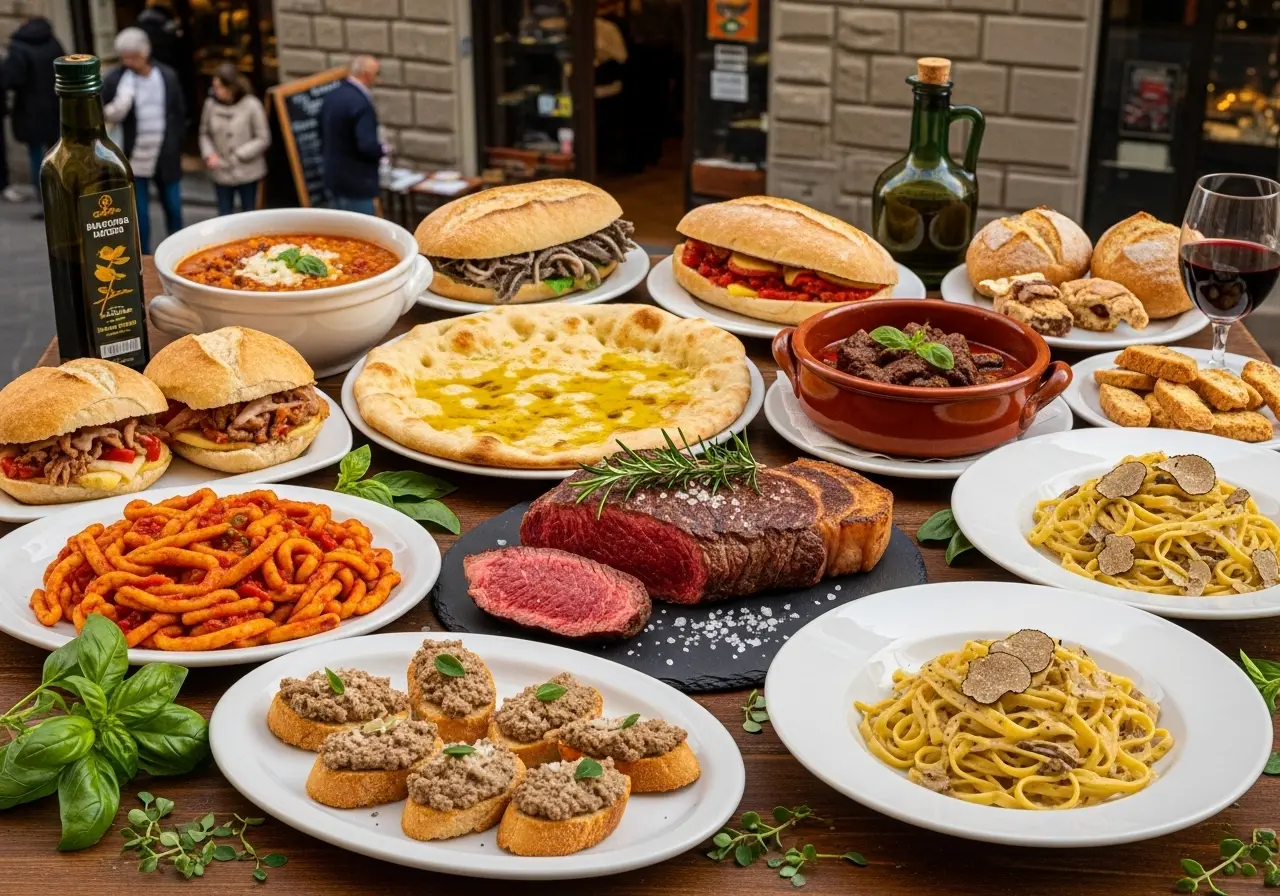
10 Delicious Foods You Have to Try in Florence
Introduction
Standing in front of a Florentine trattoria menu, completely overwhelmed by unfamiliar dishes and worried you’ll order something disappointing? You’re not alone. Many travelers miss out on Florence’s most incredible culinary treasures simply because they don’t know what to order or where authentic Tuscan flavors hide beyond the tourist traps.
This guide will transform you from a confused visitor into a confident food explorer, helping you discover the authentic tastes that make Florence one of Italy’s greatest food destinations. After years of exploring Tuscan cuisine and guiding food tours through Florence’s historic neighborhoods, I’ve learned which dishes truly capture the soul of this Renaissance city—and which ones you absolutely can’t leave without trying.
In this article, you’ll discover why Florence foods deserve a spot on your culinary bucket list, explore ten must-try dishes that define Florentine cooking, and get answers to your most pressing questions about eating in this magnificent city.
Table of Contents
Why You Should Try Florence Foods
Florence foods represent centuries of Tuscan culinary tradition, where simple, quality ingredients transform into unforgettable meals. Unlike the heavy cream sauces found elsewhere in Italy, Florentine cuisine celebrates bold flavors like garlic, herbs, and exceptional olive oil that let premium local ingredients shine.
The cultural significance runs deep here. Every dish tells a story of resourceful Tuscan cooks who created masterpieces from humble ingredients—peasant soups that became classics, bread salads born from necessity, and grilled meats that showcase the region’s legendary Chianina cattle. Eating Florence foods connects you directly to generations of tradition and the city’s agricultural heritage.
Convenience makes exploring these flavors remarkably easy. Florence’s compact historic center clusters authentic trattorias, historic food markets, and street food vendors within walking distance. You can sample lampredotto from a cart in the morning, enjoy ribollita at lunch, and savor bistecca for dinner—all without straying far from the Duomo.
The variety surprises most visitors. Florence foods range from hearty meat dishes to vegetarian soups, crispy street food to elegant pasta, and rustic peasant fare to refined preparations. Whether you’re seeking comfort food on a rainy afternoon or a celebratory feast, Florentine cuisine delivers options that satisfy every mood and appetite while maintaining its distinctive Tuscan character.
10 Delicious Foods You Have to Try in Florence
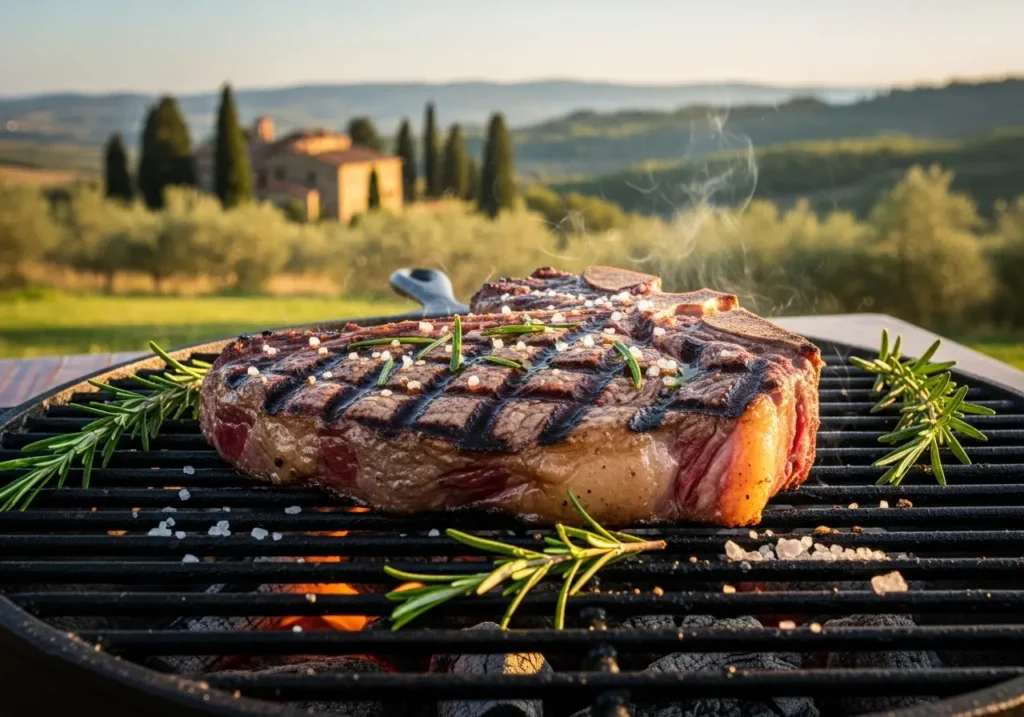
Bistecca alla Fiorentina
This massive T-bone steak stands as Florence’s most iconic dish and a carnivore’s dream come true. Cut from Chianina cattle—an ancient Tuscan breed prized for tender, flavorful meat—bistecca alla Fiorentina arrives at your table charred on the outside, ruby red inside, and weighing at least one kilogram. Traditionalists prepare it simply: high heat, sea salt, black pepper, and perhaps a drizzle of local olive oil after cooking.
The experience goes beyond just eating steak. Florentines take their bistecca seriously, insisting it must be cooked rare (al sangue) and served on the bone for maximum flavor. Order one to share between two or three people, and pair it with roasted potatoes and Chianti Classico for an authentic Tuscan feast that embodies the region’s love affair with quality beef.
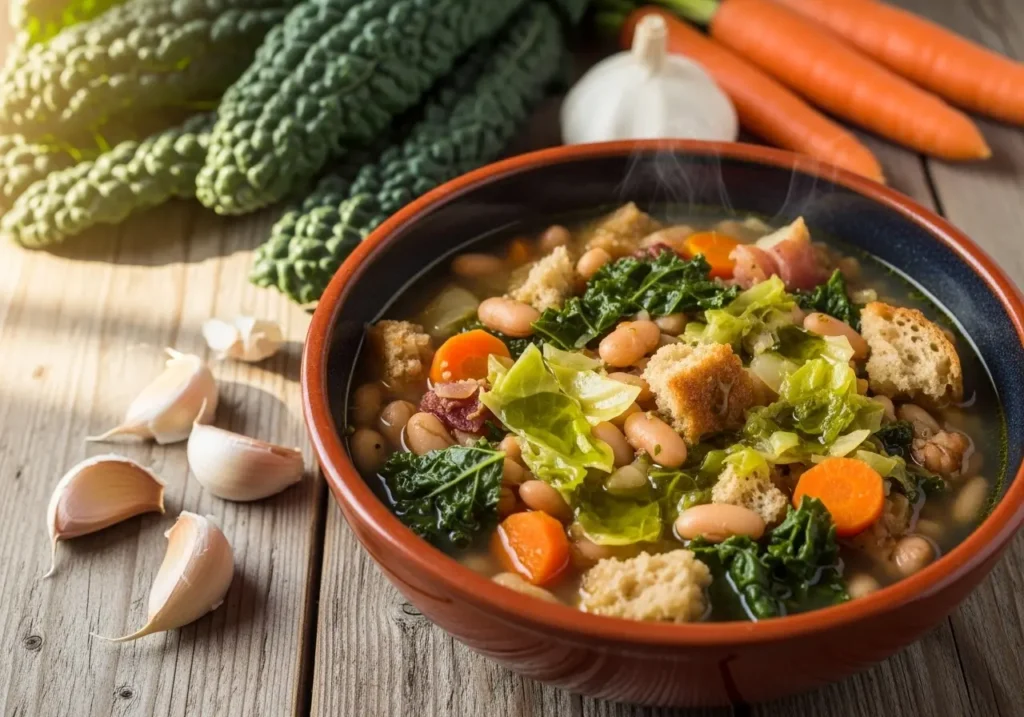
Ribollita
This hearty bread soup captures the essence of Tuscan cucina povera, or peasant cooking, at its finest. Ribollita literally means “reboiled,” referring to the traditional practice of making the soup one day, then reheating and improving it the next. The thick, warming mixture combines cannellini beans, black kale (cavolo nero), carrots, celery, tomatoes, and chunks of stale Tuscan bread that dissolve into the broth.
Winter brings ribollita to nearly every trattoria menu in Florence, offering the ultimate comfort food when temperatures drop. The soup’s dense, almost stew-like consistency and rich vegetable flavors make it surprisingly filling despite being completely vegetarian. Locals finish their bowl with a generous drizzle of peppery Tuscan olive oil—don’t skip this crucial final touch that elevates the entire dish.
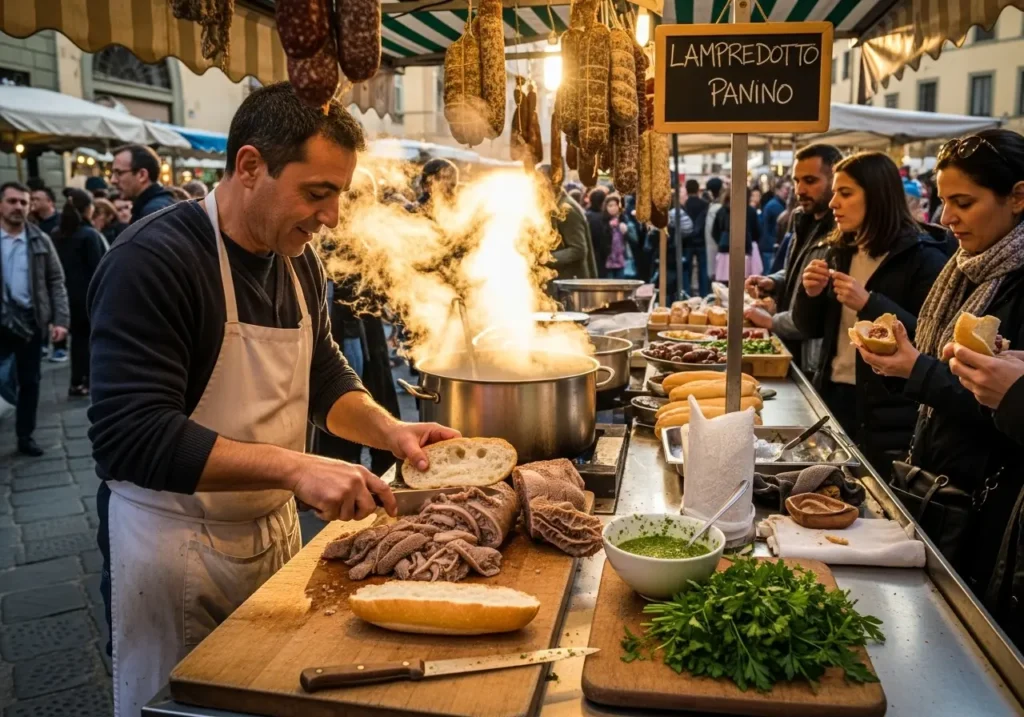
Lampredotto
Florence’s beloved street food might sound unusual—it’s made from cow’s fourth stomach—but lampredotto has fed Florentines for centuries and tastes far more delicious than its description suggests. Vendors slowly simmer the tripe in broth with tomatoes, onions, parsley, and celery until tender, then slice it thin and serve it in a crusty roll (panino) or on a plate with salsa verde.
You’ll find lampredotto carts (lampredottai) scattered throughout Florence’s streets and markets, with Trippaio Sergio in Sant’Ambrogio Market and the cart outside Mercato Centrale earning legendary status among locals. The meat itself offers a surprisingly mild, tender texture with rich, savory flavor—nothing like the rubbery organ meat many visitors fear. Order it “bagnato” (dipped in the cooking broth) for an authentically messy, incredibly satisfying Florentine experience.
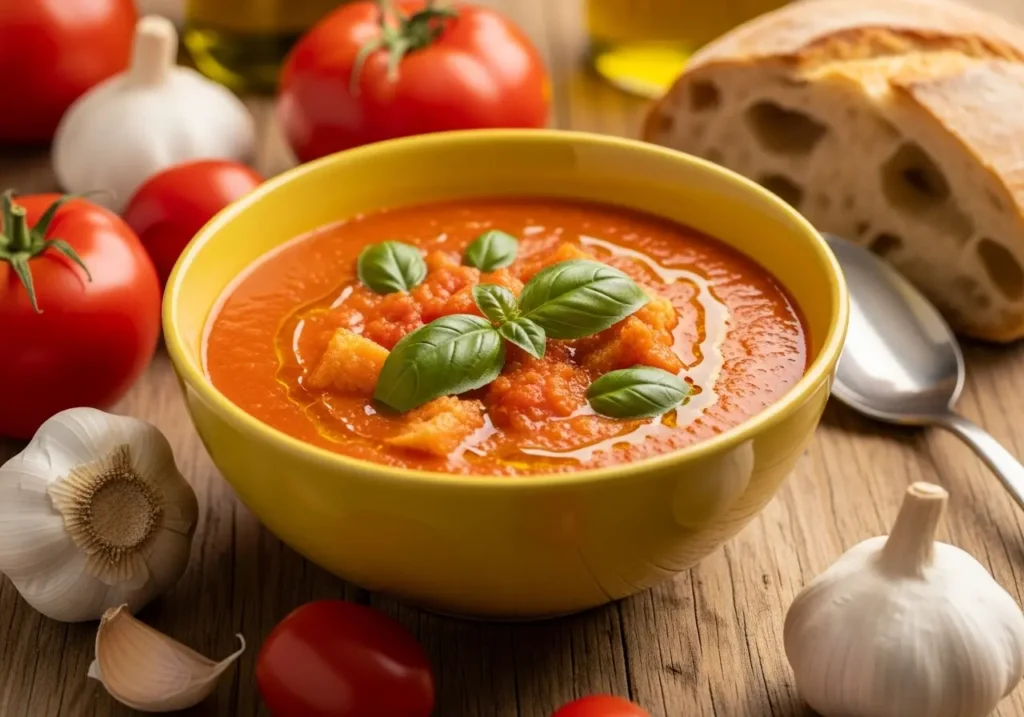
Pappa al Pomodoro
This rustic Tuscan tomato and bread soup proves that simplicity, when executed perfectly, creates something magical. Pappa al pomodoro combines ripe tomatoes, stale Tuscan bread, garlic, fresh basil, and quality olive oil into a thick, porridge-like consistency that’s both comforting and refreshing. The bread completely breaks down, binding with the tomatoes to create a smooth yet slightly chunky texture.
Summer showcases this dish at its best, when sun-ripened tomatoes burst with flavor and the cool soup (often served at room temperature) provides welcome relief from Florence’s heat. While it looks humble—essentially tomato-flavored bread mush—each spoonful delivers concentrated tomato sweetness balanced by garlic bite and basil freshness. The generous olive oil drizzle on top isn’t optional; it’s essential to the dish’s silky richness.
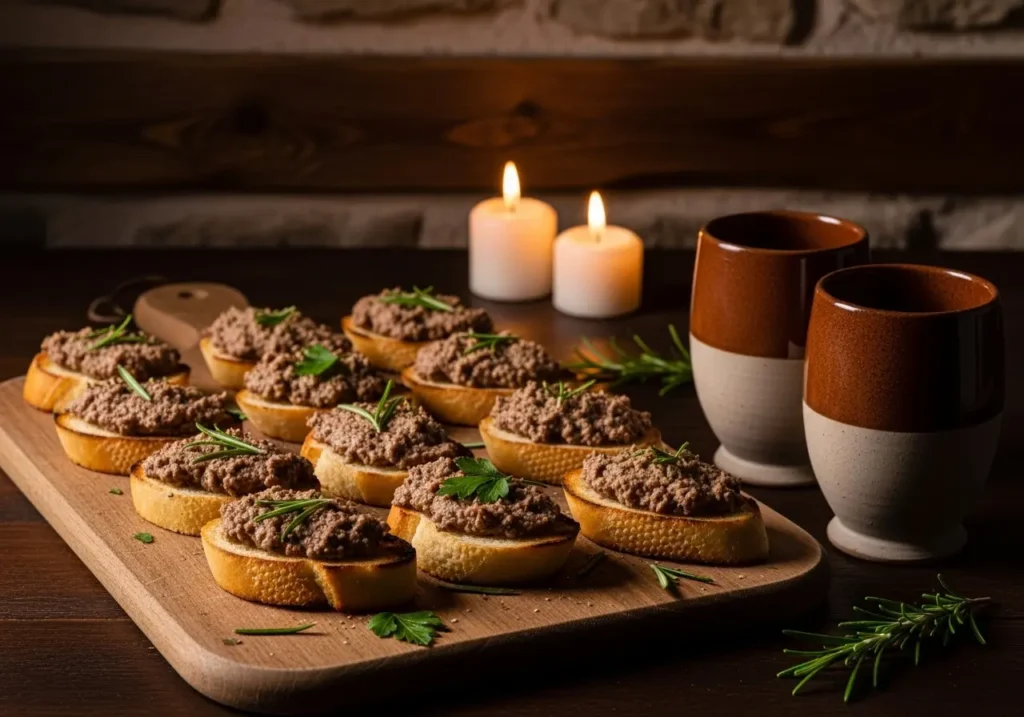
Crostini Toscani
These simple yet elegant appetizers appear at nearly every Tuscan meal, offering a perfect introduction to Florence foods. Traditional crostini toscani feature chicken liver pâté spread on small slices of toasted bread—a combination that sounds ordinary but delivers remarkably complex, earthy flavors. The pâté blends chicken livers with capers, anchovies, butter, and sometimes vin santo, creating a smooth, rich spread.
Modern variations now accompany the classic liver crostini, including toppings of white bean purée, fresh tomatoes, or truffle cream, but traditionalists insist the chicken liver version represents true Florentine antipasti. The slight bitterness of the liver, saltiness from capers and anchovies, and crunch of toasted bread create perfect harmony. Order a mixed platter to sample different preparations while sipping wine and embracing the leisurely pace of Italian dining.
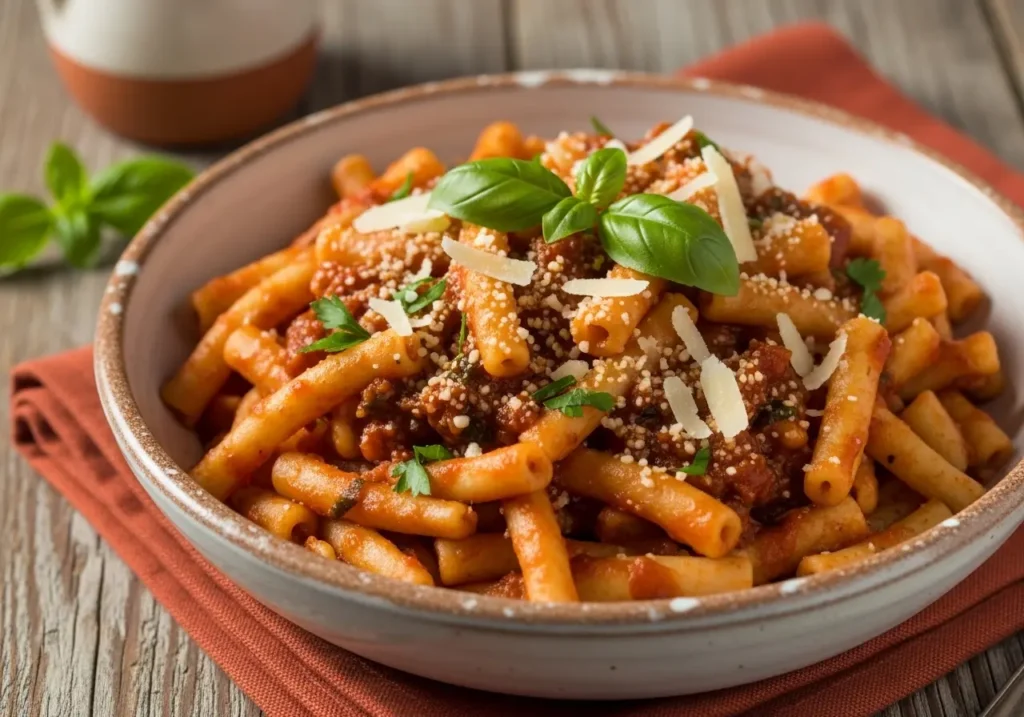
Pici Pasta
These thick, hand-rolled pasta strands showcase the rustic side of Tuscan cooking, offering a heartier, more substantial bite than delicate northern Italian pasta. Pici (pronounced PEE-chee) are made from just flour, water, and olive oil—no eggs—then rolled by hand into long, irregular, spaghetti-like shapes with a satisfying chewy texture. The imperfect, handmade quality is precisely the point.
While pici originated in Siena’s countryside, they’ve become a Florence favorite, typically served with bold sauces that cling to the pasta’s rough surface. The most traditional preparations include pici all’aglione (with tomato and lots of garlic), cacio e pepe (cheese and black pepper), or ragù di cinghiale (wild boar sauce). The thick pasta’s ability to hold up to robust, meaty sauces makes it perfect for showcasing Tuscany’s game meats and intense flavors.
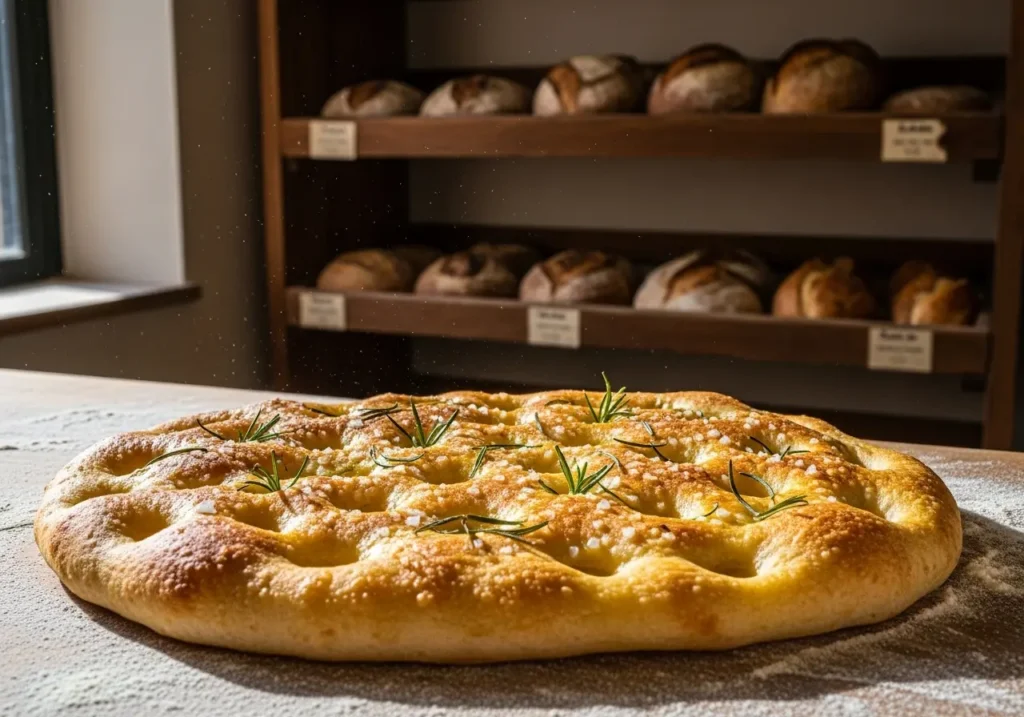
Schiacciata
This Florentine flatbread serves as the foundation for countless meals, from quick snacks to sandwich masterpieces. Schiacciata (pronounced skee-ah-CHA-tah) resembles focaccia but typically features a thinner, crispier texture with a dimpled surface glistening with olive oil and often dusted with coarse salt. Bakeries throughout Florence produce fresh schiacciata multiple times daily, filling the streets with irresistible yeasty aromas.
Locals eat schiacciata in countless ways: plain as a snack, split and filled with prosciutto and cheese for lunch, or topped with seasonal ingredients like grapes during autumn harvest. The Florentine version differs from seaside variations—it’s about the quality of the olive oil, the perfect balance between crispy exterior and tender interior, and the subtle saltiness that makes you reach for another piece even when you’re full.
Peposo
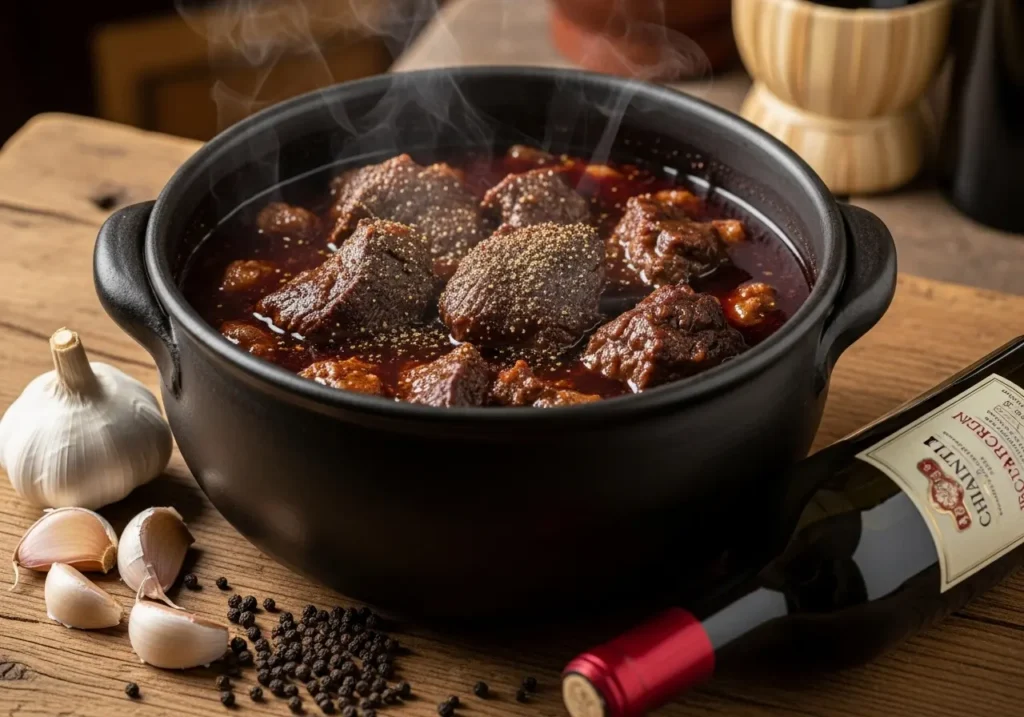
This ancient Tuscan beef stew dates back to Renaissance times when tile workers (fornacini) in Impruneta slow-cooked tough cuts of beef in the cooling kilns after a day’s work. Peposo gets its name from the extraordinary amount of black pepper that defines the dish—”peposo” means “peppery”—combined with red wine, garlic, and little else besides time and patience.
The lengthy cooking process transforms inexpensive beef cuts into fall-apart tender chunks swimming in a dark, intensely flavorful sauce where wine and pepper create surprising complexity. No tomatoes, no herbs—just the holy trinity of beef, black pepper, and Chianti working their slow-cooked magic. Traditionally served with creamy polenta or crusty bread to soak up the peppery jus, peposo represents Tuscan cooking at its most fundamental: minimal ingredients, maximum flavor, and respect for time-honored methods.
Cantuccini with Vin Santo
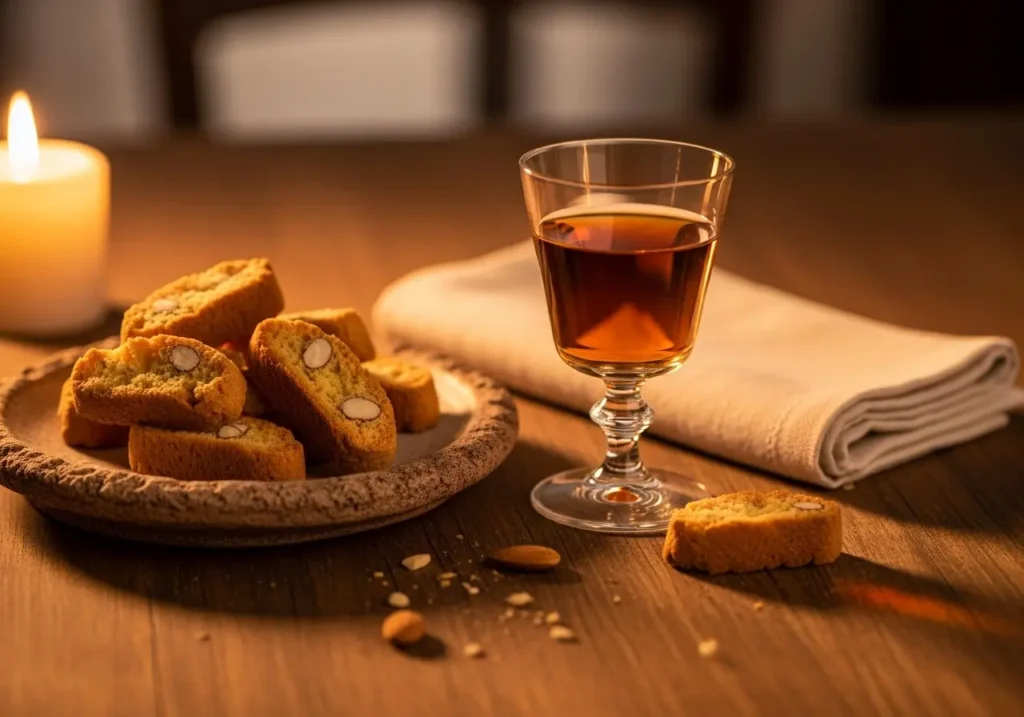
No proper Florentine meal ends without this classic dessert pairing that perfectly balances sweet and dry, crunchy and smooth. Cantuccini (often called biscotti elsewhere) are twice-baked almond cookies—hard, crunchy, and studded with whole almonds. They’re intentionally too dry to eat on their own, which is exactly the point: you dip them in vin santo, a sweet amber dessert wine made from dried grapes.
The ritual matters as much as the taste. Break off a piece of cantuccini, dip it briefly in the wine (letting it soften slightly but not disintegrate), and enjoy the combination of toasted almond crunch, buttery cookie sweetness, and the vin santo’s honeyed, nutty complexity. It’s a contemplative dessert meant for lingering conversation, served in trattorias, home kitchens, and even formal restaurants as the quintessential Tuscan finale.
Truffle Pasta
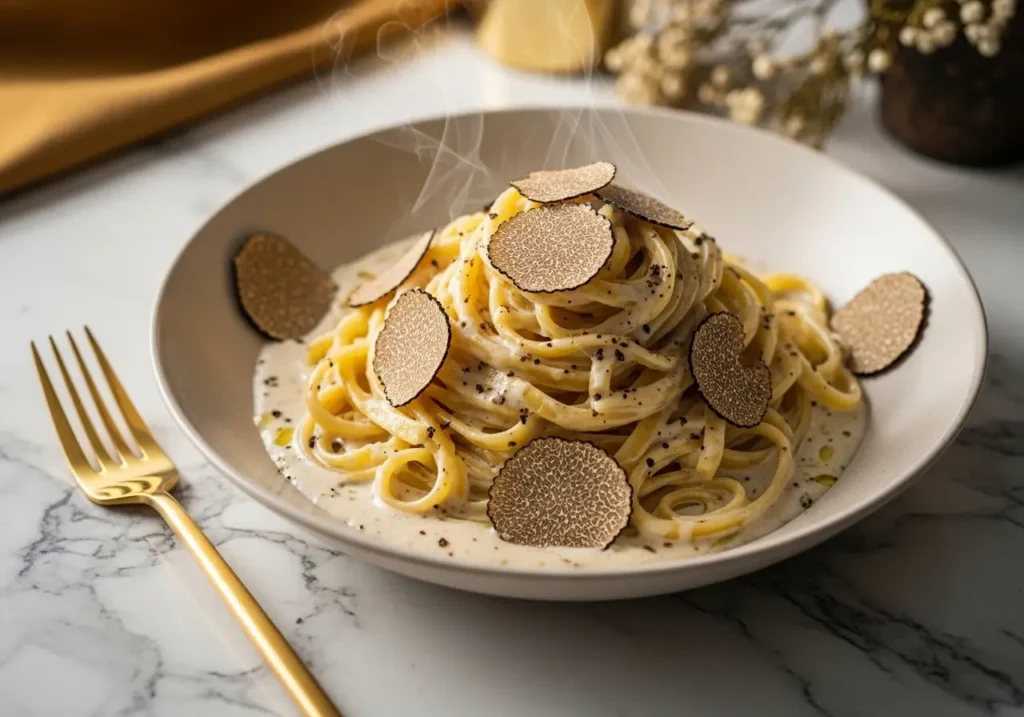
While truffles appear throughout Italy, the Tuscan hills surrounding Florence produce exceptional specimens that local chefs showcase in deceptively simple pasta preparations. Fresh truffle pasta typically features minimal ingredients—just butter, Parmigiano-Reggiano, and paper-thin shavings of aromatic truffle over fresh tagliatelle or pappardelle. This restraint allows the truffle’s earthy, intoxicating aroma to dominate completely.
White truffles arrive in autumn and command astronomical prices, while the more affordable black truffles appear throughout winter and spring. Both varieties transform a simple pasta into something transcendent through their powerful perfume and subtle, complex flavor. The best restaurants shave truffles tableside, letting their aroma fill the air before landing on your steaming pasta. It’s an indulgence worth saving for, representing Tuscan luxury at its most elemental.
FAQs About Florence Foods
What is the most famous food in Florence? Bistecca alla Fiorentina holds the title as Florence’s most famous dish—a massive T-bone steak from Chianina cattle, grilled rare and served simply with salt and olive oil. However, lampredotto runs a close second as the city’s beloved street food that locals eat almost daily.
Is Florence food expensive? Florence foods span every budget. Street food like lampredotto costs just a few euros, while a proper bistecca alla Fiorentina for two might run forty to sixty euros at a quality restaurant. Mid-range trattorias serving authentic ribollita, pappa al pomodoro, and pasta dishes typically charge between twelve and twenty euros per main course—reasonable for a European capital city.
What should I eat for breakfast in Florence? Florentines keep breakfast simple: a cappuccino and cornetto (Italian croissant) at a local bar while standing at the counter. For something more substantial, try schiacciata from a bakery or grab a quick panino. Remember that Italians never drink cappuccino after 11 AM—it’s considered a breakfast-only beverage.
Are Florence foods vegetarian-friendly? Absolutely. Many traditional Florence foods are naturally vegetarian, including ribollita, pappa al pomodoro, schiacciata, white bean crostini, and various pasta dishes. Vegans might find options more limited since cheese, butter, and eggs appear frequently, but communicating dietary needs typically yields accommodating results at most restaurants.
Where should I try authentic Florence foods? Skip restaurants near major tourist sites and venture into neighborhoods like Santo Spirito, San Frediano, or Sant’Ambrogio. Look for trattorias filled with locals, check if menus change seasonally (a good sign), and don’t be afraid of humble-looking spots—often the best Florence foods come from unassuming family-run places that have served the same recipes for generations.
What’s the difference between Florentine and other Italian cuisines? Florence foods emphasize simple preparations that highlight quality ingredients rather than complex sauces. You’ll find more grilled meats, bread-based dishes, white beans, and Tuscan olive oil here compared to the cream-heavy north or tomato-focused south. Florentine cuisine also traditionally uses less pasta than other regions, preferring bread and hearty soups.
Conclusion
Florence foods offer far more than sustenance—they provide a delicious gateway into centuries of Tuscan culture, tradition, and culinary wisdom. From the commanding bistecca alla Fiorentina to humble lampredotto served from street carts, each dish on this list reveals something essential about Florence’s character: respect for quality ingredients, appreciation for simplicity, and pride in regional heritage.
Your Florentine food journey awaits, and it’s remarkably easy to begin. Tomorrow, step into a local trattoria and order ribollita or pappa al pomodoro. Find a lampredotto cart and brave the adventurous choice that locals make every day. Save your appetite for a proper bistecca dinner that you’ll remember for years. Each meal brings you closer to understanding what makes Florence extraordinary beyond its Renaissance art and architecture.
Don’t leave Florence without tasting its soul—one memorable dish at a time. Start planning your culinary exploration today, perhaps by researching which traditional trattorias fall along your sightseeing route or which seasonal specialties will be available during your visit.
Thousands of travelers have transformed their Florence experience by moving beyond pizza and gelato to discover these authentic regional treasures. Their Instagram feeds, glowing reviews, and enthusiastic recommendations prove that taking culinary risks in Florence always rewards the adventurous eater. Now it’s your turn to join them and create your own delicious Florentine memories.