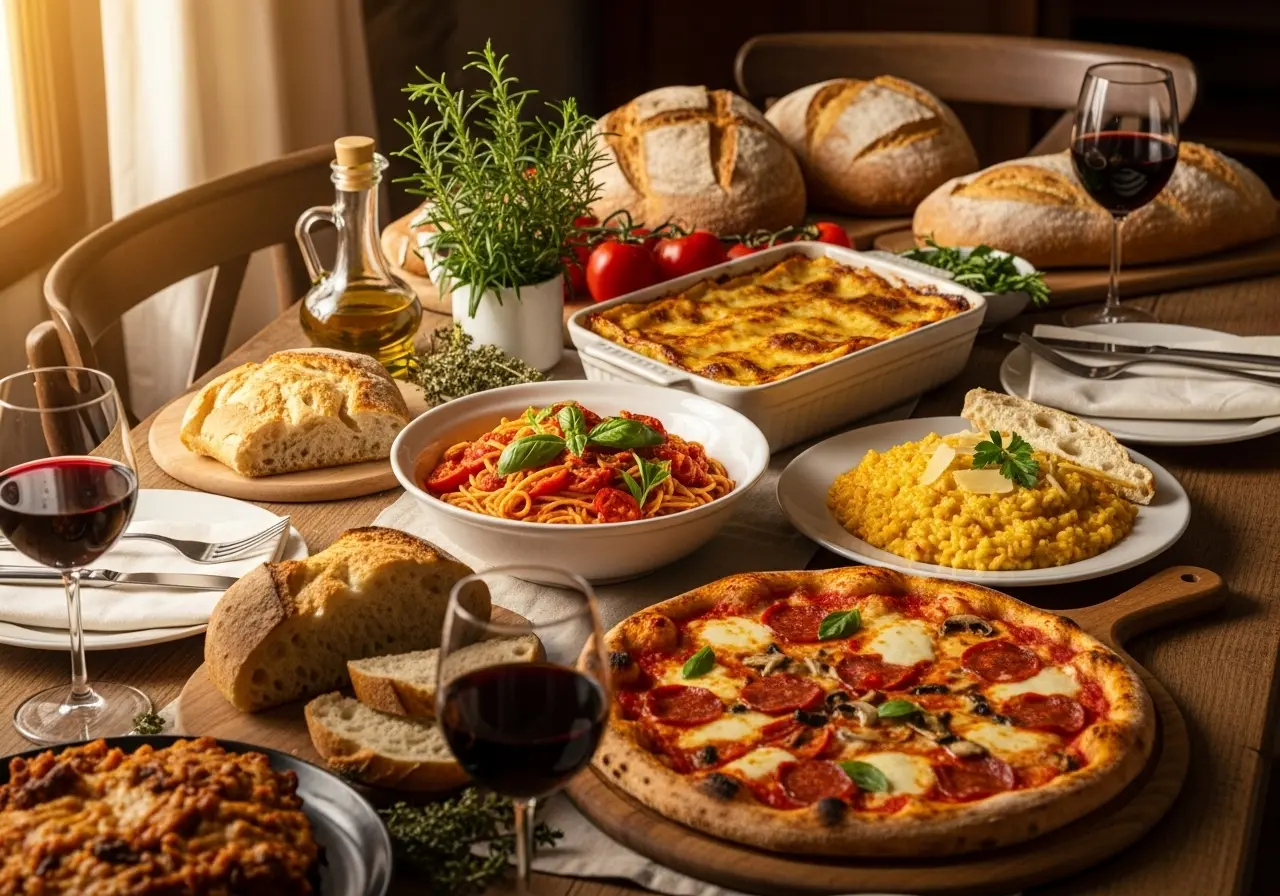
10 Traditional Italian Meals Everyone Should Try
Introduction
Have you ever found yourself in an Italian restaurant, overwhelmed by an unfamiliar menu, wondering which dishes are truly authentic and worth ordering? You’re not alone. Many travelers miss out on Italy’s culinary treasures simply because they stick to what they know or fall into tourist traps serving mediocre versions of classic dishes.
This guide will transform you from a hesitant diner into a confident connoisseur of Italian cuisine. You’ll discover the ten essential traditional meals that define Italian gastronomy, understand their regional origins, and know exactly what to expect when you order them.
As someone who has spent years exploring Italy’s diverse culinary landscape—from the trattorias of Rome to the osterias of Milan—I’ve tasted countless variations of these classics and learned what makes each dish special. I’ve consulted with Italian chefs, home cooks, and food historians to bring you authentic insights into these timeless recipes.
In this article, you’ll explore the stories behind Italy’s most beloved dishes, learn why each one deserves a place on your culinary bucket list, and discover practical tips for enjoying them like a true Italian. We’ll also address common questions about ingredients, regional variations, and where to find the best versions of these meals.
Table of Contents
Why You Should Try Traditional Italian Meals
Italian cuisine offers far more than just food—it’s a gateway into centuries of culture, tradition, and regional pride. Each traditional meal tells a story of its homeland, whether it’s the rice fields of Lombardy inspiring risotto or the pastoral traditions of central Italy giving birth to carbonara. When you taste these authentic dishes, you’re experiencing living history that has been passed down through generations of Italian families.
The beauty of traditional Italian meals lies in their remarkable convenience and accessibility. Unlike complicated fusion cuisines, Italian cooking follows a simple philosophy: use the finest ingredients and let their natural flavors shine. This approach means you’ll find these dishes throughout Italy, from humble family-run trattorias to upscale restaurants, all maintaining the same fundamental preparations that make them recognizable and comforting.
Italian cuisine also delivers unparalleled variety within its traditional framework. From the rich, meat-based sauces of the north to the lighter, seafood-focused dishes of the coast, from hearty peasant soups to delicate risottos, there’s something to satisfy every palate and preference. This diversity reflects Italy’s regional identities and ensures that exploring traditional Italian meals never becomes monotonous—each dish offers a distinct experience in flavor, texture, and cultural significance.
10 Traditional Italian Meals Everyone Should Try

Spaghetti Carbonara
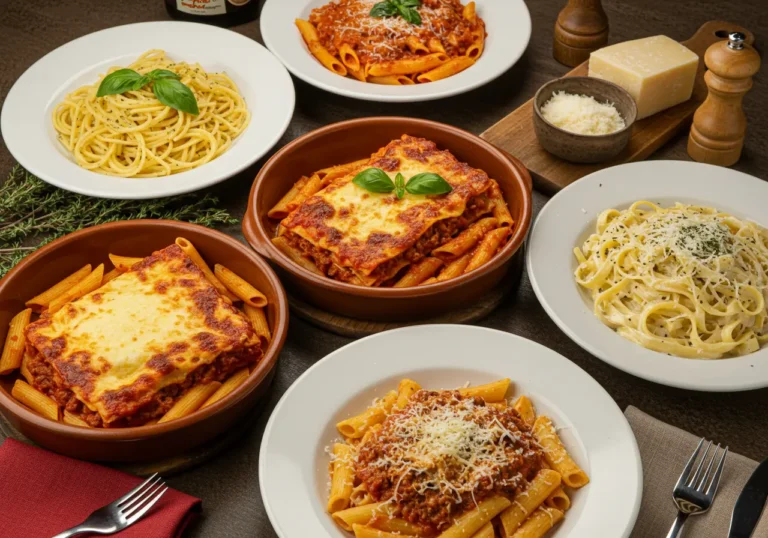
This iconic Roman pasta dish represents the pinnacle of Italian simplicity and flavor. Made with just eggs, Pecorino Romano cheese, guanciale (cured pork cheek), and black pepper, carbonara achieves a silky, creamy sauce without any cream whatsoever. The key lies in the technique: tossing hot pasta with the egg mixture creates a luscious coating that clings to every strand. Authentic carbonara never includes garlic, onions, or cream—those are modern bastardizations. The dish likely originated in the mid-20th century, possibly named after charcoal workers (carbonari) who needed hearty, portable meals. When prepared correctly, carbonara delivers a perfect balance of salty, savory richness with the subtle bite of freshly cracked pepper.
Lasagna alla Bolognese
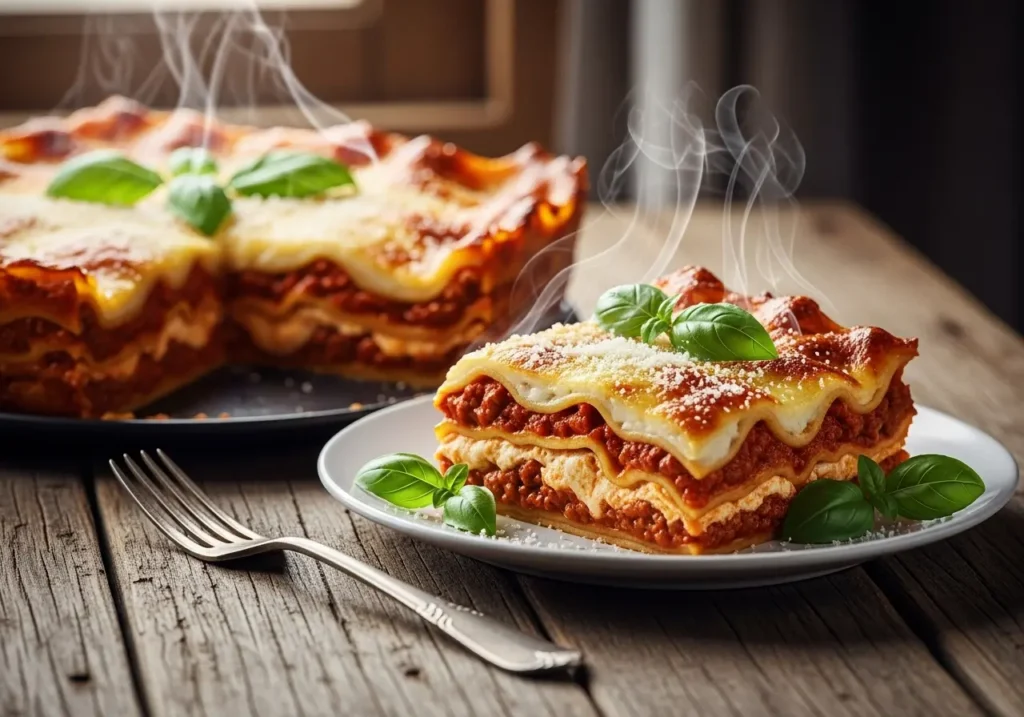
Hailing from Bologna in Emilia-Romagna, this layered pasta masterpiece differs significantly from its American counterpart. Traditional lasagna alla Bolognese features delicate sheets of fresh egg pasta alternated with ragù Bolognese (a slow-cooked meat sauce), creamy béchamel, and Parmigiano-Reggiano cheese. The ragù itself requires hours of gentle simmering, allowing beef, pork, tomatoes, and aromatic vegetables to meld into a deeply savory sauce. Unlike heavy, cheese-laden versions found elsewhere, the Bolognese preparation emphasizes balance and refinement. The béchamel adds moisture and richness without overwhelming the meat sauce. This labor-intensive dish is typically reserved for Sunday dinners and special occasions, reflecting the Italian value of dedicating time to create memorable meals for loved ones.
Risotto alla Milanese
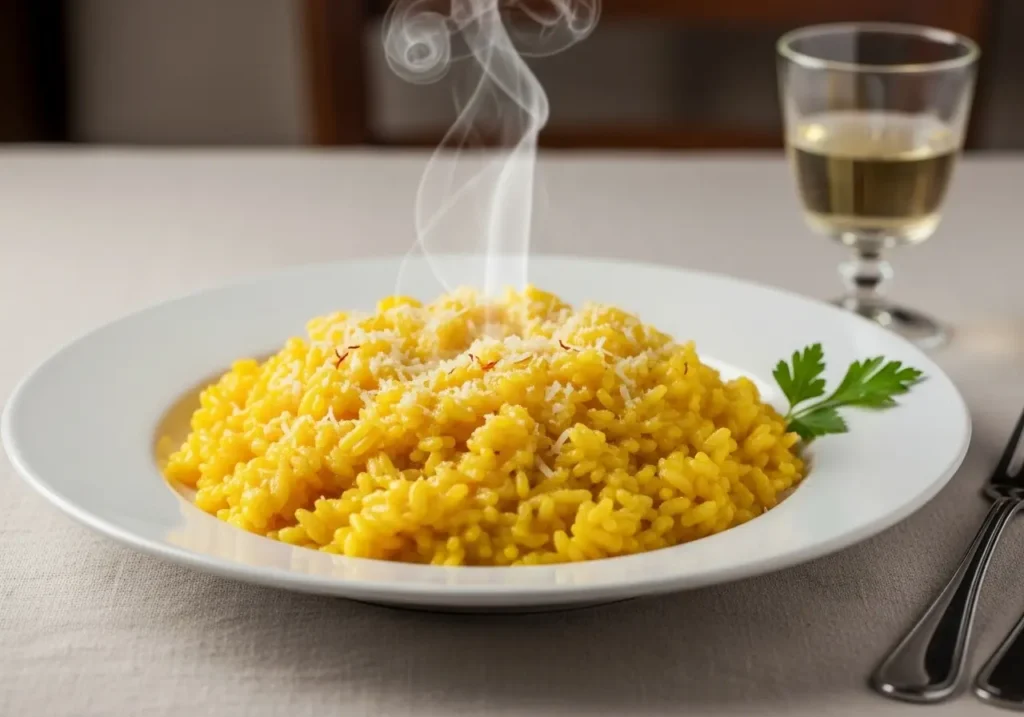
Milan’s signature dish showcases the Lombardy region’s abundant rice production and luxurious ingredients. This golden-hued risotto derives its distinctive color and subtle flavor from saffron threads, one of the world’s most expensive spices. The preparation demands constant attention: Arborio or Carnaroli rice is gradually cooked with warm broth, stirred continuously to release starches that create a creamy, flowing consistency Italians call “all’onda” (wave-like). Butter and Parmigiano-Reggiano are stirred in at the end for additional richness. Legend suggests the dish originated in the 16th century when a glazier’s apprentice added saffron (used for stained glass) to rice at a wedding banquet. Today, risotto alla Milanese often accompanies osso buco, though it stands magnificently on its own.
Osso Buco
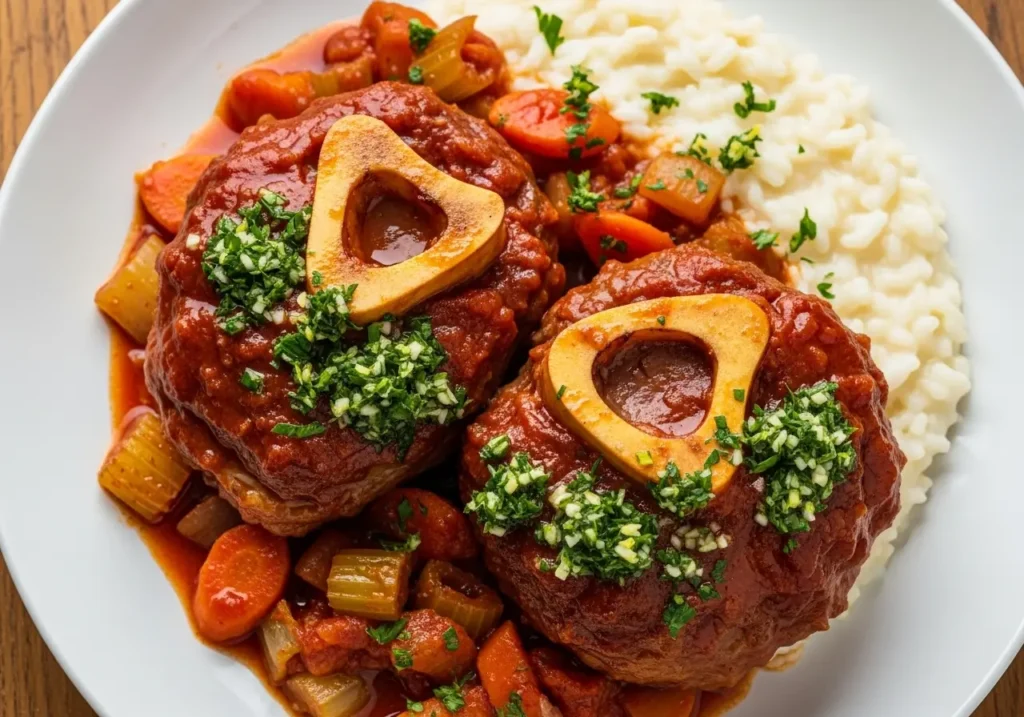
This Milanese specialty transforms humble veal shanks into an extraordinarily tender and flavorful dish. “Osso buco” literally means “bone with a hole,” referring to the marrow-filled cross-cut shanks that define this preparation. The meat is slowly braised in white wine, broth, tomatoes, and aromatic vegetables until it becomes fork-tender and nearly falls off the bone. The true treasure is the rich bone marrow, which diners scoop out with a special narrow spoon. Traditional accompaniment includes gremolata—a bright mixture of lemon zest, garlic, and parsley that cuts through the richness. Osso buco epitomizes the Italian talent for transforming economical cuts into luxurious meals through patience and proper technique, typically served alongside risotto alla Milanese.
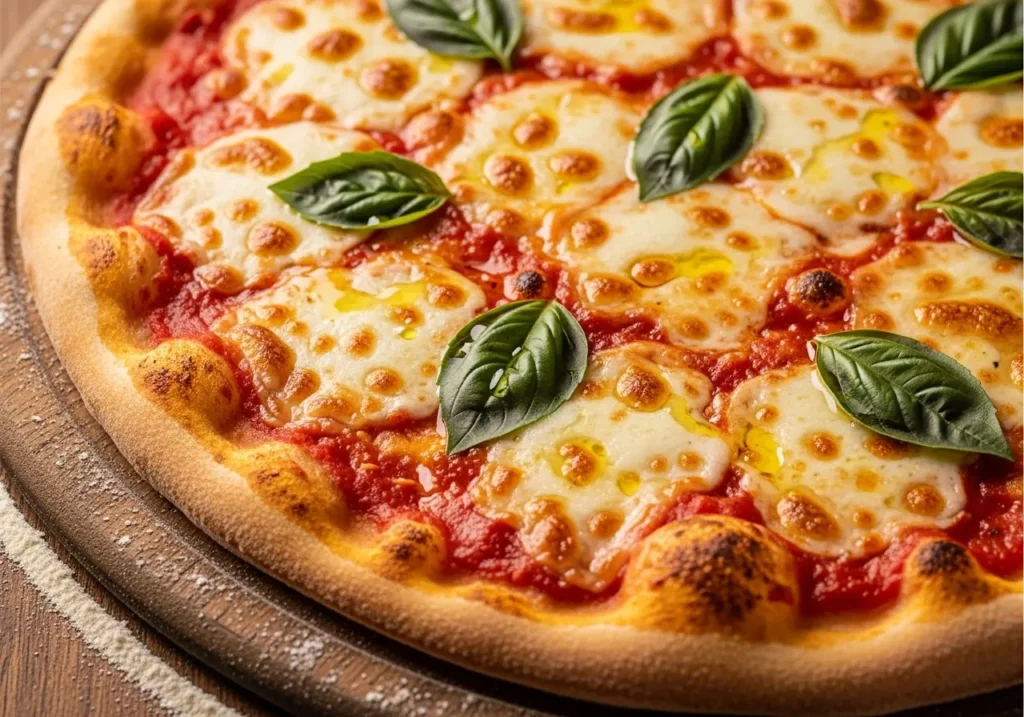
Margherita Pizza
Naples gave the world this deceptively simple yet perfect pizza, allegedly created in 1889 to honor Queen Margherita of Italy. The three toppings—tomato sauce, fresh mozzarella, and basil—represent the Italian flag’s colors while delivering an impeccable balance of flavors. Authentic Neapolitan pizza requires specific ingredients: San Marzano tomatoes, buffalo mozzarella, fresh basil, extra virgin olive oil, and dough made from type 00 flour.
The pizza must be baked at extremely high temperatures (around 900°F) in a wood-fired oven for just 60-90 seconds, creating a slightly charred, puffy crust (cornicione) with a soft, chewy center. This rapid cooking preserves the fresh ingredients’ integrity while developing complex flavors. Margherita pizza proves that exceptional food doesn’t require complexity—just quality ingredients treated with respect.
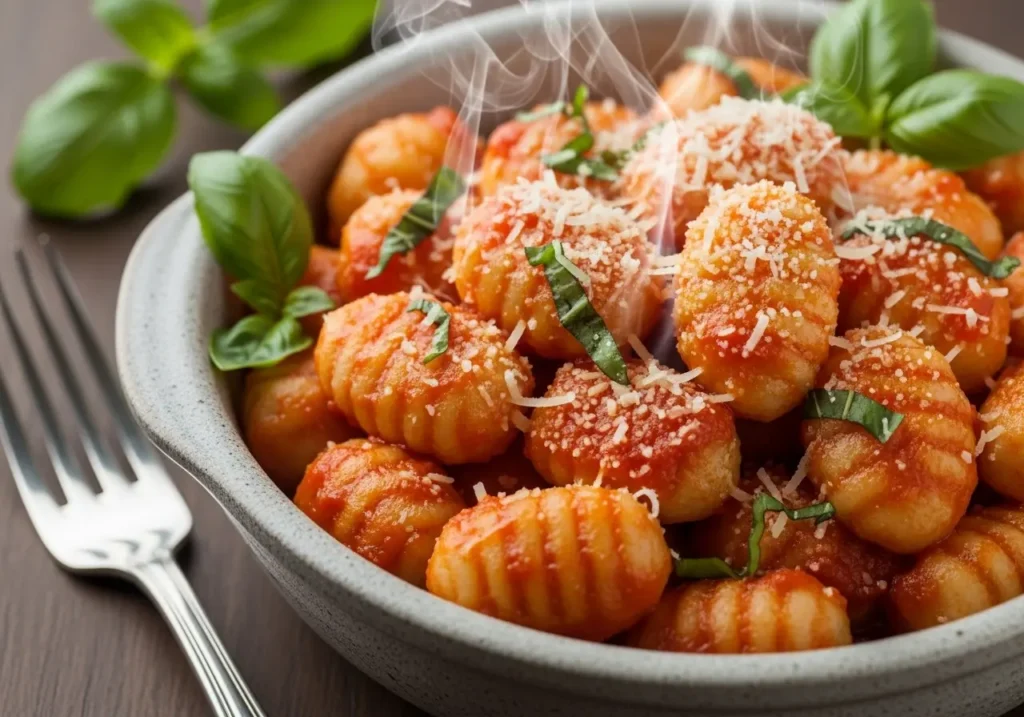
Gnocchi di Patate
These pillowy potato dumplings represent Italian comfort food at its finest. Traditional gnocchi combine mashed potatoes with just enough flour and egg to hold their shape, creating tender, light morsels that seem to melt on your tongue. The key is using starchy potatoes and minimal flour—too much makes them dense and heavy. Each gnocco (singular form) is typically rolled against a fork or special board to create ridges that catch sauce.
Gnocchi appear throughout Italy with regional variations, served with everything from simple butter and sage to robust meat ragù or creamy gorgonzola sauce. In Roman tradition, gnocchi are eaten on Thursdays, and many trattorias maintain this custom today. Making excellent gnocchi requires a delicate touch—overworking the dough develops gluten and ruins their characteristic tenderness.

Polenta e Funghi
This northern Italian dish showcases the region’s historical reliance on corn rather than wheat. Polenta, made from stone-ground cornmeal slowly cooked with water or broth, transforms from gritty meal into smooth, creamy comfort food through constant stirring. Topped with sautéed wild mushrooms (typically porcini), this humble peasant food becomes something extraordinary. The earthy, meaty mushrooms complement polenta’s mild corn sweetness perfectly. Traditionally, polenta was poured onto a wooden board and served family-style, with everyone eating from the same communal portion. It can be served soft and creamy or allowed to set, then sliced and grilled or fried. This versatile staple sustained northern Italian farming communities for centuries, proving that simple ingredients prepared with care create deeply satisfying meals.
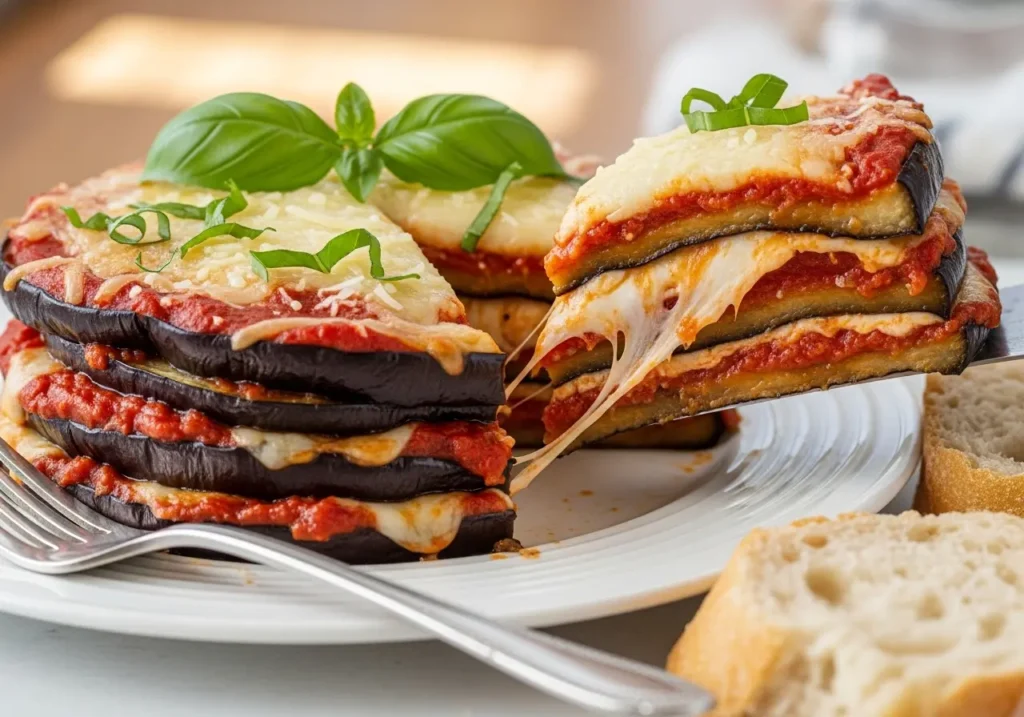
Eggplant Parmigiana (Parmigiana di Melanzane)
Despite its name suggesting Parma, this beloved dish likely originated in southern Italy, particularly Sicily or Campania. Sliced eggplant is typically fried until golden, then layered with tomato sauce, mozzarella, Parmigiano-Reggiano, and fresh basil before baking until bubbly and aromatic. The result is a rich, satisfying vegetarian main course that converts even eggplant skeptics. Some regions prefer breading the eggplant before frying, while others keep it simple.
The debate over whether to salt and drain eggplant beforehand (to remove bitterness) continues among Italian cooks. What’s not debatable is the dish’s incredible popularity—it appears on menus throughout Italy and has become a Sunday dinner staple in Italian-American households. Parmigiana demonstrates how Mediterranean vegetables become transcendent when treated with Italian culinary wisdom.

Tiramisu
This elegant dessert, whose name means “pick me up,” originated in the Veneto region during the 1960s, making it relatively modern by Italian standards. Layers of coffee-soaked ladyfinger biscuits (savoiardi) alternate with a rich mascarpone cream made from egg yolks, sugar, and the luxuriously smooth Italian cream cheese. The entire creation is dusted with cocoa powder, creating a beautiful presentation and adding slight bitterness that balances the sweetness.
Authentic tiramisu contains no whipped cream or gelatin—just mascarpone, eggs, sugar, espresso, and cocoa. The coffee and cocoa provide a sophisticated caffeine boost, hence the name. Some variations include a splash of Marsala wine or liqueur in the mascarpone mixture. Tiramisu has become Italy’s most famous dessert export, though versions found abroad rarely match the authentic preparation’s delicate texture and balanced flavors.
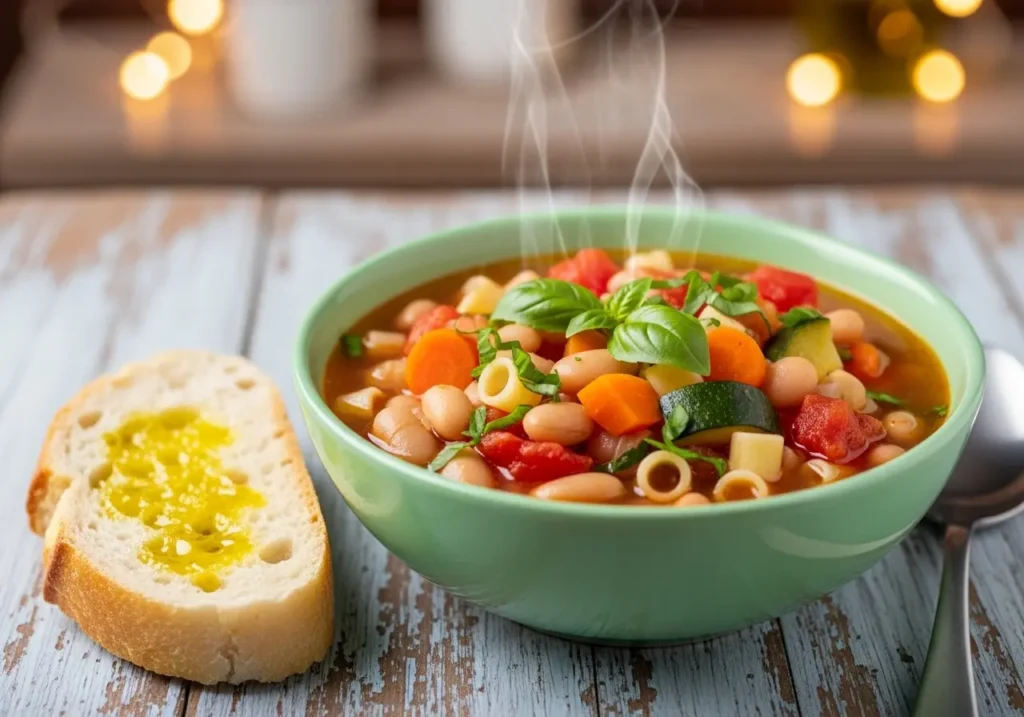
Minestrone Soup
This hearty vegetable soup embodies Italian cucina povera (peasant cooking) at its resourceful best. Minestrone has no single definitive recipe—instead, it varies by season, region, and what vegetables are available. Common ingredients include beans, tomatoes, celery, carrots, onions, and small pasta or rice, all simmered in a flavorful broth. Some versions incorporate pancetta or Parmesan rind for added depth. The soup’s name comes from “minestra” (soup) with the augmentative suffix, essentially meaning “big soup.” It’s traditionally served with a drizzle of quality olive oil and grated Parmigiano-Reggiano.
Minestrone represents Italian cooking’s practical genius: transforming humble vegetables and pantry staples into nourishing, delicious meals. Every Italian grandmother has her own version, passed down through generations and adapted to family preferences.
FAQs About Traditional Italian Meals
What makes Italian food “traditional”? Traditional Italian food refers to recipes and cooking methods that have been passed down through generations, typically originating before the mid-20th century. These dishes maintain their authentic preparations, use regional ingredients, and reflect the culinary heritage of specific Italian areas. Traditional meals also follow Italian dining customs, such as the progression from antipasto to primo, secondo, and dolce.
Are traditional Italian meals healthy? Generally, yes. Traditional Italian cuisine emphasizes fresh vegetables, olive oil, whole grains, legumes, and moderate portions of meat and cheese. The Mediterranean diet, largely based on traditional Italian eating patterns, is recognized worldwide for its health benefits, including heart health and longevity. However, like any cuisine, moderation matters—some dishes are richer than others.
Do I need special ingredients to make traditional Italian meals? Authenticity requires specific ingredients, but many are now available internationally. Key staples include quality olive oil, Parmigiano-Reggiano cheese, San Marzano tomatoes, and type 00 flour. For harder-to-find items like guanciale or fresh pasta, Italian specialty stores or online retailers can help. That said, Italians value using the best local ingredients available rather than compromising with inferior imported options.
Why don’t traditional Italian meals include cream-based sauces often? Contrary to popular belief outside Italy, cream is rarely used in traditional Italian cooking, especially in southern regions. The creamy textures in dishes like carbonara come from eggs, cheese, and pasta water, while northern dishes might use butter. The over-reliance on cream in “Italian” restaurants abroad is typically an adaptation to local tastes rather than authentic Italian practice.
What’s the difference between northern and southern Italian cuisine? Northern Italian cuisine traditionally uses more butter, cream, rice, polenta, and meat, reflecting the region’s cooler climate and dairy farming. Southern Italian cooking emphasizes olive oil, tomatoes, pasta, seafood, and vegetables, influenced by the Mediterranean climate. These differences stem from historical agricultural patterns, though modern Italy sees more crossover between regional styles.
Can I find vegetarian traditional Italian meals? Absolutely. Italian cuisine offers numerous traditional vegetarian options, including Margherita pizza, eggplant Parmigiana, risotto variations, pasta with tomato sauce, minestrone soup, and various vegetable-focused antipasti. Many traditional Italian meals developed during times when meat was scarce or reserved for special occasions, creating a rich vegetarian repertoire.
How important is fresh pasta versus dried pasta in Italian cooking? Both have their place in traditional Italian cuisine. Fresh pasta (made with eggs) is preferred in northern Italy and for dishes like lasagna or tagliatelle with ragù. Dried pasta (made with durum wheat and water) is traditional in southern Italy and ideal for dishes like carbonara or with olive oil-based sauces. Italians choose based on the dish, not superiority—each type has appropriate uses.
Why do traditional Italian meals seem so simple? Italian cooking philosophy centers on “la cucina povera”—letting high-quality ingredients shine without overcomplication. Traditional meals typically contain few components, each contributing distinct flavor. This simplicity requires excellent ingredients and proper technique. The goal isn’t complexity but balance and respect for each ingredient’s natural character, which paradoxically requires great skill to achieve.
Conclusion
Traditional Italian meals represent more than just sustenance—they’re an edible journey through Italy’s diverse regions, rich history, and enduring culinary wisdom. From the sophisticated simplicity of spaghetti carbonara to the comforting embrace of minestrone soup, each dish tells a story of the people, places, and traditions that created it. These ten essential meals provide a comprehensive introduction to authentic Italian cuisine, moving beyond stereotypes to reveal the true character of Italy’s gastronomic heritage.
By exploring these traditional dishes, you’ll develop a deeper appreciation for Italian culture and the philosophy that great food requires quality ingredients, time-honored techniques, and respect for regional traditions. Whether you’re planning a trip to Italy, seeking to recreate authentic flavors at home, or simply expanding your culinary knowledge, these meals serve as your roadmap to understanding what makes Italian cuisine beloved worldwide.
Call to Action: Ready to embark on your Italian culinary adventure? Start by trying one of these traditional meals at an authentic Italian restaurant in your area, or challenge yourself to prepare one at home this weekend. Share your experience—which traditional Italian meal have you tried, or which one are you most excited to taste? Leave a comment below with your favorite Italian dish, and don’t forget to bookmark this guide for your next Italian food exploration. Subscribe to our newsletter for more authentic travel and culinary guides that help you eat like a local wherever you go.
Social Proof: Join thousands of food enthusiasts who’ve already transformed their understanding of Italian cuisine through our authentic guides. Our readers consistently report that discovering traditional Italian meals has enriched their travels and inspired them to seek out genuine culinary experiences rather than settling for tourist-trap versions. As Maria from New York shared: “This guide completely changed how I approach Italian restaurants—I finally know what to order and why!” Don’t just take our word for it; Italian chefs and food critics have praised our commitment to authenticity and cultural respect in representing Italy’s diverse culinary traditions.